



Evaluation of Intussusception Following Pentavalent Rotavirus Vaccine (RotaTeq) Administration in Five Countries in Africa
Supporting Files

-
1 25 2024 ; 1-25-
-
Available in CDC Stacks on 2024-10-23T00:00:00Z
File Language:
English
Details
-
Alternative Title:Clin Infect Dis
-
Personal Author:Tate, Jacqueline E. ; Mwenda, Jason M. ; Keita, Adama Mamby ; Tapsoba, Toussaint Wendlamita ; Ngendahayo, Edouard ; Kouamé, Bertin Dibi ; Samateh, Ahmadou Lamin ; Aliabadi, Negar ; Sissoko, Seydou ; Traore, Yacouba ; Bayisenga, Justin ; Sounkere-Soro, Moufidath ; Jagne, Sheriffo ; Burke, Rachel M. ; Onwuchekwa, Uma ; Ouattara, Ma ; Bikoroti, Joel B. ; N’Zue, Kofi ; Leshem, Eyal ; Coulibaly, Oumar ; Ouedraogo, Issa ; Uwimana, Jeannine ; Sow, Samba ; Parashar, Umesh D.
-
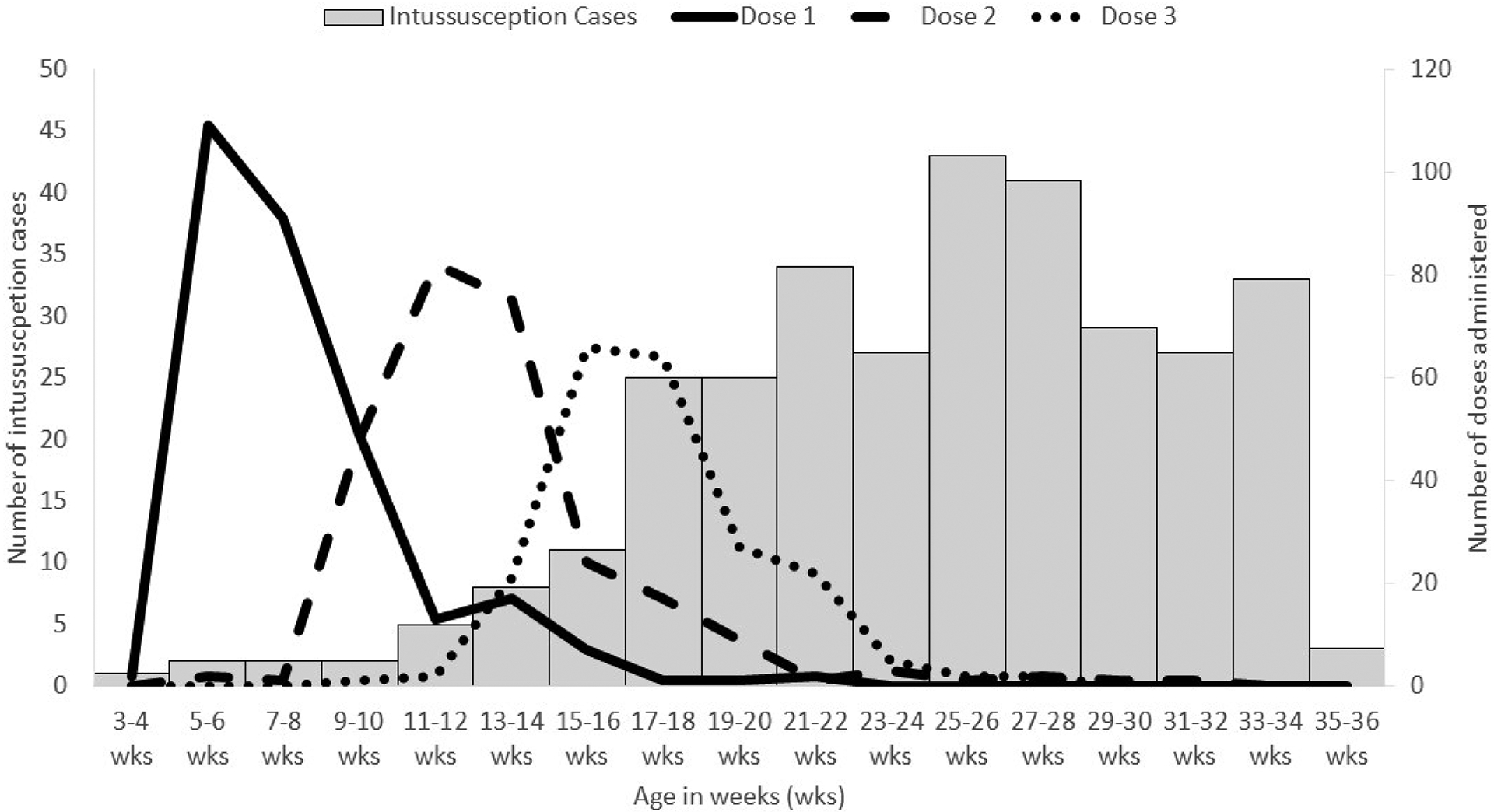
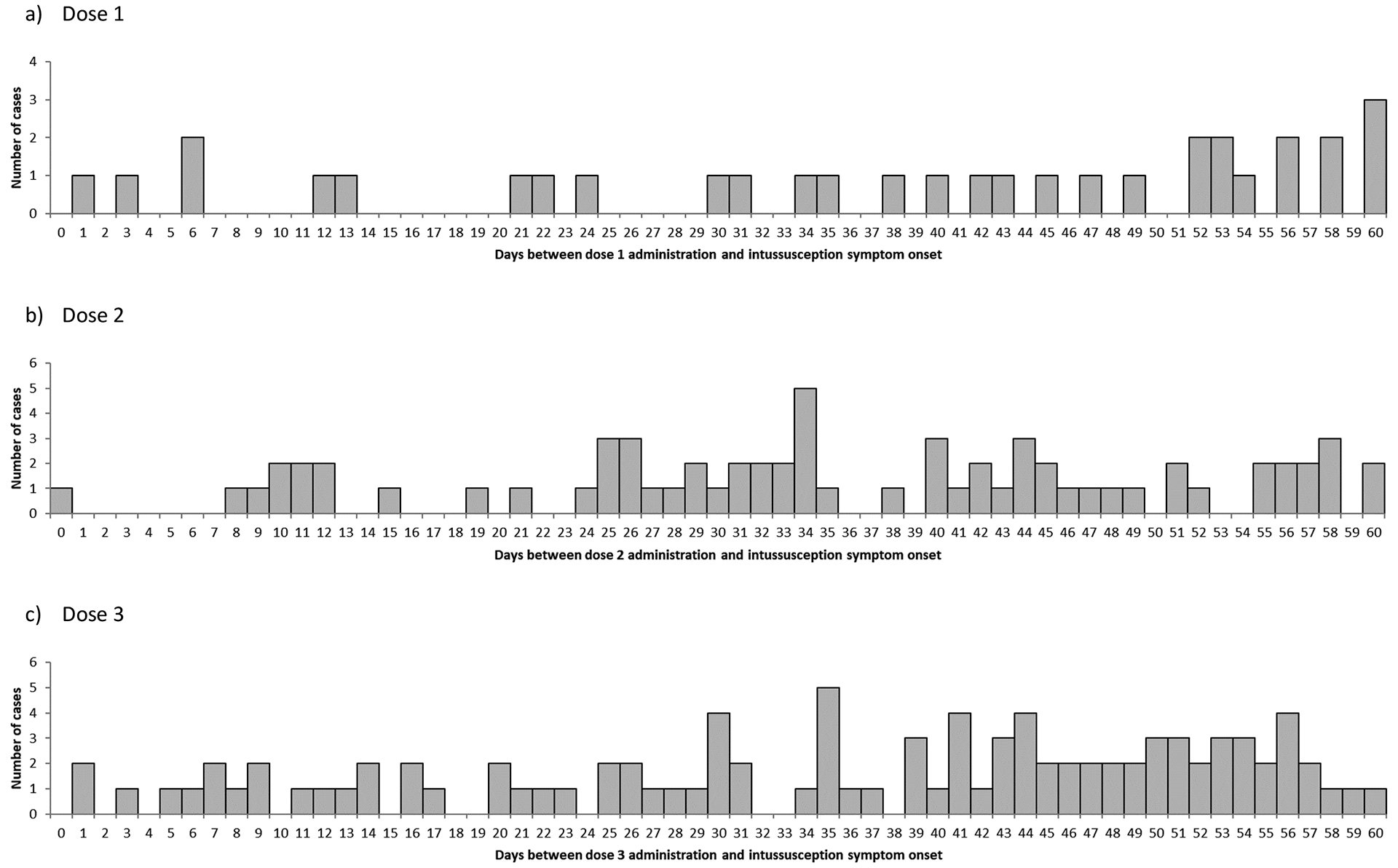
Description:Background: ; A low-level risk of intussusception following rotavirus vaccination has been observed in some settings and may vary by vaccine type. We examined the association between RotaTeq vaccination and intussusception in low-income settings in a pooled analysis from five African countries that introduced RotaTeq into their national immunization program. ; Methods: ; Active surveillance was conducted in 20 sentinel sites to identify intussusception cases. A standard case report form was completed for each enrolled child and vaccination status was determined by review of the child’s vaccination card or clinic record. The pseudo-likelihood adaptation of self-controlled case-series method was used to assess the association between RotaTeq administration and intussusception in the 1–7, 8–21, and 1–21 day periods after each vaccine dose in infants 28 to 245 days of age. ; Results: ; Data from 318 infants with confirmed rotavirus vaccination status were analyzed. No clustering of cases occurred in any of the risk windows after any of the vaccine doses. Compared to the background risk of naturally occurring intussusception, no increased risk was observed after dose 1 in the 1–7 day (relative incidence=2.71, 95% confidence interval (CI)=0.47–8.03) or the 8–21 day window (relative incidence=0.77, 95%CI=0.0–2.69). Similarly, no increased risk of intussusception was observed in any risk window after dose 2 or dose 3. ; Conclusions: ; RotaTeq vaccination was not associated with an increased risk of intussusception in this pooled analysis from five African countries. This finding mirrors what was reported in similar analyses with other rotavirus vaccines in low-income settings and highlights need for vaccine-specific and setting-specific risk monitoring.
-
Subjects:
-
Source:Clin Infect Dis. 78(1):210-216
-
Pubmed ID:37596934
-
Pubmed Central ID:PMC11497219
-
Document Type:
-
Funding:
-
Volume:78
-
Issue:1
-
Download URL:
-
File Type:
 [PDF - 609.98 KB]
 -
Collection(s):
-
Main Document Checksum:urn:sha-512:658ce7f796e12b3fd19761105f1804e6c2ddfac2a7556e0412e0170819f4032224c73429ca2ac7133dd805afad6d1aaa2aa73c2ae3cdf6d607c0a25a34133dd5
Supporting Files


File Language:
English
 Was this page helpful?
 Found an issue?

CDC STACKS serves as an archival repository of CDC-published products including
scientific findings, journal articles, guidelines, recommendations, or other public health information authored or
co-authored by CDC or funded partners.
As a repository, CDC STACKS retains documents in their original published format to ensure public access to scientific information.
As a repository, CDC STACKS retains documents in their original published format to ensure public access to scientific information.
You May Also Like
COLLECTION
CDC Public Access