



Bidirectional associations of sleep with cognitive interference in employees' work days
Supporting Files

-
6 2019 ; 6-2019
-
Available in CDC Stacks on October 18, 2024, 12:00 AM
File Language:
English
Details
-
Alternative Title:Sleep Health
-
Personal Author:
-
Description:Objectives:
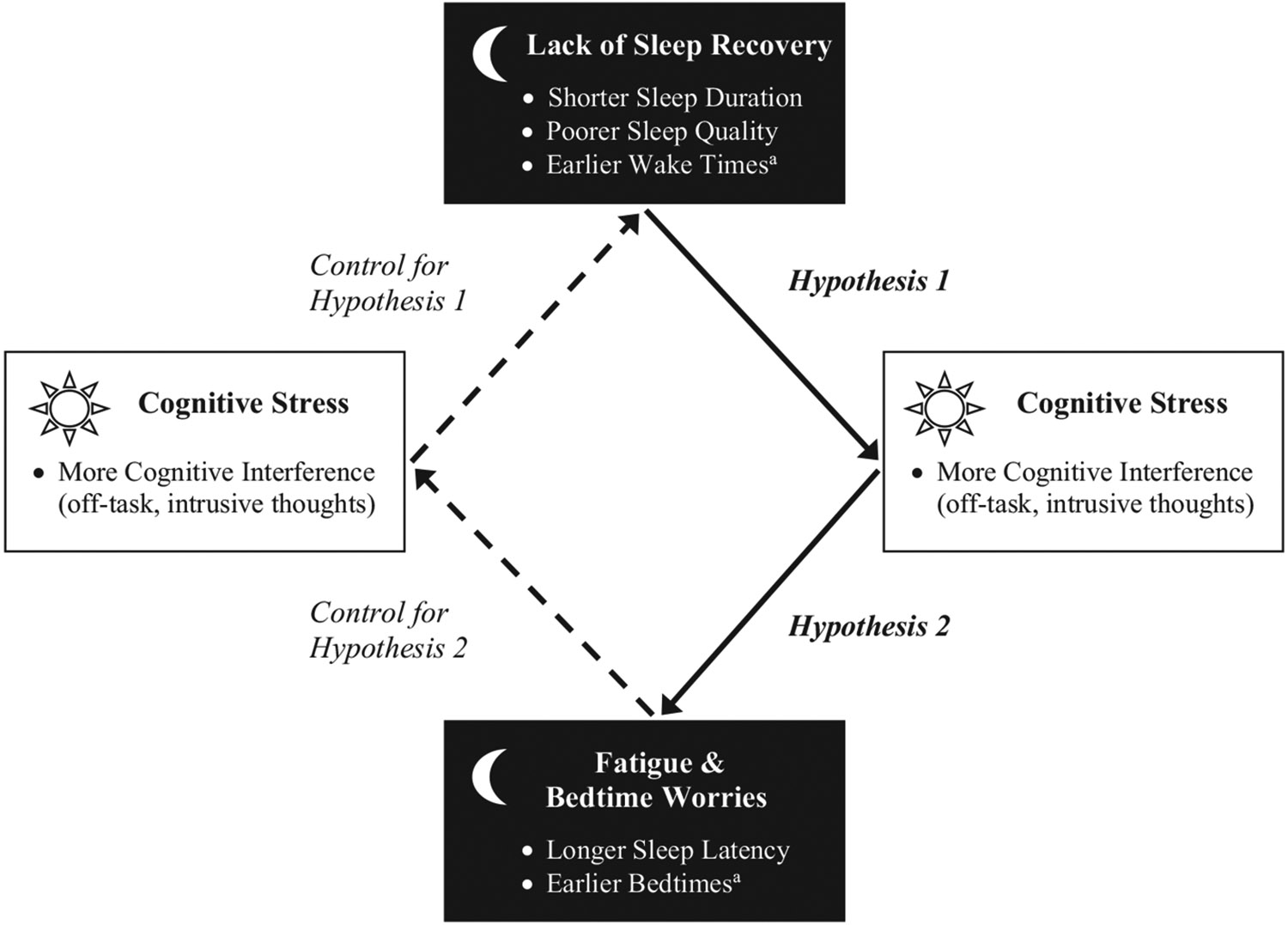
Studies have reported bidirectional associations of sleep with daily stressors and negative mood. Yet we know little about how sleep is associated with workers' daily cognitive interference, or the experience of off-task and distracting thoughts. This study examined whether nightly sleep was associated with next-day cognitive interference, and vice versa, during workdays and non-work days.
Design:
Daily telephone interviews.
Setting:
US information technology workplaces.
Participants:
130 middle-aged employees.
Measurements:
On 8 consecutive days, participants reported the frequency of experiencing off-task and distracting thoughts during the day (0 = never to 4 = very often) and multiple sleep characteristics (bedtimes, wake times, sleep duration, sleep quality, and sleep latency). Covariates included sociodemographic characteristics and work hours.
Results:
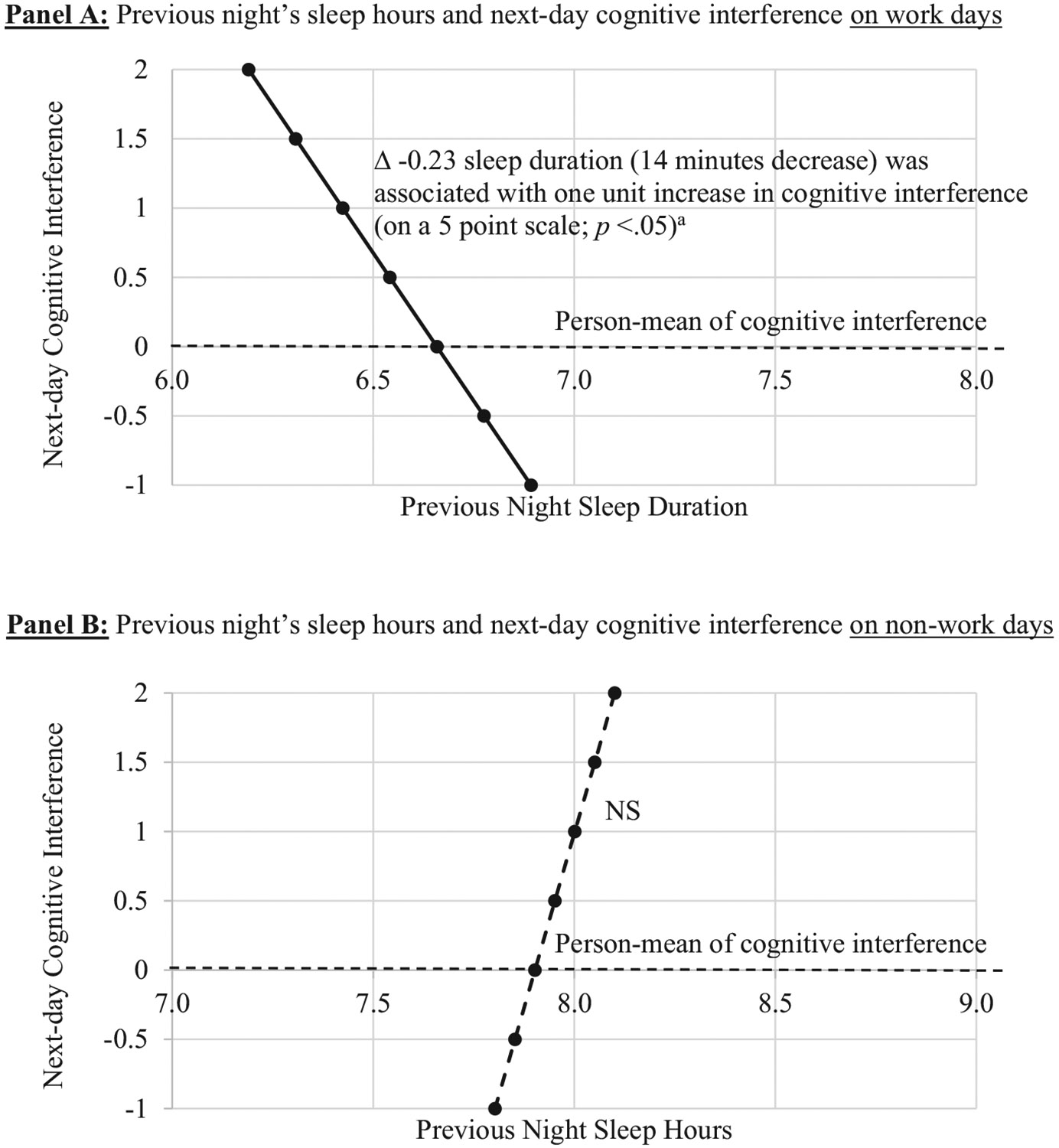
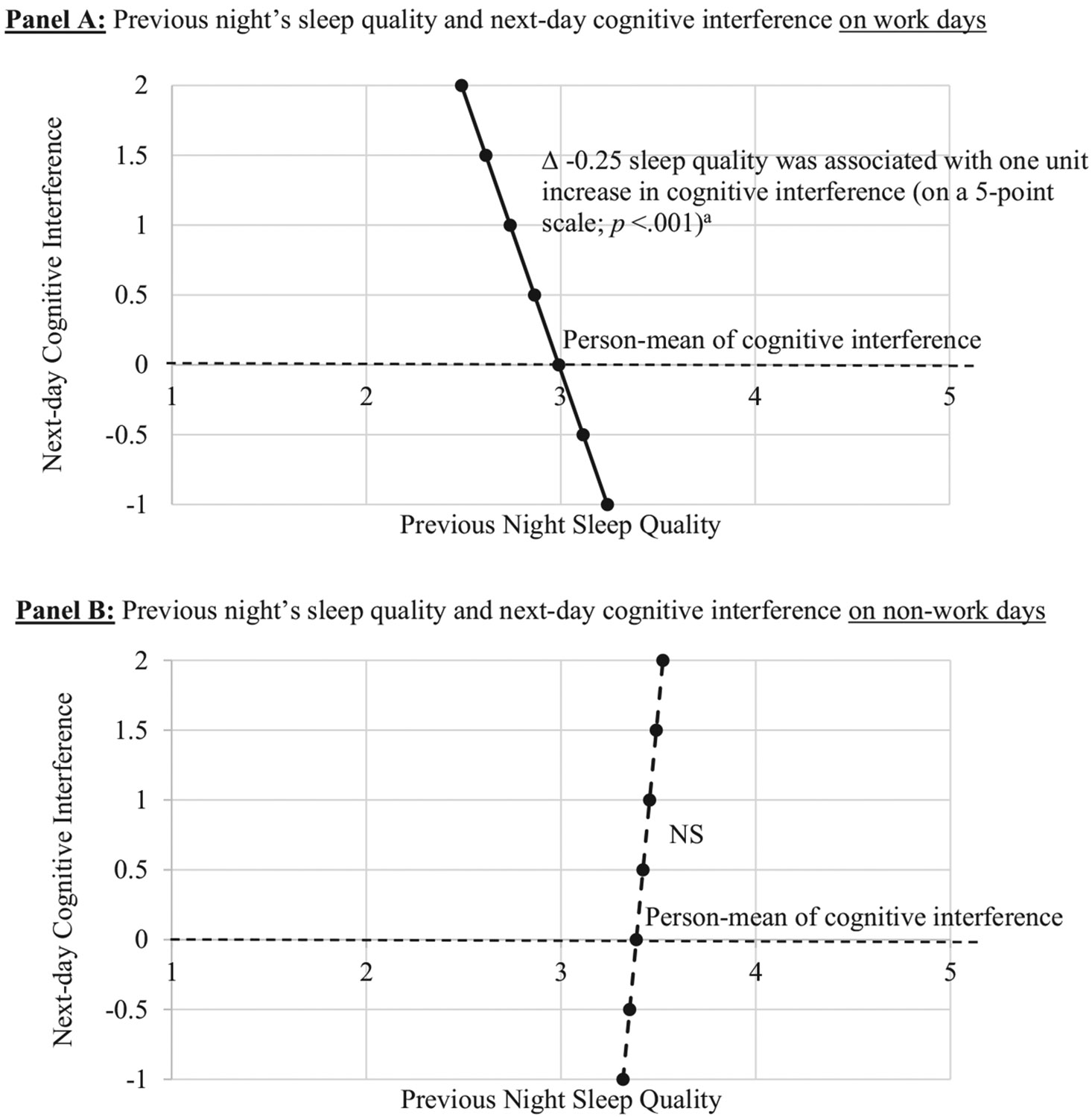
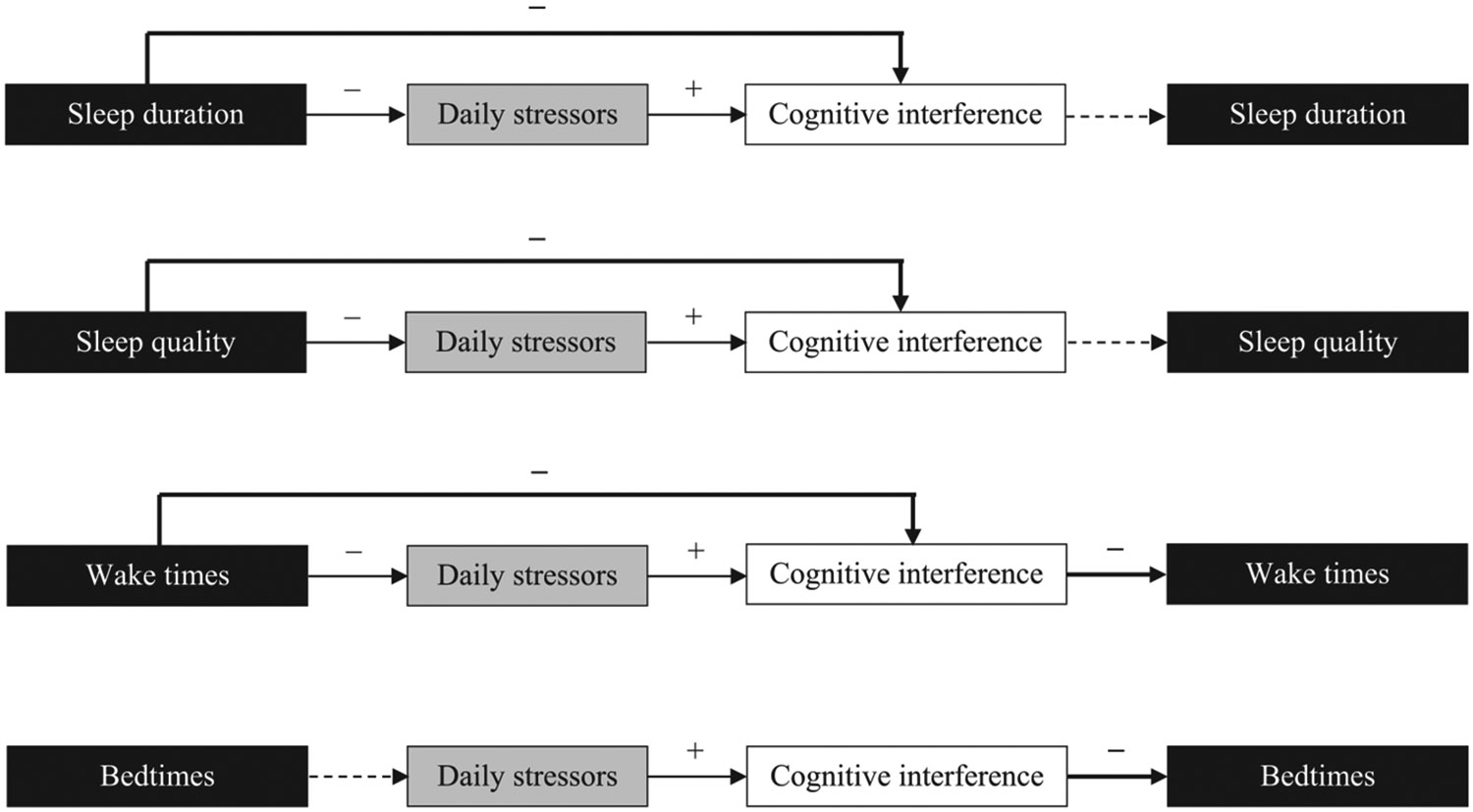
Multilevel models revealed that, on days following earlier wake times (B = −0.32, P < .01), shorter sleep duration (B = −0.27, P < .01), or poorer sleep quality (B = −0.17, P < .01), participants reported more cognitive interference than usual. That is, waking 19 minutes earlier and sleeping 16 minutes less were associated with one additional point on the cognitive interference scale the next day. With cognitive interference predicting nightly sleep, more same day's cognitive interference was associated with earlier bedtimes (B = −0.19, P < .05) and earlier wake times (B = −0.30, P < .01) than usual. The temporal associations of nightly sleep duration and sleep quality with the following day's cognitive interference were significant on work days, but not on non-work days.
Conclusion:
Our results suggest bidirectional associations between poorer sleep and more cognitive interference, particularly on work days with implications for workday productivity and quality of life. -
Subjects:
-
Keywords:
-
Source:Sleep Health. 5(3):298-308
-
Pubmed ID:30905693
-
Pubmed Central ID:PMC11487484
-
Document Type:
-
Funding:U01 HD051217/HD/NICHD NIH HHSUnited States/ ; U01 HD051256/HD/NICHD NIH HHSUnited States/ ; U01 HD059773/HD/NICHD NIH HHSUnited States/ ; U01 OH008788/OH/NIOSH CDC HHSUnited States/ ; R43 AG056250/AG/NIA NIH HHSUnited States/ ; R01 HL107240/HL/NHLBI NIH HHSUnited States/ ; U01 AG027669/AG/NIA NIH HHSUnited States/ ; U01 HD051276/HD/NICHD NIH HHSUnited States/ ; U01 HD051218/HD/NICHD NIH HHSUnited States/
-
Volume:5
-
Issue:3
-
Download URL:
-
File Type:
 [PDF - 892.99 KB]
 -
Collection(s):
-
Main Document Checksum:urn:sha-512:83dd2e352ebb557f5affe0599a69478d5c0eefd2f12a7cfdd93866a5b7dc8385d11b75dbf7ecf66d864daa9c3fdece4aa8035439ba6d7a943b63a5567e3d9cd9
Supporting Files


File Language:
English
 Was this page helpful?
 Found an issue?

CDC STACKS serves as an archival repository of CDC-published products including
scientific findings, journal articles, guidelines, recommendations, or other public health information authored or
co-authored by CDC or funded partners.
As a repository, CDC STACKS retains documents in their original published format to ensure public access to scientific information.
As a repository, CDC STACKS retains documents in their original published format to ensure public access to scientific information.
You May Also Like
COLLECTION
CDC Public Access