



SARS-CoV-2 delta variant in African lions (Panthera leo) and humans at Utah's Hogle Zoo, USA, 2021–22
Supporting Files

-
11 2024 ; 11-2024
-
Available in CDC Stacks on 2025-11-01T00:00:00Z

File Language:
English
Details
-
Alternative Title:Zoonoses Public Health
-
Personal Author:
-
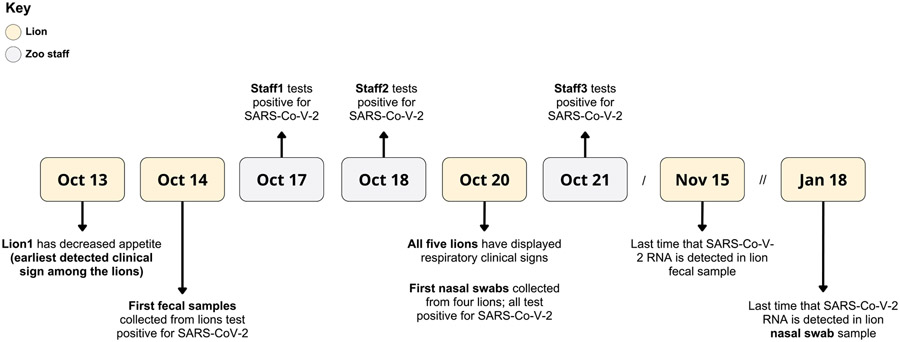
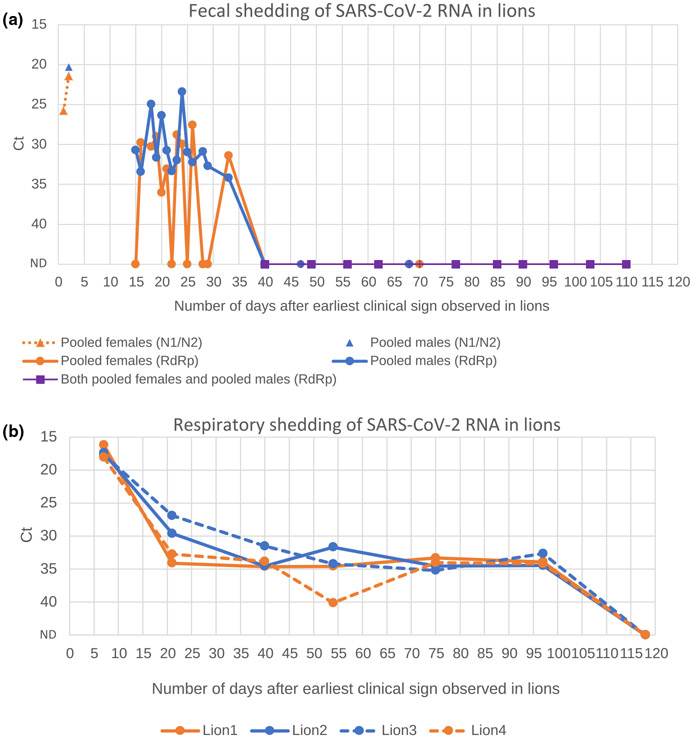
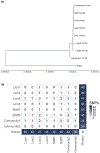
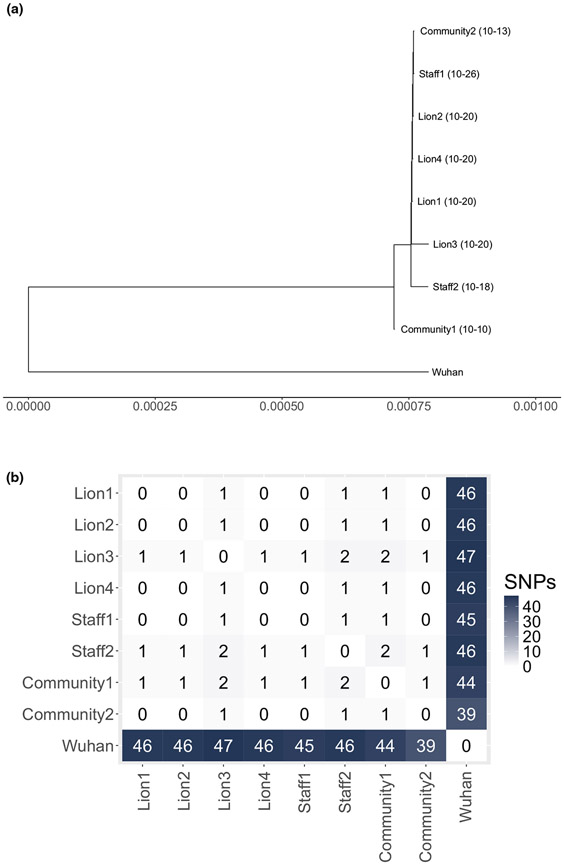
Description:Aims: ; We conducted a One Health investigation to assess the source and transmission dynamics of SARS-CoV-2 infection in African lions (Panthera leo) at Utah's Hogle Zoo in Salt Lake City from October 2021 to February 2022. ; Methods and Results: ; Following observation of respiratory illness in the lions, zoo staff collected pooled faecal samples and individual nasal swabs from four lions. All specimens tested positive for SARS-CoV-2 by reverse transcription-polymerase chain reaction (RT-PCR). The resulting investigation included: lion observation; RT-PCR testing of lion faeces every 1–7 days; RT-PCR testing of lion respiratory specimens every 2–3 weeks; staff interviews and RT-PCR testing; whole-genome sequencing of viruses from lions and staff; and comparison with existing SARS-CoV-2 human community surveillance sequences. In addition to all five lions, three staff displayed respiratory symptoms. All lions recovered and no hospitalizations or deaths were reported among staff. Three staff reported close contact with the lions in the 10 days before lion illness onset, one of whom developed symptoms and tested positive for SARS-CoV-2 on days 3 and 4, respectively, after lion illness onset. The other two did not report symptoms or test positive. Two staff who did not have close contact with the lions were symptomatic and tested positive on days 5 and 8, respectively, after lion illness onset. We detected SARS-CoV-2 RNA in lion faeces for 33 days and in lion respiratory specimens for 14 weeks after illness onset. The viruses from lions were genetically highly related to those from staff and two contemporaneous surveillance specimens from Salt Lake County; all were delta variants (AY.44). ; Conclusions: ; We did not determine the sources of these infections, although human-to-lion transmission likely occurred. The observed period of respiratory shedding was longer than in previously documented SARS-CoV-2 infections in large felids, indicating the need to further assess duration and potential implications of shedding.
-
Subjects:
-
Keywords:
-
Source:Zoonoses Public Health. 71(7):807-816
-
Pubmed ID:38825749
-
Pubmed Central ID:PMC11455604
-
Document Type:
-
Funding:
-
Volume:71
-
Issue:7
-
Download URL:
-
File Type:
 [PDF - 801.75 KB]
 -
Collection(s):
-
Main Document Checksum:urn:sha-512:54375538f82206285e9f045f40c9521d15e2cc9c2039db4b3888f62e5ea488f704bf6003ff8d4d2a78d464cc3c6e6e799b89820b04283c5c2fae604ae919d575
Supporting Files


File Language:
English
 Was this page helpful?
 Found an issue?

CDC STACKS serves as an archival repository of CDC-published products including
scientific findings, journal articles, guidelines, recommendations, or other public health information authored or
co-authored by CDC or funded partners.
As a repository, CDC STACKS retains documents in their original published format to ensure public access to scientific information.
As a repository, CDC STACKS retains documents in their original published format to ensure public access to scientific information.
You May Also Like
COLLECTION
CDC Public Access