



Tecovirimat Use under Expanded Access to Treat Mpox in the United States, 2022–2023
Supporting Files

-
10 2024 ; 10-2024
-
Available in CDC Stacks on 2024-11-01T00:00:00Z
File Language:
English
Details
-
Alternative Title:NEJM Evid
-
Personal Author:
-
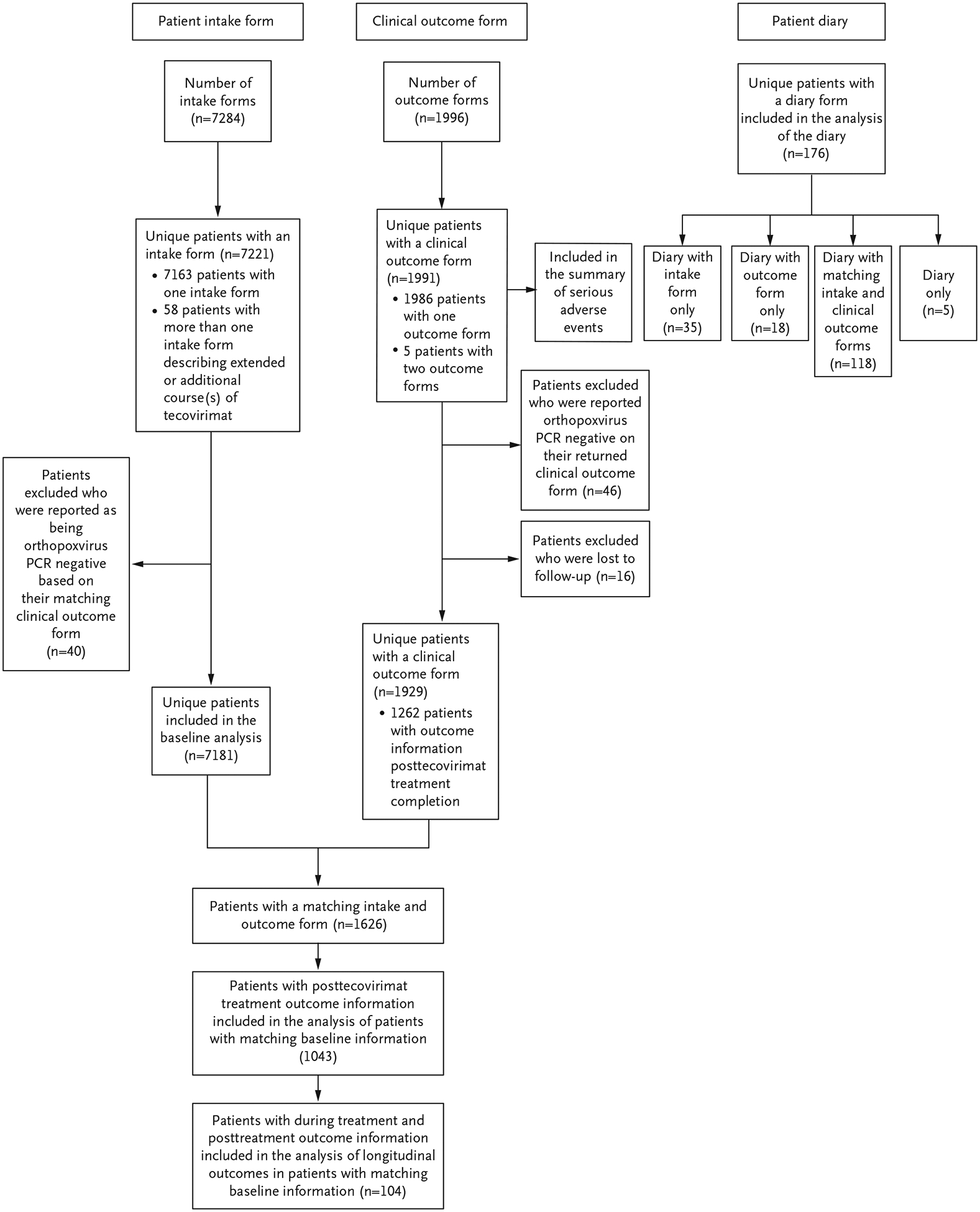
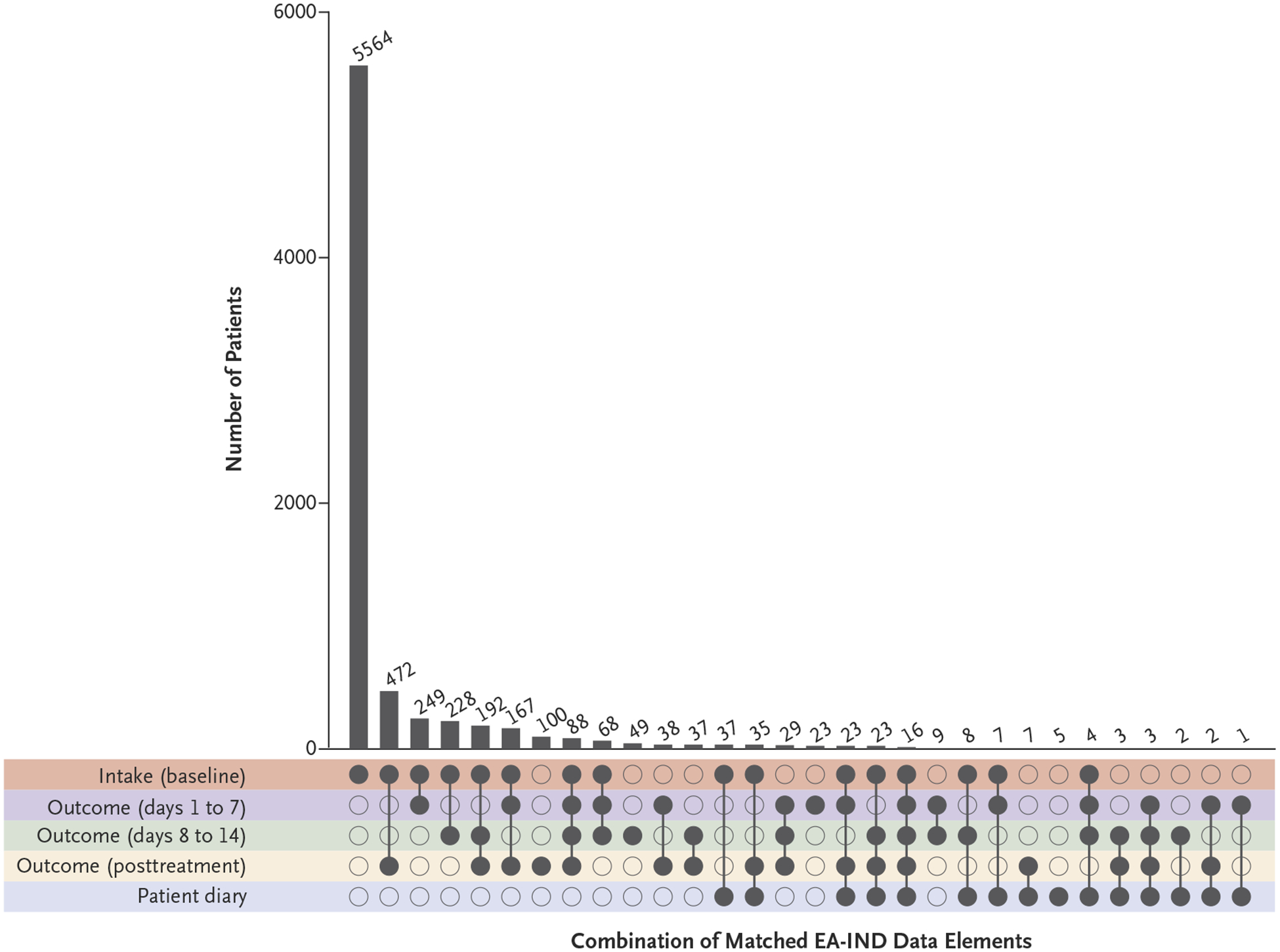
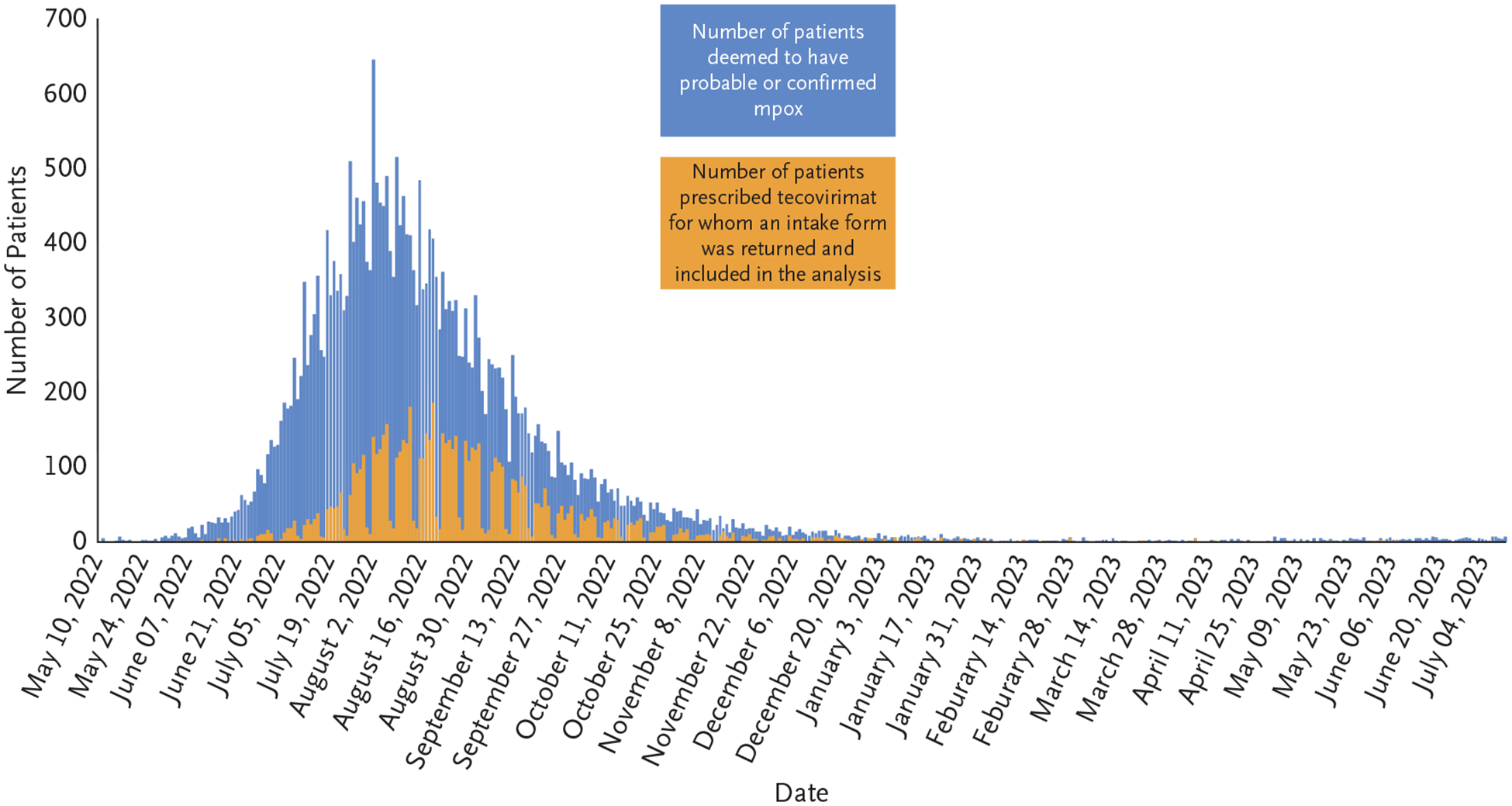
Description:BACKGROUND ; During the ongoing outbreak of clade II monkeypox virus (MPXV), many U.S. patients were prescribed tecovirimat, an antiviral drug that was made available under an expanded access Investigational New Drug (EA-IND) program. We evaluated EA-IND data to summarize characteristics of treated patients, outcomes, and serious adverse events (SAEs). ; METHODS ; We evaluated data from patients prescribed tecovirimat from May 29, 2022, through July 10, 2023. Baseline patient characteristics, clinical courses, and outcomes were evaluated via intake forms, outcome forms, and patient diaries. Data were summarized in aggregate by human immunodeficiency virus (HIV) status and by comorbidities of special interest. Reported SAEs were also compiled. ; RESULTS ; Tecovirimat was prescribed for over 7100 patients in the United States, most often for lesions in sensitive anatomical areas, such as certain anogenital lesions (83.5%; 5135 out of 6148 patients), and pain (52.5%; 3227 out of 6148 patients). The demographic and clinical characteristics mirrored those of patients worldwide. Among the 7181 patients with returned intake forms, 1626 also had returned outcome forms (22.6%). Many patients with severe immunocompromise (e.g., HIV with CD4 counts <200 cells/μl) received multiple courses of tecovirimat (43.1%; 22 out of 51 patients), including intravenously, and often experienced poor outcomes (35.3%; 18 out of 51 patients). Overall, 223 SAEs and 40 deaths were reported. Most SAEs were among patients who were severely immunocompromised, one of whom experienced hallucinations after tecovirimat was administered at twice the standard dose. ; CONCLUSIONS ; Tecovirimat was used extensively. The returned EA-IND data suggest that life-threatening or protracted infections occurred in persons who were severely immunocompromised. SAEs were not commonly reported. The EA-IND data are not definitive; controlled clinical trial data are essential to elucidating if and how tecovirimat should be used.
-
Subjects:
-
Source:NEJM Evid. 3(10):EVIDoa2400189
-
Pubmed ID:39270215
-
Pubmed Central ID:PMC11421955
-
Document Type:
-
Funding:
-
Volume:3
-
Issue:10
-
Download URL:
-
File Type:
 [PDF - 986.98 KB]
 -
Collection(s):
-
Main Document Checksum:urn:sha-512:abc1218ac1f35b352a500a655fb0ce6894af8f23ad0a21ab921c8e1a58970d5e79175f7c15c45c4695d698cce93694357a09b1c25d602005677ad472fd725913
Supporting Files


File Language:
English
 Was this page helpful?
 Found an issue?



CDC STACKS serves as an archival repository of CDC-published products including
scientific findings, journal articles, guidelines, recommendations, or other public health information authored or
co-authored by CDC or funded partners.
As a repository, CDC STACKS retains documents in their original published format to ensure public access to scientific information.
As a repository, CDC STACKS retains documents in their original published format to ensure public access to scientific information.
You May Also Like
COLLECTION
CDC Public Access