



A CFD study on the effect of portable air cleaner placement on airborne infection control in a classroom†
Supporting Files

-
Available in CDC Stacks on 2024-09-19T00:00:00Z

File Language:
English
Details
-
Alternative Title:Environ Sci Process Impacts
-
Personal Author:
-
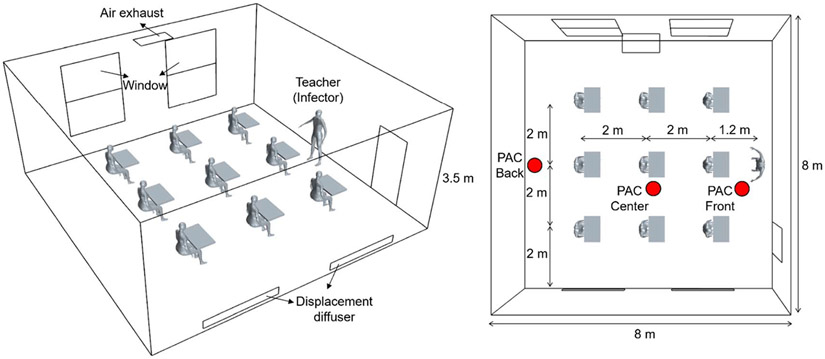
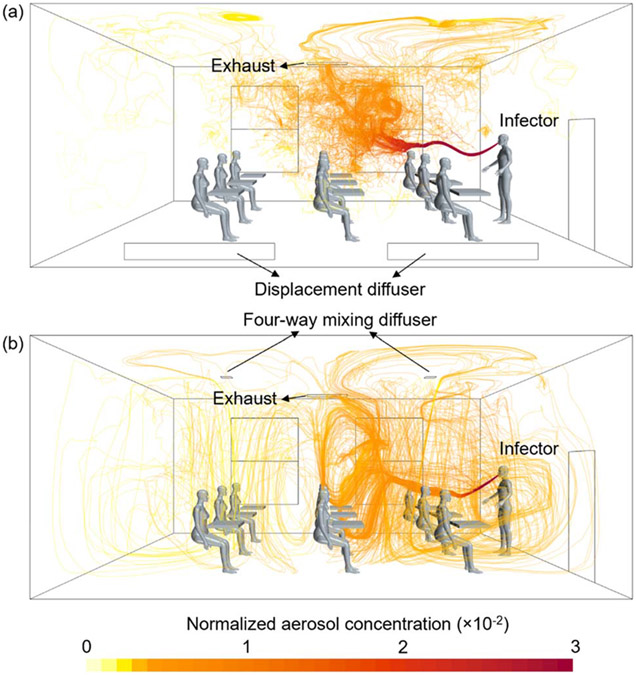
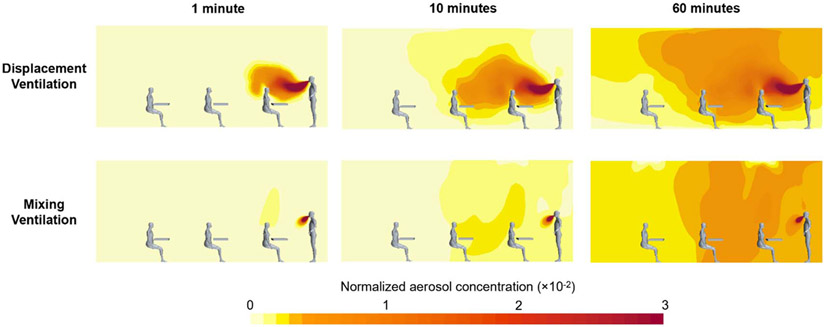
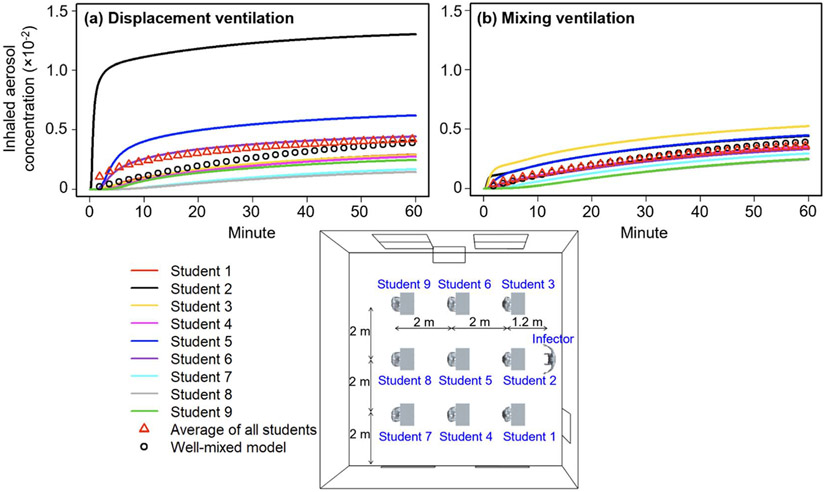
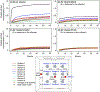
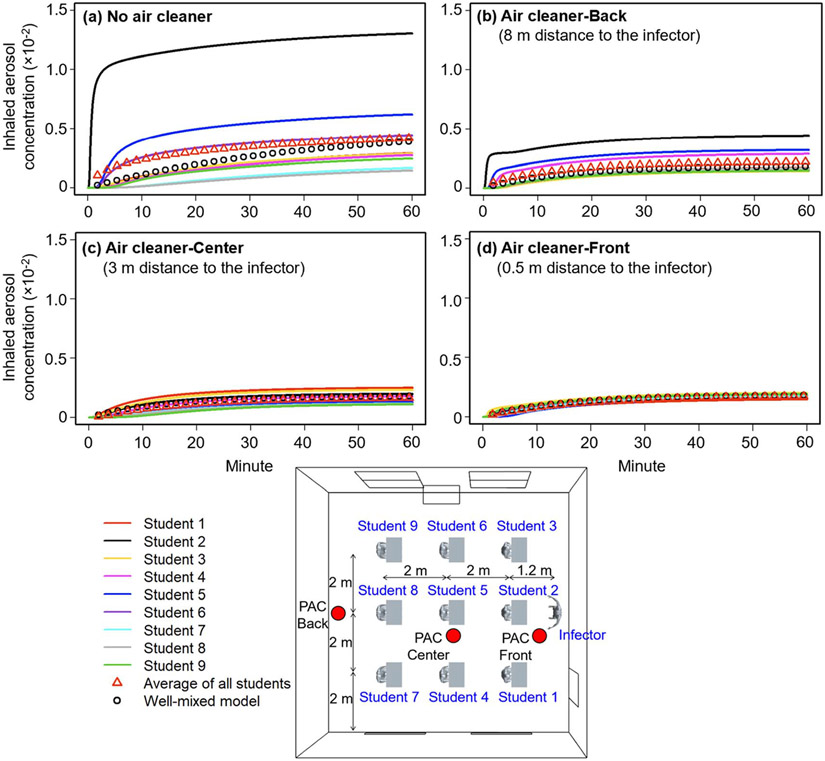
Description:The utilization of portable air cleaners (PACs) is a recommended supplemental approach to help remove airborne pathogens and mitigate disease transmission in learning environments. To improve PAC effectiveness, science-based information is needed to optimize their implementation strategies such as the deployment location, height, and number of PACs. In this study, we developed a Computational Fluid Dynamics (CFD) model to assess how PACs perform in occupied classrooms equipped with displacement and mixing ventilation systems. The results show that PACs with a flow rate of 2.6 h| reduce the mean aerosol intake of all students by up to 66%. A key benefit of using PACs is to facilitate air mixing and movement in indoor environments with inadequate ventilation, thereby effectively reducing high aerosol concentrations near the infector. Furthermore, our results highlight the impact of PAC location on its performance. PACs achieve the best effectiveness when placed closed to the infector (within a distance <3 m). In the absence of knowing who is infected, deploying a PAC at the center of the room is recommended. Moreover, adjusting PAC flow discharge height to the breathing height of occupants (|, 0.9-1.2 m for seated people) can enhance their effectiveness in spaces with poor air mixing.
-
Subjects:
-
Source:Environ Sci Process Impacts. 26(9):1476-1488
-
Pubmed ID:38973672
-
Pubmed Central ID:PMC11410509
-
Document Type:
-
Funding:
-
Volume:26
-
Issue:9
-
Download URL:
-
File Type:
 [PDF - 1.61 MB]
 -
Collection(s):
-
Main Document Checksum:urn:sha-512:9f45c2cbe604eb41a80a04ccb6757f066e82c486bcbc571b129ef87a93d75fa6580be6f984346a60b18497ca9413e8fc69a3c14d36522be30ddda8b4c6d7585a
Supporting Files


File Language:
English
 Was this page helpful?
 Found an issue?




CDC STACKS serves as an archival repository of CDC-published products including
scientific findings, journal articles, guidelines, recommendations, or other public health information authored or
co-authored by CDC or funded partners.
As a repository, CDC STACKS retains documents in their original published format to ensure public access to scientific information.
As a repository, CDC STACKS retains documents in their original published format to ensure public access to scientific information.
You May Also Like
COLLECTION
CDC Public Access