



Syphilis Treatment Among People Who Are Pregnant in Six U.S. States, 2018–2021
Supporting Files

-
6-01-
-
Available in CDC Stacks on 2024-08-21T00:00:00Z
File Language:
English
Details
-
Alternative Title:Obstet Gynecol
-
Personal Author:Tannis, Ayzsa ; Miele, Kathryn ; Carlson, Jeffrey M. ; O’Callaghan, Kevin P. ; Woodworth, Kate R. ; Anderson, Breanne ; Praag, Aisha ; Pulliam, Kourtney ; Coppola, Nicole ; Willabus, Teri’ ; Mbotha, Deborah ; Abetew, Dejene ; Currenti, Salvatore ; Longcore, Nicole D. ; Akosa, Amanda ; Meaney-Delman, Dana ; Tong, Van T. ; Gilboa, Suzanne M. ; Olsen, Emily O.
-
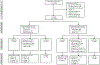
Description:OBJECTIVE: ; To describe syphilis treatment status and prenatal care among people with syphilis during pregnancy to identify missed opportunities for preventing congenital syphilis. ; METHODS: ; Six jurisdictions that participated in SET-NET (Surveillance for Emerging Threats to Pregnant People and Infants Network) conducted enhanced surveillance among people with syphilis during pregnancy based on case investigations, medical records, and linkage of laboratory data with vital records. Unadjusted risk ratios (RRs) were used to compare demographic and clinical characteristics by syphilis stage (primary, secondary, or early latent vs late latent or unknown) and treatment status during pregnancy (adequate per the Centers for Disease Control and Prevention’s “Sexually Transmitted Infections Treatment Guidelines, 2021” vs inadequate or not treated) and by prenatal care (timely: at least 30 days before pregnancy outcome; nontimely: less than 30 days before pregnancy outcome; and no prenatal care). ; RESULTS: ; As of September 15, 2023, of 1,476 people with syphilis during pregnancy, 855 (57.9%) were adequately treated and 621 (42.1%) were inadequately treated or not treated. Eighty-two percent of the cohort received timely prenatal care. Although those with nontimely or no prenatal care were more likely to receive inadequate or no treatment (RR 2.50, 95% CI, 2.17–2.88 and RR 2.73, 95% CI, 2.47–3.02, respectively), 32.1% of those with timely prenatal care were inadequately or not treated. Those with reported substance use or a history of homelessness were nearly twice as likely to receive inadequate or no treatment (RR 2.04, 95% CI, 1.82–2.28 and RR 1.83, 95% CI, 1.58–2.13, respectively). ; CONCLUSION: ; In this surveillance cohort, people without timely prenatal care had the highest risk for syphilis treatment inadequacy; however, almost a third of people who received timely prenatal care were not adequately treated. These findings underscore gaps in syphilis screening and treatment for pregnant people, especially those experiencing substance use and homelessness, and the need for systems-based interventions, such as treatment outside of traditional prenatal care settings.
-
Subjects:
-
Source:Obstet Gynecol. 143(6):718-729
-
Pubmed ID:38626449
-
Pubmed Central ID:PMC11337980
-
Document Type:
-
Funding:
-
Volume:143
-
Issue:6
-
Download URL:
-
File Type:
 [PDF - 973.22 KB]
 -
Collection(s):
-
Main Document Checksum:urn:sha-512:392cf645122dea03eab68551f988a66b42ad79036fdf6ee83758505c1bf24dd74d4a35ea15c46a229122f534c42230777e110bebf866860cdc7a5c7146786e0b
Supporting Files


File Language:
English
 Was this page helpful?
 Found an issue?


CDC STACKS serves as an archival repository of CDC-published products including
scientific findings, journal articles, guidelines, recommendations, or other public health information authored or
co-authored by CDC or funded partners.
As a repository, CDC STACKS retains documents in their original published format to ensure public access to scientific information.
As a repository, CDC STACKS retains documents in their original published format to ensure public access to scientific information.
You May Also Like
COLLECTION
CDC Public Access