



Population dynamics of the Lyme disease bacterium, Borrelia burgdorferi, during rapid range expansion in New York State
Supporting Files

-
8 2024 ; 8-2024
-
Available in CDC Stacks on 2025-08-01T00:00:00Z
File Language:
English
Details
-
Alternative Title:Mol Ecol
-
Personal Author:Oppler, Zachary J. ; Prusinski, Melissa A. ; O’Keeffe, Kayleigh R. ; Pearson, Patrick ; Rich, Stephen M. ; Falco, Richard C. ; Vinci, Vanessa ; O’Connor, Collin ; Haight, Jamie ; Backenson, P. Bryon ; Brisson, Dustin
-
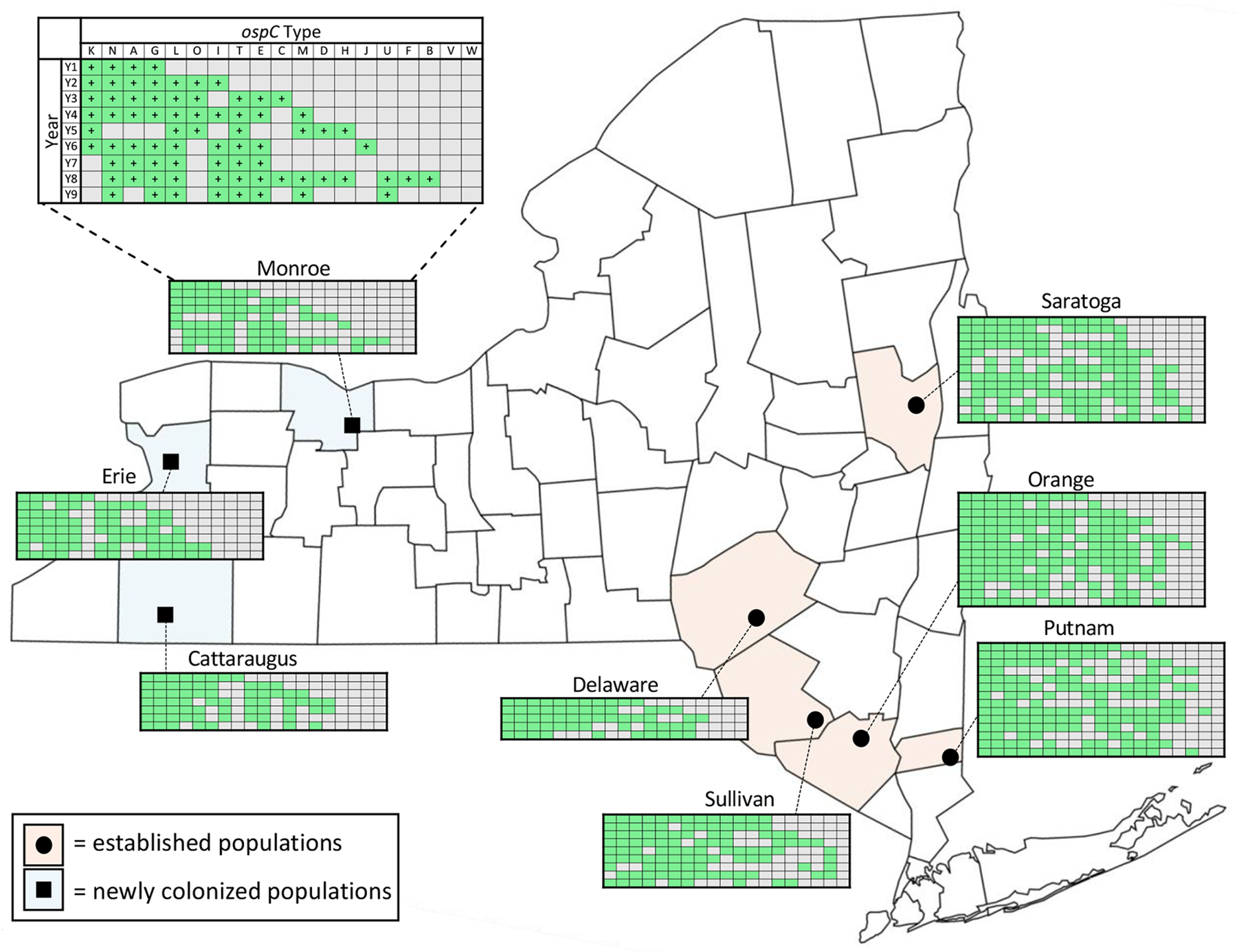
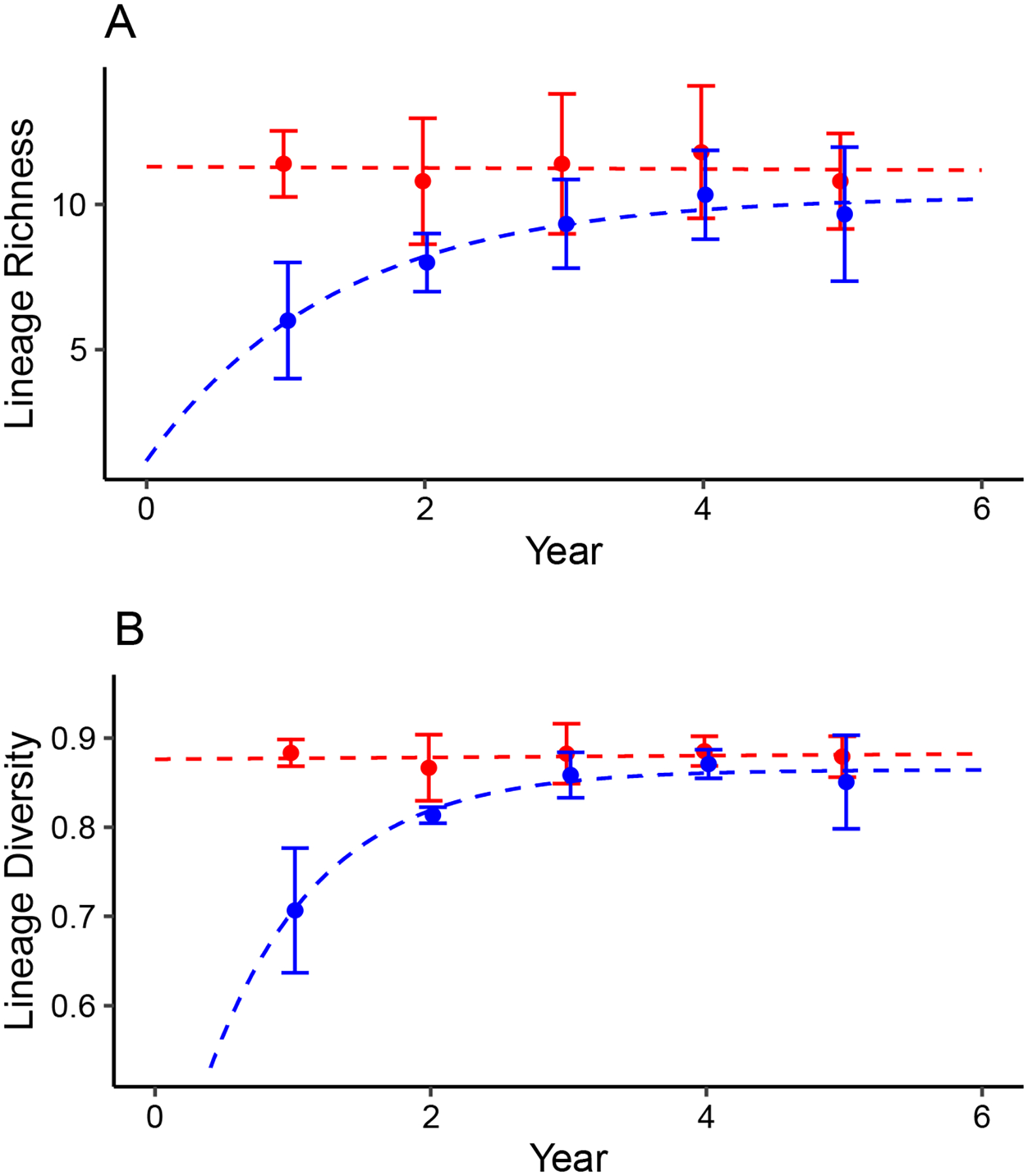
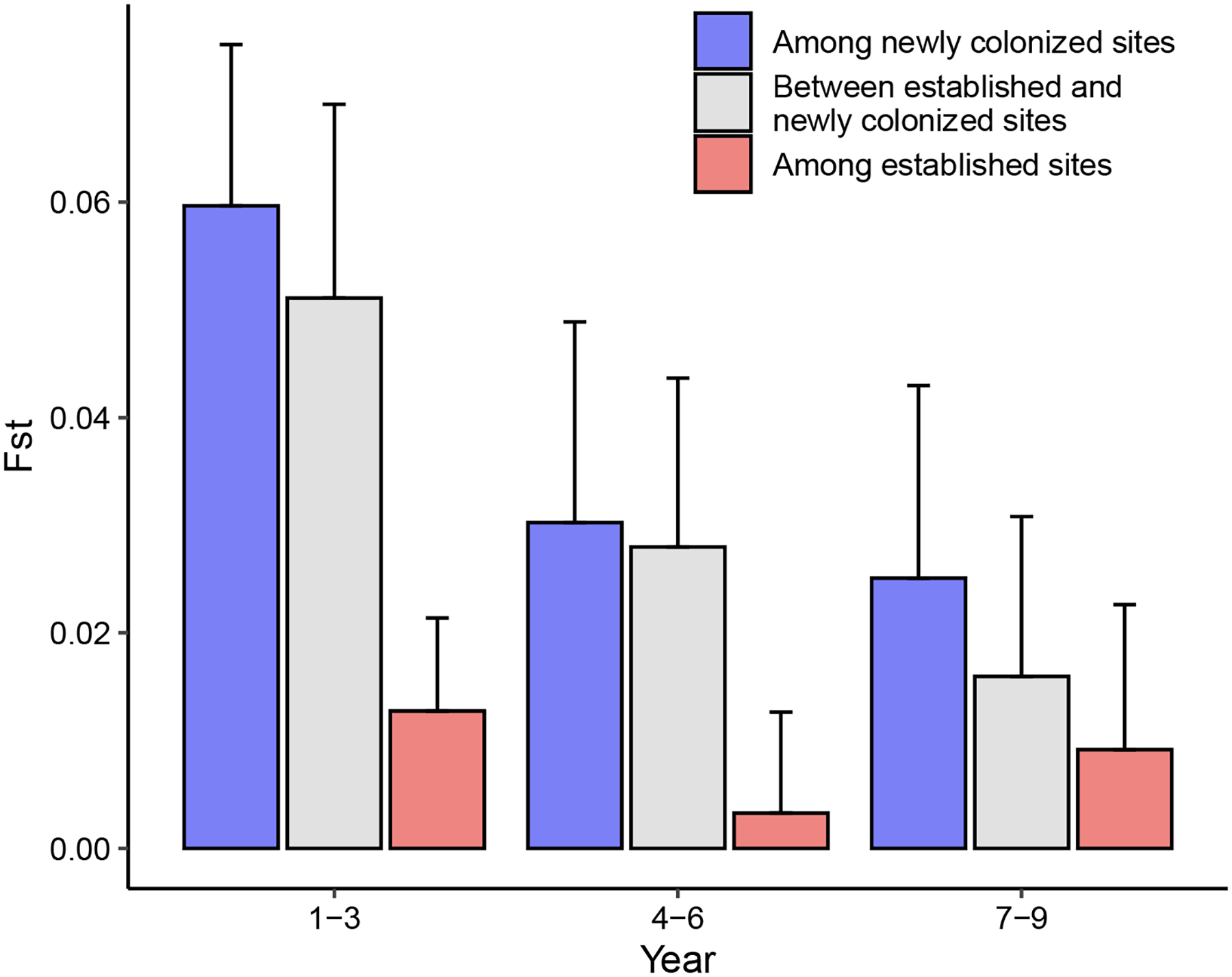
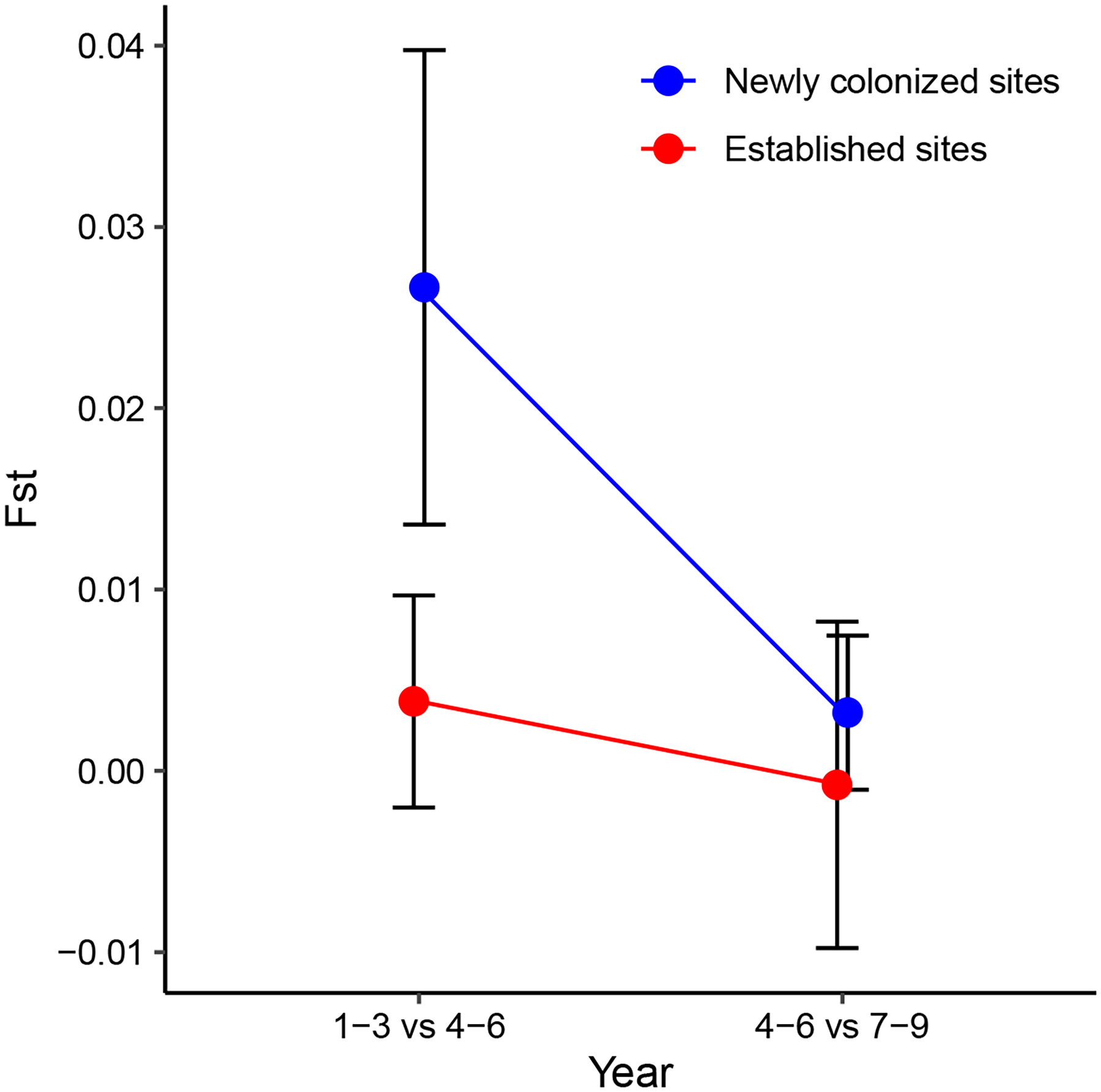
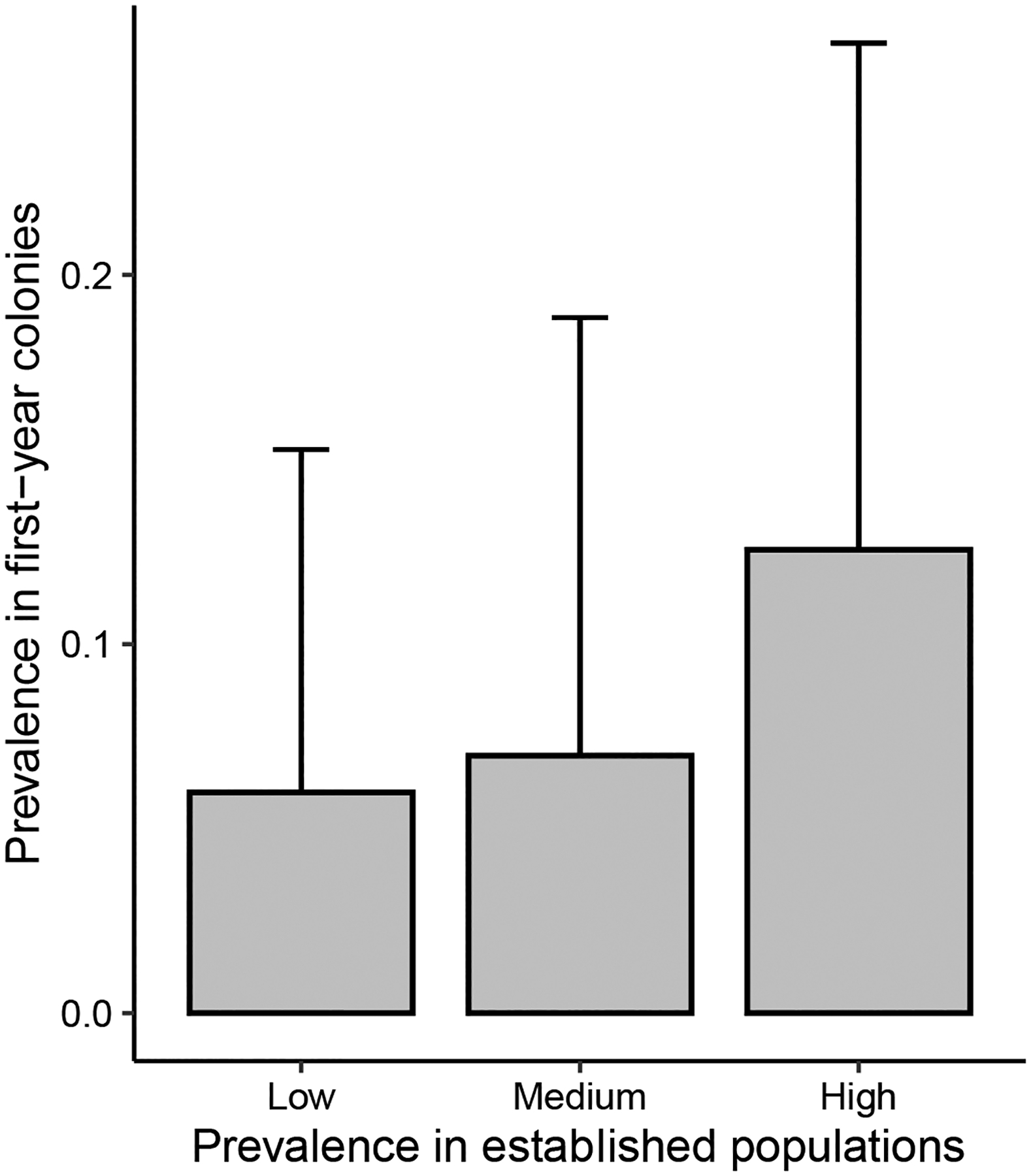
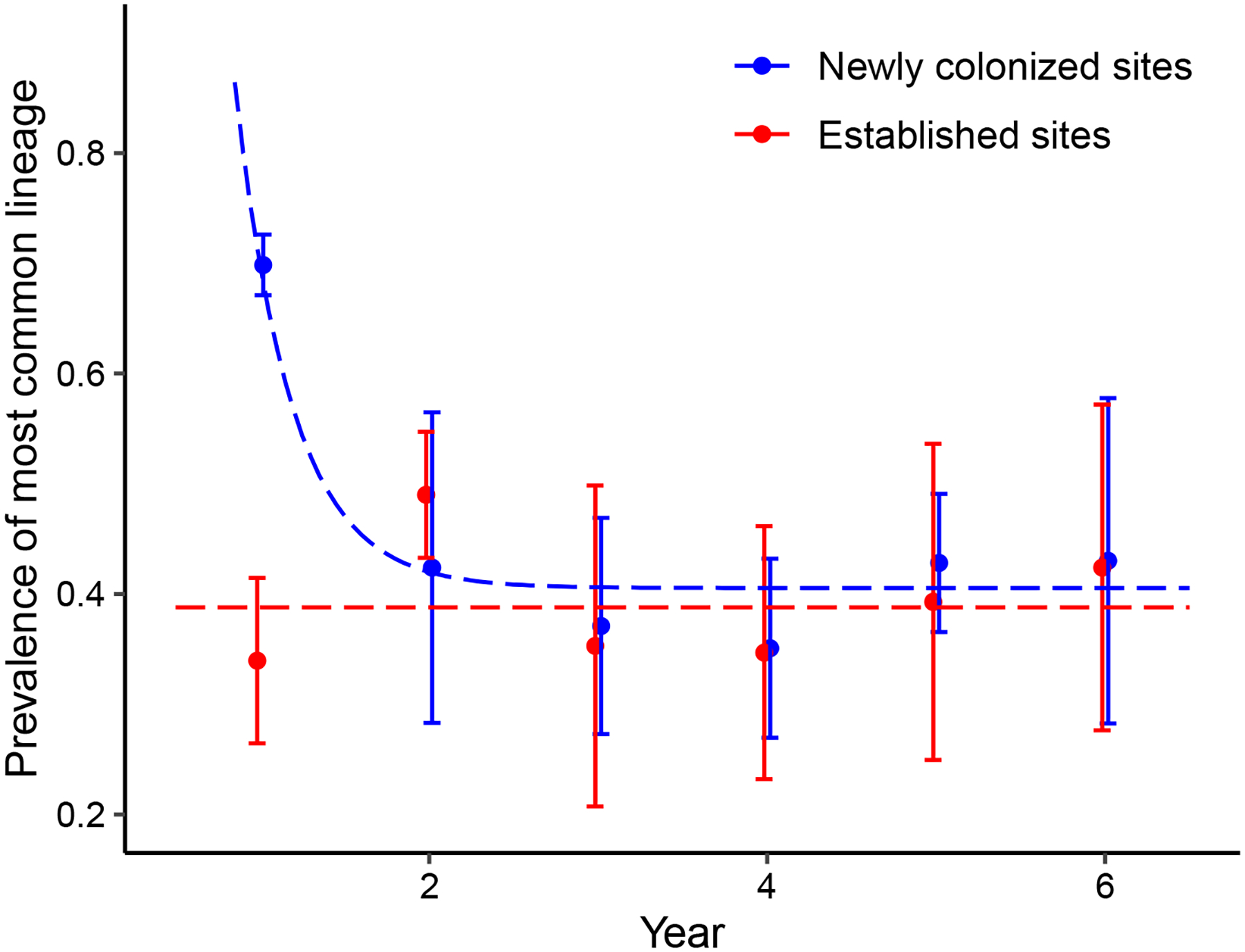
Description:Recent changes in climate and human land-use have resulted in alterations of the geographic range of many species, including human pathogens. Geographic range expansion and population growth of human pathogens increase human disease risk. Relatively little empirical work has investigated the impact of range changes on within-population variability, a contributor to both colonization success and adaptive potential, during the precise time in which populations are colonized. This is likely due to the difficulties of collecting appropriate natural samples during the dynamic phase of migration and colonization. We systematically collected blacklegged ticks (Ixodes scapularis) across New York State (NY), USA, between 2006 and 2019, a time period coinciding with a rapid range expansion of ticks and their associated pathogens including Borrelia burgdorferi, the etiological agent of Lyme disease. These samples provide a unique opportunity to investigate the population dynamics of human pathogens as they expand into novel territory. We observed that founder effects were short-lived, as gene flow from long-established populations brought almost all B. burgdorferi lineages to newly colonized populations within just a few years of colonization. By 7 years post-colonization, B. burgdorferi lineage frequency distributions were indistinguishable from long-established sites, indicating that local B. burgdorferi populations experience similar selective pressures despite geographic separation. The B. burgdorferi lineage dynamics elucidate the processes underlying the range expansion and demonstrate that migration into, and selection within, newly colonized sites operate on different time scales.
-
Subjects:
-
Keywords:
-
Source:Mol Ecol. 33(16):e17480
-
Pubmed ID:39034651
-
Pubmed Central ID:PMC11303095
-
Document Type:
-
Funding:T32-AI007532/National Institute of Allergy and Infectious Diseases/ ; R21 AI137433/AI/NIAID NIH HHSUnited States/ ; T32 AI007532/AI/NIAID NIH HHSUnited States/ ; U01CK000509/CC/CDC HHSUnited States/ ; AI137433/National Institute of Allergy and Infectious Diseases/ ; AI097137/National Institute of Allergy and Infectious Diseases/ ; R01 AI142572/AI/NIAID NIH HHSUnited States/ ; U01 CK000509/CK/NCEZID CDC HHSUnited States/ ; AI142572/National Institute of Allergy and Infectious Diseases/ ; R01 AI097137/AI/NIAID NIH HHSUnited States/
-
Volume:33
-
Issue:16
-
Download URL:
-
File Type:
 [PDF - 1.33 MB]
 -
Collection(s):
-
Main Document Checksum:urn:sha-512:ddd9aafc5a834bf21d6d26f6df8138e1369eb5ea6341aa0908217427de23565506419ce21e4bbdd3992419a8aefc020ba6e82329f1542ddedcc90d1d1149ef91
Supporting Files


File Language:
English
 Was this page helpful?
 Found an issue?

CDC STACKS serves as an archival repository of CDC-published products including
scientific findings, journal articles, guidelines, recommendations, or other public health information authored or
co-authored by CDC or funded partners.
As a repository, CDC STACKS retains documents in their original published format to ensure public access to scientific information.
As a repository, CDC STACKS retains documents in their original published format to ensure public access to scientific information.
You May Also Like
COLLECTION
CDC Public Access