



Correlates of cervical cancer screening among women living with HIV in Kenya: A cross-sectional study
Supporting Files

-
1 2022 ; 1-2022
-
Available in CDC Stacks on August 05, 2024, 12:00 AM

File Language:
English
Details
-
Alternative Title:Int J Gynaecol Obstet
-
Personal Author:
-
Description:Objective:
Cervical cancer is the leading cause of cancer-related death among Kenyan women. It is important to identify how demographics and knowledge of cervical cancer are associated with screening to determine best practices for targeted screening efforts.
Methods:
We conducted a sub-analysis of women who were asked about cervical cancer from a cross-sectional study of women attending large HIV care and treatment programs across Kenya between June and September 2016.
Results:
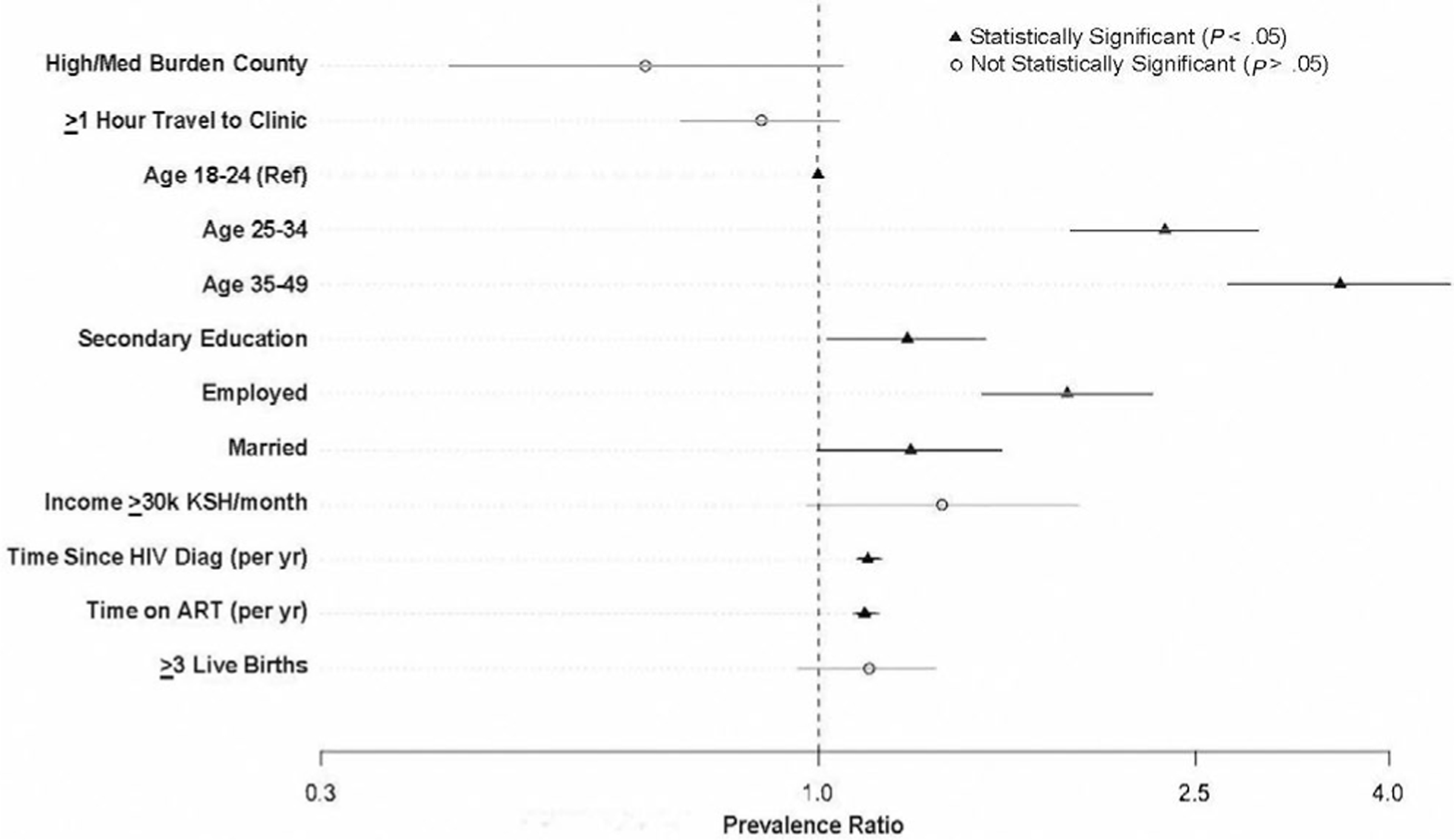
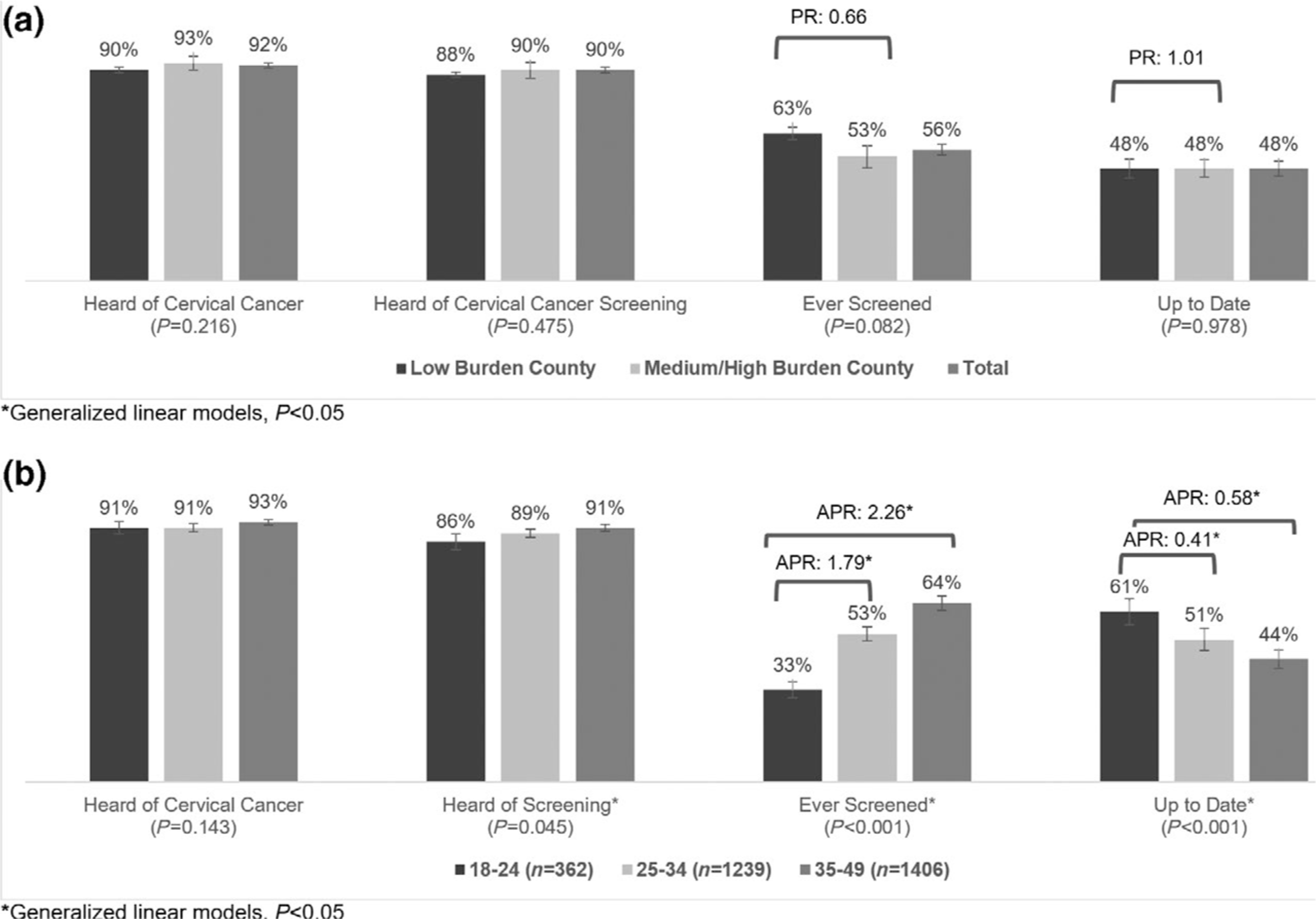
1671 of 3007 (56%) women reported ever being screened, 804 (48%) of whom were screened within the last 12 months. Prevalence of screening was highest among women who were older (adjusted prevalence ratio APR age 35–49 vs. 18–24: 2.26, 95% CI: 1.68–3.05, P < 0.001), employed (APR: 1.55, 95% CI: 1.24–1.93, P < 0.001), married (APR: 1.27, 95% CI: 1.01–1.59, P = 0.047), had at least secondary education (APR: 1.45, 95% CI: 1.19–1.77, P < 0.001), with longer time since HIV diagnosis (APR: 1.09/year average increase, 95% CI: 1.04–1.13, P < 0.001). 36% knew cervical cancer is treatable.
Conclusion:
Characteristics linked to social or economic capital are correlated with cervical cancer screening. Integrating cervical cancer screening into HIV care and educating patients on the need for annual screening and potential treatment are important strategies for increasing screening uptake. -
Subjects:
-
Keywords:
-
Source:Int J Gynaecol Obstet. 156(1):151-158
-
Pubmed ID:33782971
-
Pubmed Central ID:PMC11298692
-
Document Type:
-
Funding:P30 AI027757/GF/NIH HHSUnited States/ ; UW/Fred Hutch Center for AIDS Research/ ; University of Washington (UW) Global Center for Integrated Health of Women, Adolescents, and Children (Global WACh)/ ; K01 AI116298/GF/NIH HHSUnited States/ ; US Centers for Disease Control and Prevention (CDC)/ ; K01 AI116298/AI/NIAID NIH HHSUnited States/ ; University of Washington/ ; Division of Global HIV and TB (DGHT)/ ; CC999999/ImCDC/Intramural CDC HHSUnited States/ ; U2GPS002047/U.S. President's Emergency Plan for AIDS Relief/ ; U2G PS002047/PS/NCHHSTP CDC HHSUnited States/ ; P2C HD042828/HD/NICHD NIH HHSUnited States/ ; National Institute for Allergy and Infectious Diseases/ ; P30 AI027757/AI/NIAID NIH HHSUnited States/
-
Volume:156
-
Issue:1
-
Download URL:
-
File Type:
 [PDF - 627.14 KB]
 -
Collection(s):
-
Main Document Checksum:urn:sha-512:d80ab459d93967e4bfa9b0fabd816be6080e4e6f5162e5aad5f9dd6a9ca4c0ee6b9567af4335b42d7cef94496808773b960b5b5edb046f0dd48c8bdd54311e87
Supporting Files


File Language:
English
 Was this page helpful?
 Found an issue?

CDC STACKS serves as an archival repository of CDC-published products including
scientific findings, journal articles, guidelines, recommendations, or other public health information authored or
co-authored by CDC or funded partners.
As a repository, CDC STACKS retains documents in their original published format to ensure public access to scientific information.
As a repository, CDC STACKS retains documents in their original published format to ensure public access to scientific information.
You May Also Like
COLLECTION
CDC Public Access