


Nondaily Smokers’ Characteristics and Likelihood of Prenatal Cessation and Postpartum Relapse
Supporting Files

-
7 01 2017
-
File Language:
English
Details
-
Alternative Title:Nicotine Tob Res
-
Personal Author:
-
Description:Introduction:
This study aimed to calculate the prevalence of pre-pregnancy nondaily smoking (<1 cigarette/day), risk factors, and report of prenatal provider smoking education; and assess the likelihood of prenatal cessation and postpartum relapse for nondaily smokers.
Methods:
We analyzed data from 2009 to 2011 among women with live-born infants participating in the Pregnancy Risk Assessment Monitoring System. We compared characteristics of pre-pregnancy daily smokers (≥1 cigarette/day), nondaily smokers, and nonsmokers (chi-square adjusted p < .025). Between nondaily and daily smokers, we compared proportions of prenatal cessation, postpartum relapse (average 4 months postpartum), and reported provider education. Multivariable logistic regression calculated adjusted prevalence ratios (APR) for prenatal cessation among pre-pregnancy smokers (n = 27 360) and postpartum relapse among quitters (n = 13 577).
Results:
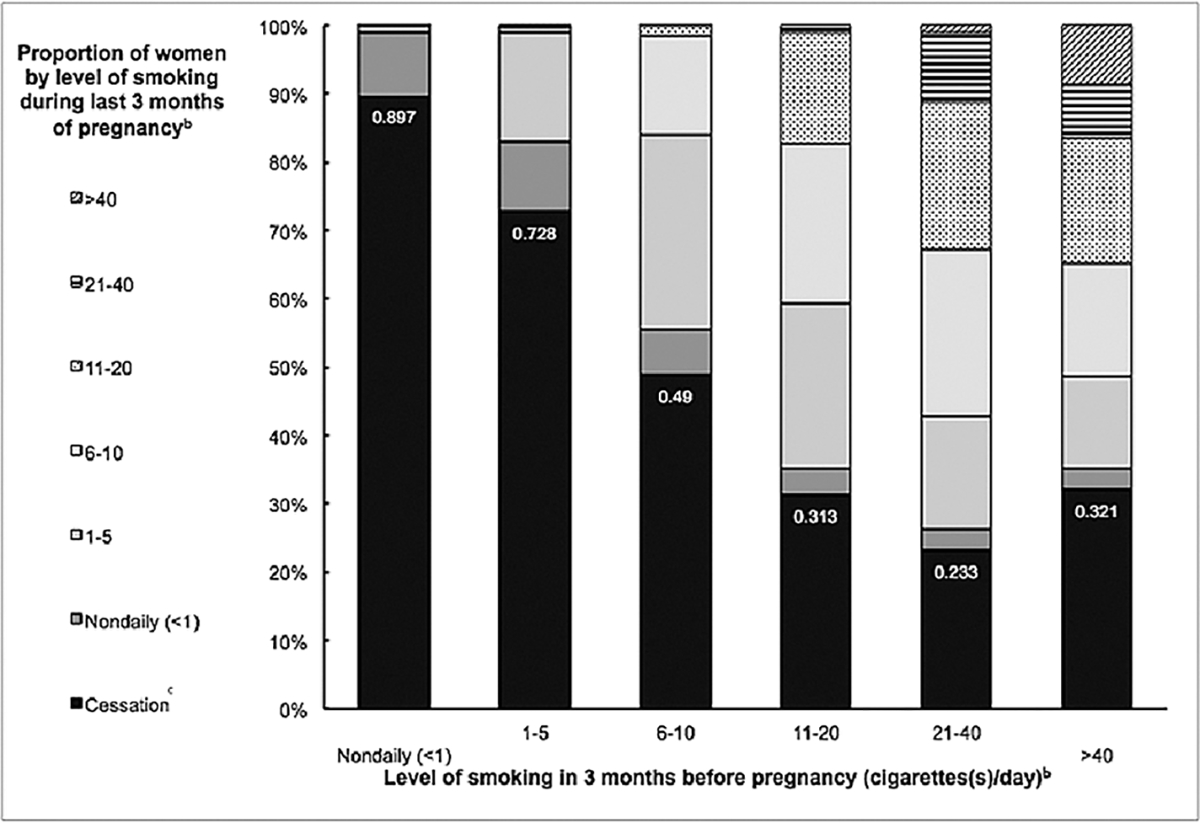
Nondaily smokers (11% of smokers) were more similar to nonsmokers and differed from daily smokers on characteristics examined (p ≤ .001 for all). Fewer nondaily smokers reported provider education than daily smokers (71.1%, 86.3%; p < .001). A higher proportion of nondaily compared to daily smokers quit during pregnancy (89.7%, 49.0%; p < .001), and a lower proportion relapsed postpartum (22.2%, 48.6%; p < .001). After adjustment, nondaily compared to daily smokers were more likely to quit (APR: 1.65; 95% confidence interval [CI]: 1.58–1.71) and less likely to relapse postpartum (APR: 0.55; 95% CI: 0.48–0.62).
Conclusions:
Nondaily smokers were more likely to quit smoking during pregnancy, less likely to relapse postpartum, and less likely to report provider education than daily smokers. Providers should educate all women, regardless of frequency of use, about the harms of tobacco during pregnancy, provide effective cessation interventions, and encourage women to be tobacco free postpartum and beyond.
Implication:
Nondaily smoking (<1 cigarette/day) is increasing among US smokers and carries a significant risk of disease. However, smoking patterns surrounding pregnancy among nondaily smokers are unknown. Using 2009–2011 data from the Pregnancy Risk Assessment Monitoring System, we found pre-pregnancy nondaily smokers compared to daily smokers were 65% more likely to quit smoking during pregnancy and almost half as likely to relapse postpartum. Providers should educate all women, regardless of frequency of use, about the harms of tobacco during pregnancy, provide effective cessation interventions, and encourage women to be tobacco free postpartum and beyond.
-
Subjects:
-
Source:Nicotine Tob Res. 19(7):810-816
-
Pubmed ID:27986912
-
Pubmed Central ID:PMC11261313
-
Document Type:
-
Funding:
-
Volume:19
-
Issue:7
-
Collection(s):
-
Main Document Checksum:urn:sha-512:cec0a55afb83e227c04d81c75db0523afcf71f93b3bed7c4e035c2f939839381b5b902ecc5e1382369300ede58842b7ecbf00460b07fb3fcb3881b56d82adbd9
-
Download URL:
-
File Type:
 [PDF
- 197.70 KB
]
[PDF
- 197.70 KB
]
Supporting Files


File Language:
English
ON THIS PAGE

CDC STACKS serves as an archival repository of CDC-published products including
scientific findings,
journal articles, guidelines, recommendations, or other public health information authored or
co-authored by CDC or funded partners.
As a repository, CDC STACKS retains documents in their original published format to ensure public access to scientific information.
As a repository, CDC STACKS retains documents in their original published format to ensure public access to scientific information.
You May Also Like
COLLECTION
CDC Public Access