



Determination of Mercury with a Miniature Sensor for Point-of-care Testing
Supporting Files

-
3 2023 ; 3-2023
-
Available in CDC Stacks on 2024-06-18T00:00:00Z
File Language:
English
Details
-
Alternative Title:Electroanalysis
-
Personal Author:
-
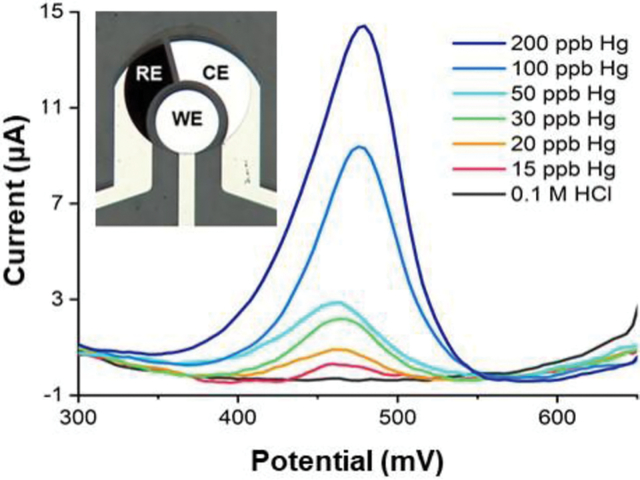
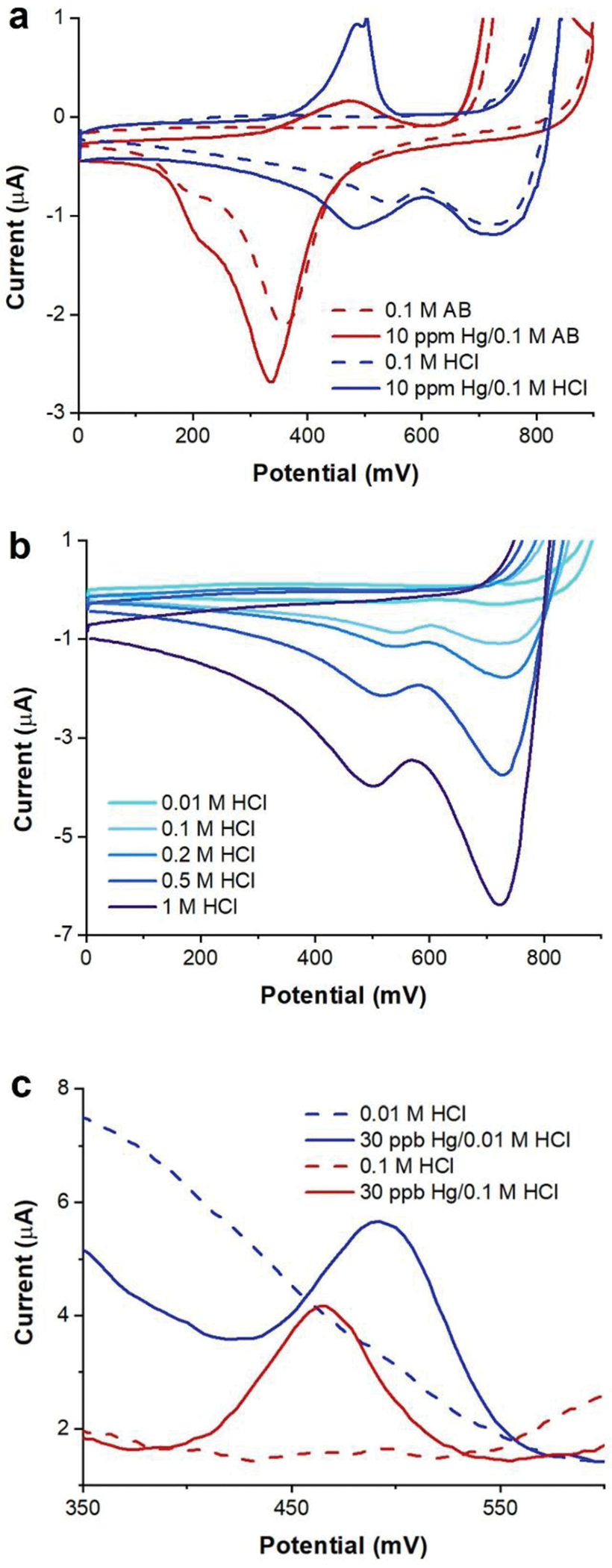
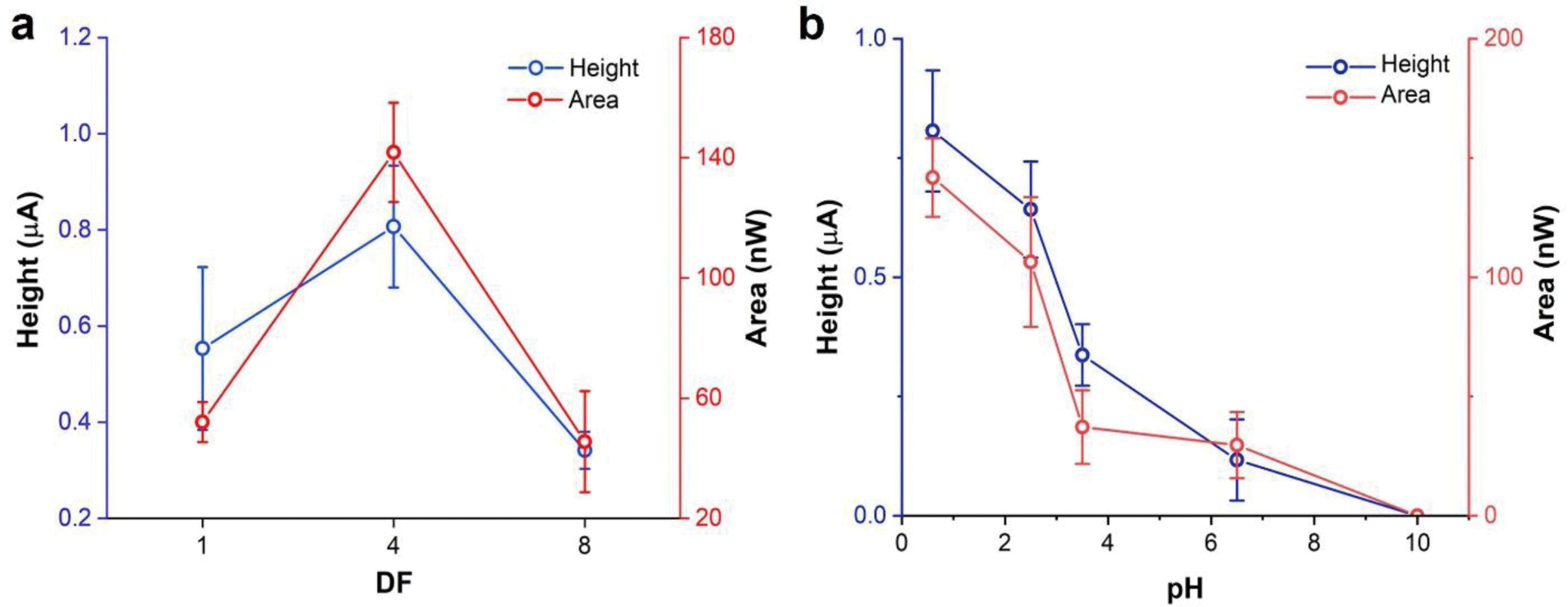
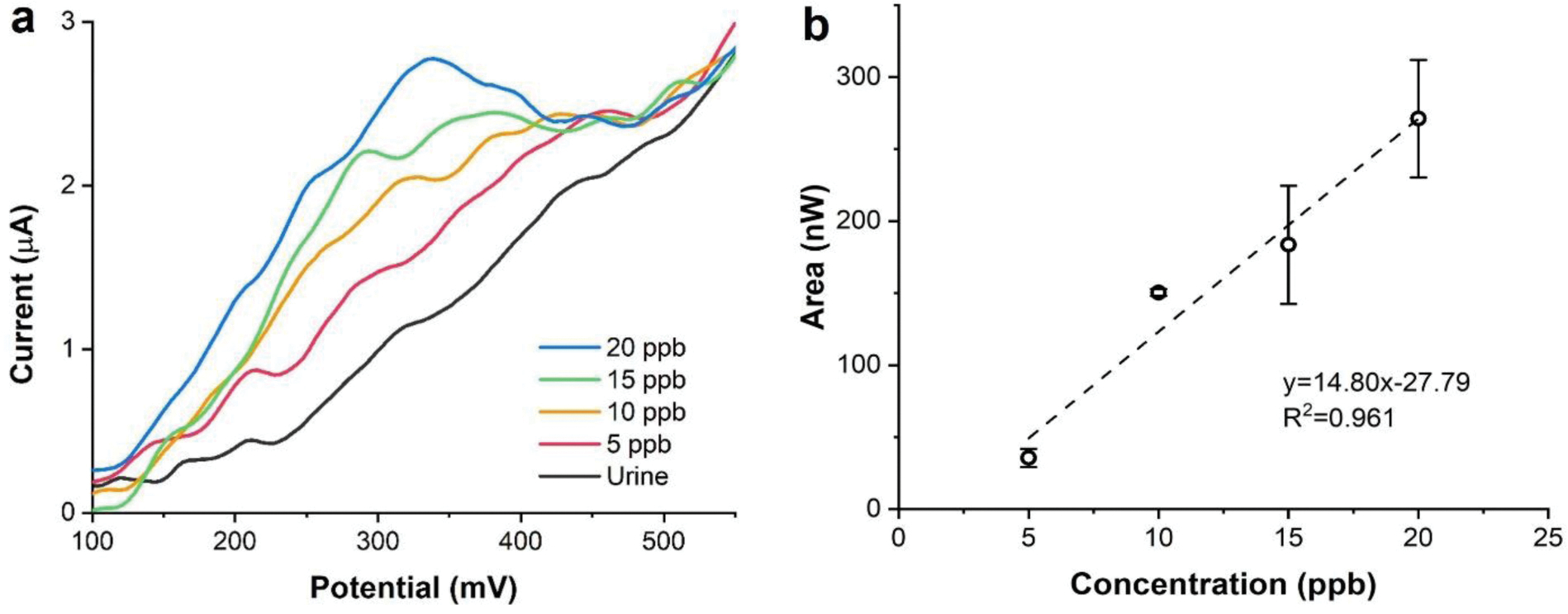
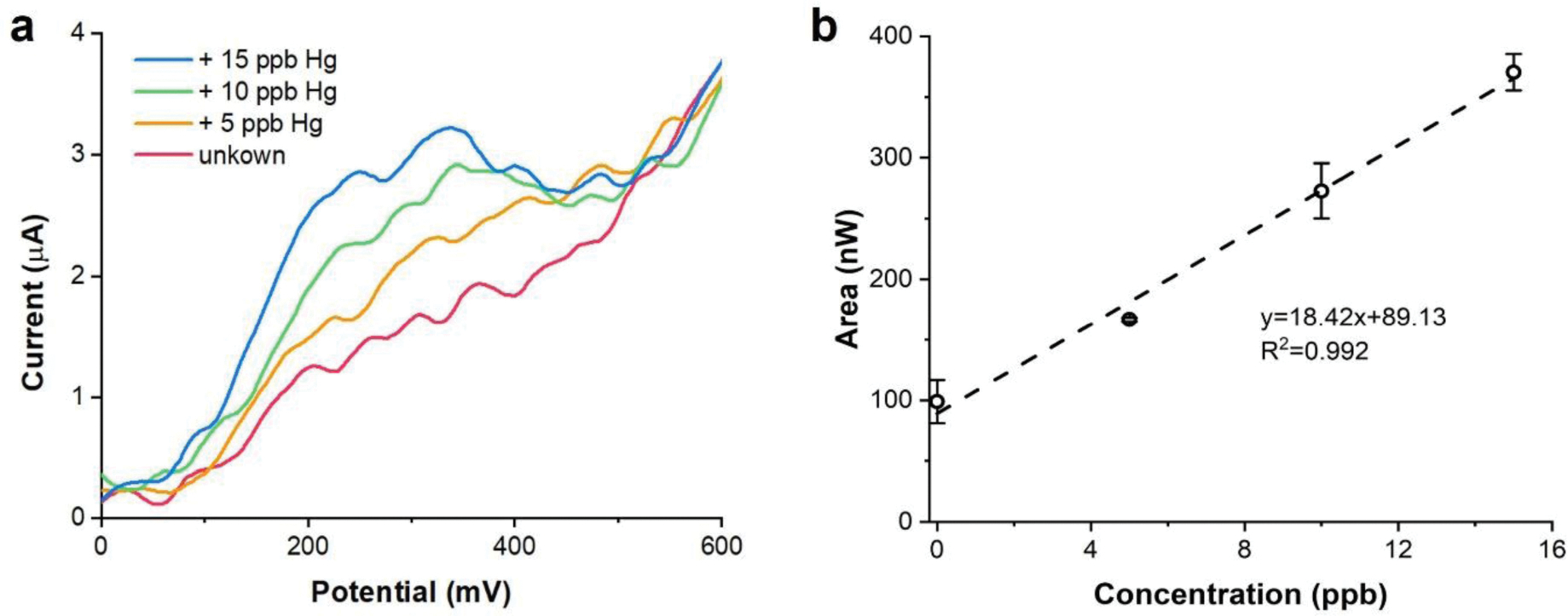
Description:In developing countries, subsistence gold mining entails mixing metallic mercury with crushed sediments to extract gold. In this approach, the gold-mercury amalgam is heated to evaporate mercury and obtain gold. Thus, the highly volatile mercury can be absorbed through inhalation, resulting in adverse health effects. Urinalysis can be used to detect mercury, which is excreted in urine and feces, and correlate exposure with toxic effects. The current gold standard analytical methods are based on fluorescence or inductively coupled plasma mass spectrometry methods, but are expensive, time consuming, and are not easily accessible in countries where testing is needed. In this work, we report on a miniature electrochemical sensor that can rapidly detect mercury in urine at levels well below the US Biological Exposure Index (BEI) limit of 50 ppb (μg/L). The sensor is based on a thin-film gold electrode and anodic stripping voltammetry electroanalytical approach. The sensor successfully detected mercury at trace levels in urine, with a limit of detection of ~15 ppb Hg in the linear range of 20-80 ppb. With the low-cost disposable sensors and portable instrumentation, it is well suited for point-of-care applications.
-
Keywords:
-
Source:Electroanalysis. 35(3)
-
Pubmed ID:38894713
-
Pubmed Central ID:PMC11185419
-
Document Type:
-
Funding:
-
Volume:35
-
Issue:3
-
Download URL:
-
File Type:
 [PDF - 1.55 MB]
 -
Collection(s):
-
Main Document Checksum:urn:sha256:0645f0dd03f18481d26a43195bcc3b16113e64163eb59c55299a992cce72f775
Supporting Files


File Language:
English
 Was this page helpful?
 Found an issue?


CDC STACKS serves as an archival repository of CDC-published products including
scientific findings, journal articles, guidelines, recommendations, or other public health information authored or
co-authored by CDC or funded partners.
As a repository, CDC STACKS retains documents in their original published format to ensure public access to scientific information.
As a repository, CDC STACKS retains documents in their original published format to ensure public access to scientific information.
You May Also Like
COLLECTION
CDC Public Access