


Impacts of Initial Prescription Length and Prescribing Limits on Risk of Prolonged Postsurgical Opioid Use
Supporting Files

-
1 01 2022
-
File Language:
English
Details
-
Alternative Title:Med Care
-
Personal Author:
-
Description:Background:
In response to concerns about opioid addiction following surgery, many states have implemented laws capping the days supplied for initial postoperative prescriptions. However, few studies have examined changes in risk of prolonged opioid use associated with the initial amount prescribed.
Objective:
To estimate the risk of prolonged opioid use associated with length of initial opioid prescribed and the potential impact of prescribing limits.
Research Design:
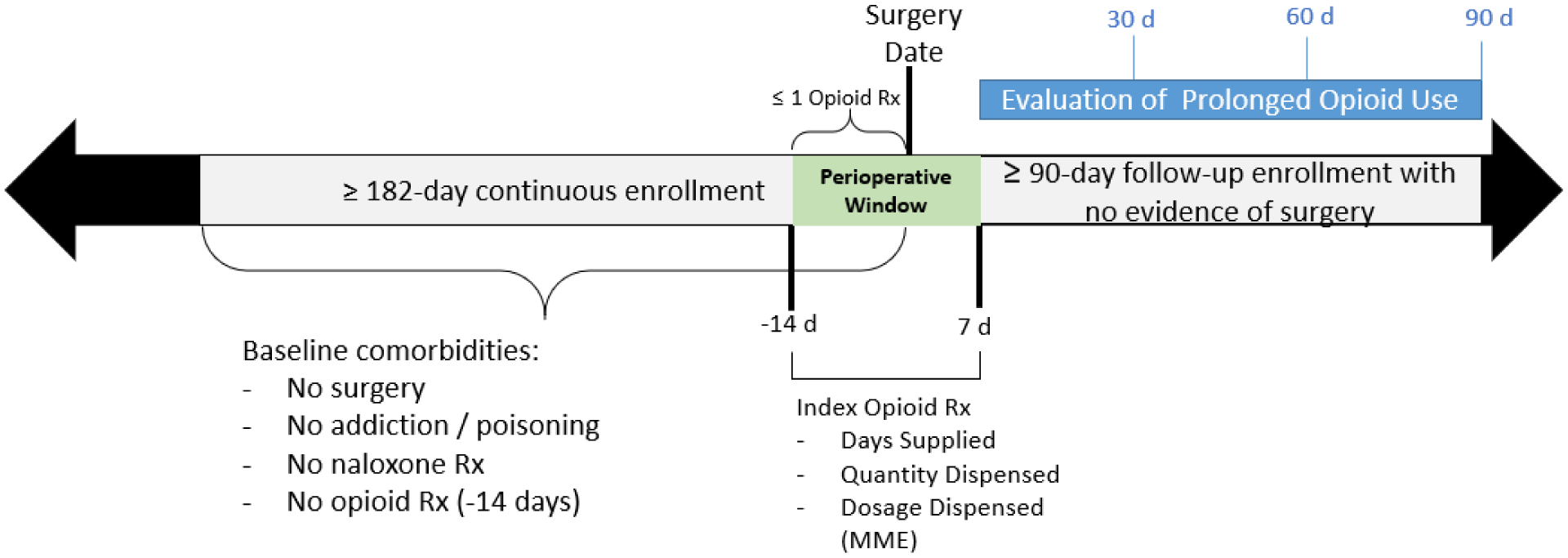
Using Medicare insurance claims (2007 – 2017) we identified opioid-naïve adults undergoing surgery. Using g-computation methods with logistic regression models, we estimated the risk of prolonged opioid use (≥1 opioid prescription dispensed in 3 consecutive 30-day windows following surgery) associated with varying initial number of days supplied. We then estimate the potential reduction in cases of prolonged opioid use associated with varying prescribing limits.
Results:
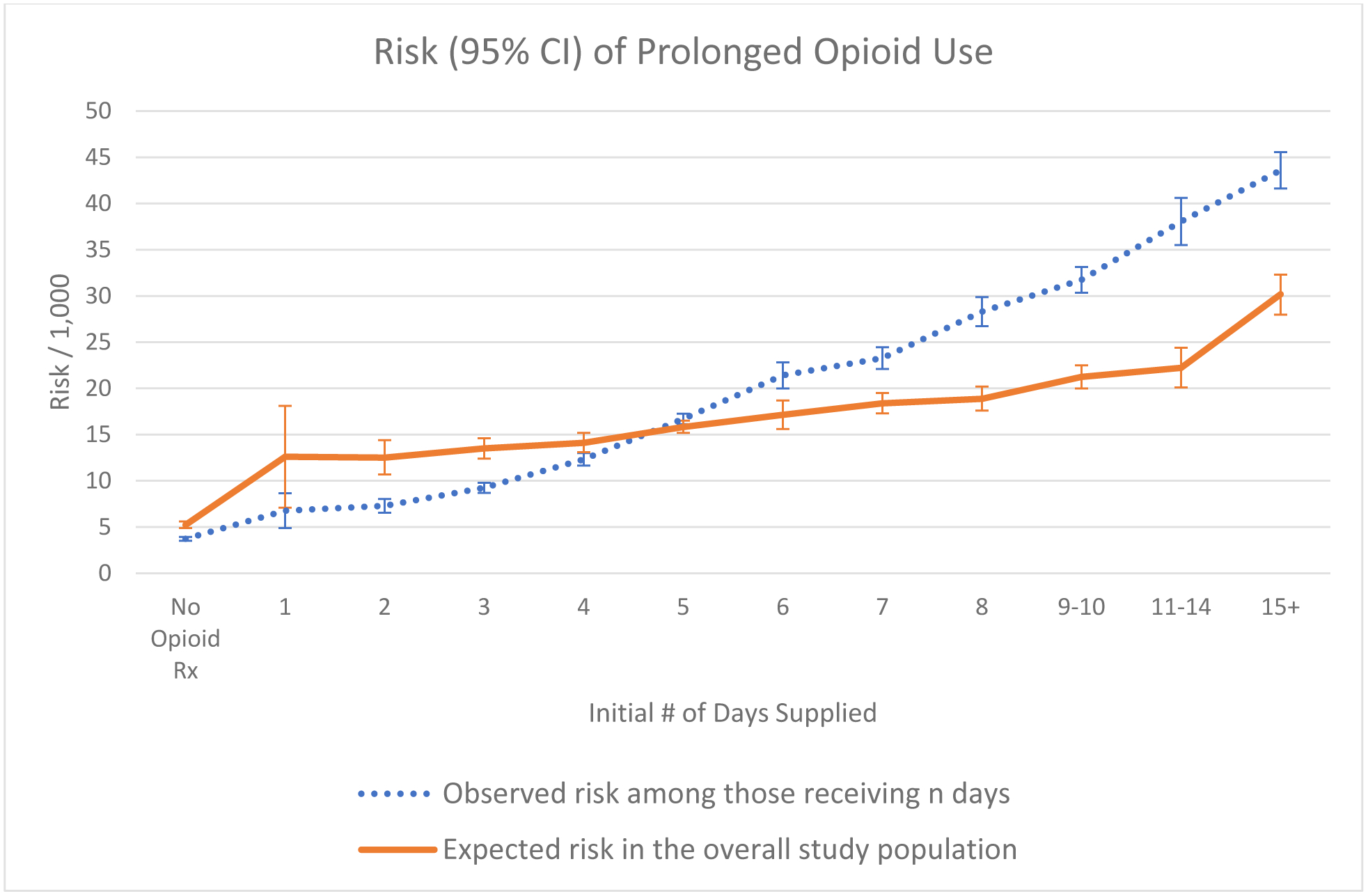
We identified 1,060,596 opioid-naïve surgical patients. Among the 70.0% who received an opioid for postoperative pain, 1.9% had prolonged opioid use. The risk of prolonged use increased from 0.7% (1 day supply) to 4.4% (15+ days). We estimated that a prescribing limit of 4 days would be associated with a risk reduction of 4.84 (3.59,6.09) per thousand patients and would be associated with 2,255 cases of prolonged use potentially avoided. The commonly used day supply limit of 7 would be associated with a smaller reduction in risk (aRD=2.04 [−0.17,4.25] per thousand).
Conclusions:
Risk of prolonged opioid use following surgery increased monotonically with increasing prescription duration. Common prescribing maximums based on days supplied may impact many patients but are associated with relatively low numbers of reduced cases of prolonged use. Any prescribing limits need to be weighed against the need for adequate pain management.
-
Subjects:
-
Source:Med Care. 60(1):75-82
-
Pubmed ID:34812786
-
Pubmed Central ID:PMC8900903
-
Document Type:
-
Funding:R40MC29455-01-00/HRSA/HRSA HHSUnited States/ ; R01 HL118255/HL/NHLBI NIH HHSUnited States/ ; U01 DP006369/DP/NCCDPHP CDC HHSUnited States/ ; UL1 TR002489/TR/NCATS NIH HHSUnited States/ ; HHSF223201810183C/FD/FDA HHSUnited States/ ; R36 DA045885/DA/NIDA NIH HHSUnited States/ ; 75F40119C10115/FD/FDA HHSUnited States/ ; T32 HS000032/HS/AHRQ HHSUnited States/ ; R36 DA04588501/DA/NIDA NIH HHSUnited States/ ; U01DP006369/ACL/ACL HHSUnited States/ ; R01 MD011680/MD/NIMHD NIH HHSUnited States/ ; R01 AG056479/AG/NIA NIH HHSUnited States/ ; 1U54 TR002255/TR/NCATS NIH HHSUnited States/
-
Volume:60
-
Issue:1
-
Collection(s):
-
Main Document Checksum:urn:sha256:9fc58b2a347b8303f97260eae142f5271463a006f2956161f40f52801b9e7b81
-
Download URL:
-
File Type:
 [PDF
- 256.28 KB
]
[PDF
- 256.28 KB
]
Supporting Files


File Language:
English
ON THIS PAGE

CDC STACKS serves as an archival repository of CDC-published products including
scientific findings,
journal articles, guidelines, recommendations, or other public health information authored or
co-authored by CDC or funded partners.
As a repository, CDC STACKS retains documents in their original published format to ensure public access to scientific information.
As a repository, CDC STACKS retains documents in their original published format to ensure public access to scientific information.
You May Also Like
COLLECTION
CDC Public Access