



Discrepancies in Local, State, and National Alcohol Outlet Listings: Implications for Research and Interventions
Supporting Files

-
2020 ; 2020
-
Available in CDC Stacks on 2021-09-11T00:00:00Z
File Language:
English
Details
-
Alternative Title:Subst Use Misuse
-
Personal Author:
-
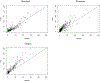
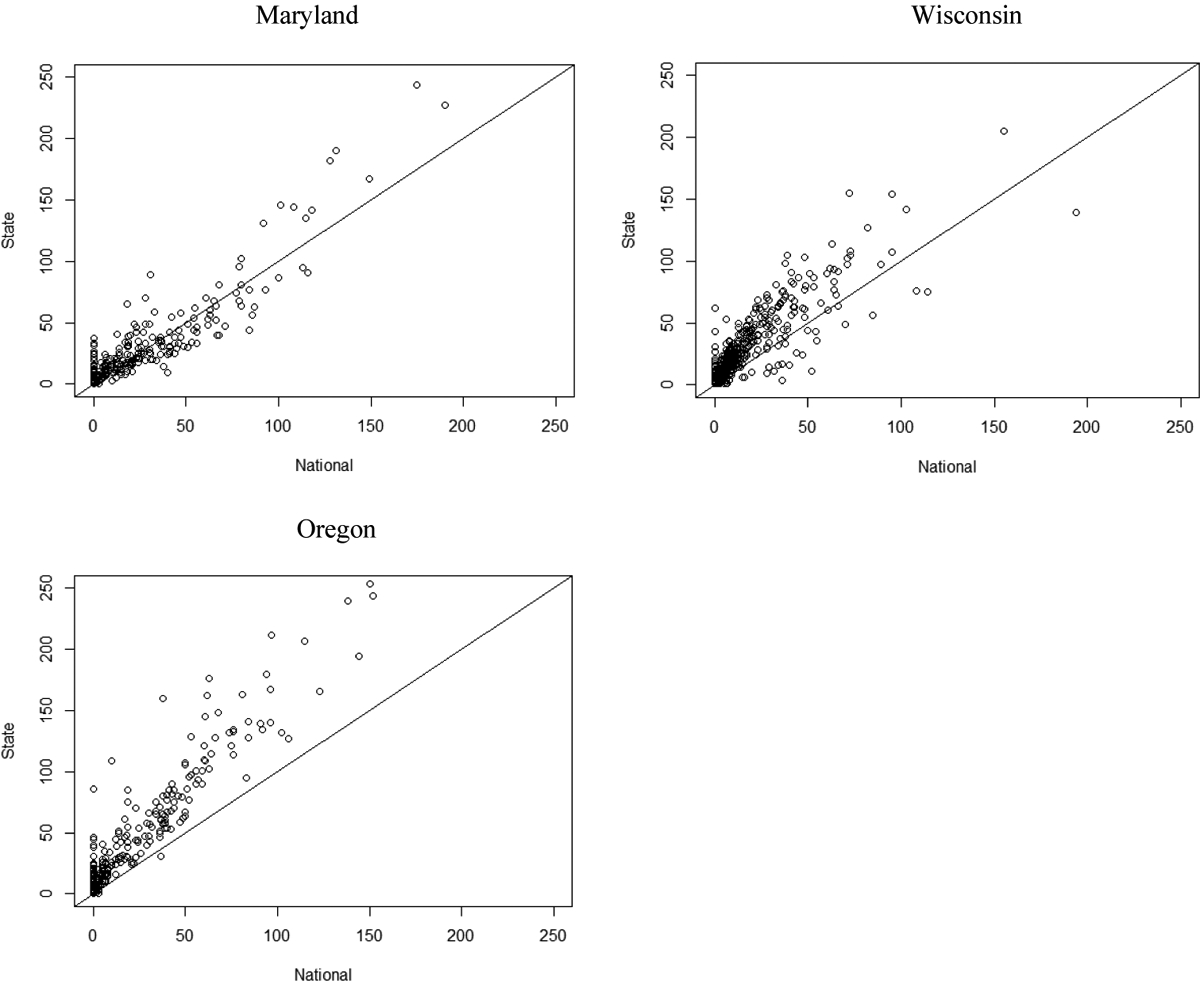
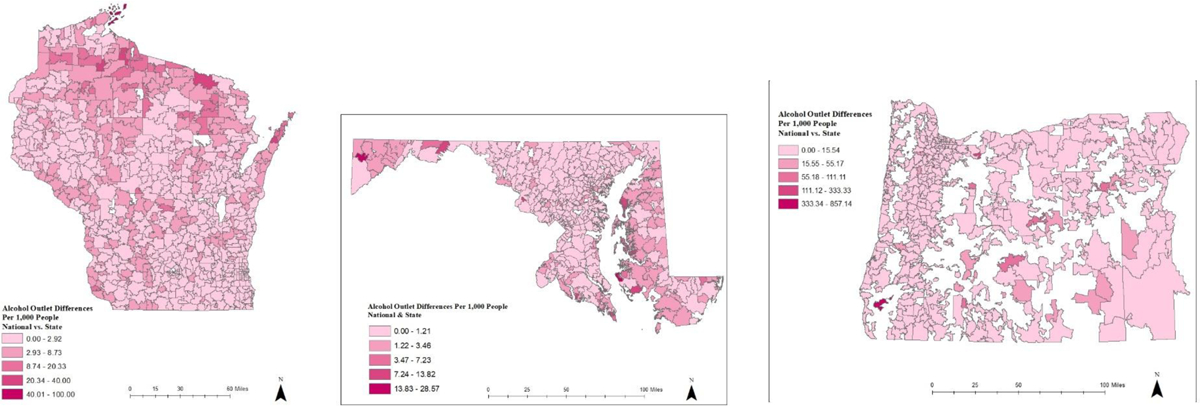
Description:Background: ; The availability of local, state, and national data on alcohol outlet density have important implications for policies and interventions aiming to reduce alcohol-related problems. High-quality data on locations of alcohol outlets is important to accurately inform community interventions and public health initiatives, but such data is often not maintained, readily available, or of sufficient quality. ; Objectives: ; This study aims to examine the discrepancies between alcohol outlet databases and how neighborhood characteristics (i.e., income, majority racial population, urbanicity) are associated with the discrepancies between databases. ; Methods: ; Data was collected from national (n=1), local (n=2), and state databases (n=3). Negative binomial regression modes were used to assess discrepancies in alcohol outlet count at the ZIP code level based on the data source. ; Results: ; The average density of alcohol outlets (per 1000 residents) ranged from 0.71 to 2.17 in Maryland, 1.65 to 5.17 in Wisconsin, and 1.09 to 1.22 in Oregon based on different sources of data. Findings suggest high income areas (>200% poverty level) have fewer discrepancies (IR = 0.775, p < 0.01), low income areas (below poverty level) have greater discrepancies (IR = 4.990, p < 0.01), and urban areas tend to have fewer discrepancies (IR = 0.378, p < 0.01) between datasets. ; Conclusion: ; Interventions and policies depend on valid and reliable data; researchers, policymakers, and local agencies need to collaborate to develop methods to maintain accurate and accessible data.
-
Subjects:
-
Keywords:
-
Source:Subst Use Misuse. 55(14):2348-2356
-
Pubmed ID:32917123
-
Pubmed Central ID:PMC7644371
-
Document Type:
-
Funding:
-
Volume:55
-
Issue:14
-
Download URL:
-
File Type:
 [PDF - 483.23 KB]
 -
Collection(s):
-
Main Document Checksum:urn:sha-512:cf22dda8a98b51340f7a12d251e01733b5f246a40b5b9c451a5f136c70e9f7cf67d47bbe27625b80c6e2e3e4c1bf32d65067c42b4591db76d33c508a8c18da33
Supporting Files


File Language:
English
 Was this page helpful?
 Found an issue?


CDC STACKS serves as an archival repository of CDC-published products including
scientific findings, journal articles, guidelines, recommendations, or other public health information authored or
co-authored by CDC or funded partners.
As a repository, CDC STACKS retains documents in their original published format to ensure public access to scientific information.
As a repository, CDC STACKS retains documents in their original published format to ensure public access to scientific information.
You May Also Like
COLLECTION
CDC Public Access