



Vestibular and oculomotor findings in neurologically-normal, non-concussed children
Supporting Files

-
2018 ; 2018
-
Available in CDC Stacks on August 16, 2018, 12:00 AM
File Language:
English
Details
-
Alternative Title:Brain Inj
-
Personal Author:
-
Description:OBJECTIVE
To determine the proportion of non-concussed, neurologically normal children with failures on a vestibular and oculomotor examination for concussion performed in an acute setting.
DESIGN
This was a cross-sectional study of subjects 6–18 years old presenting to a pediatric emergency department with non-neurologic chief complaints. The examination was administered by a pediatric emergency medicine physician, and includes assessments of dysmetria, nystagmus, smooth pursuits, saccades, gaze stability, near-point of convergence, and gait/balance testing.
RESULTS
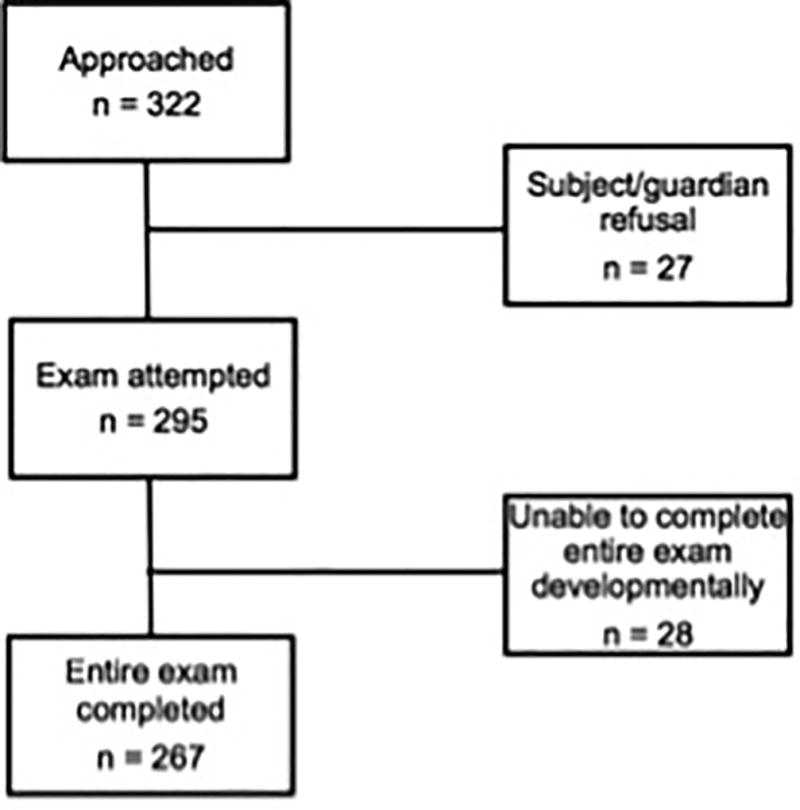
Of the 295 subjects enrolled, 24% failed at least one element of testing. 13% had >1 failed element and 5% had >2 failed elements. 29% of females and 19% of males had failed examinations. By age, 15% of subjects 6–8 years old, 32% 9–11 years, 32% 12–14 years, and 26% 15–18 years had failed examinations. Overall, 10% were unable to complete the exam due to developmental age.
CONCLUSIONS
The provider should be aware that a proportion of non-concussed children may demonstrate failure on a single element of the vestibular and oculomotor exam for. While this testing is of benefit to the acute care provider in diagnosing pediatric concussion, its utility is greatest in the context of an injury history with acute onset of concussion symptoms. -
Subjects:
-
Source:Brain Inj. 32(6):794-799
-
Pubmed ID:29584455
-
Pubmed Central ID:PMC6094364
-
Document Type:
-
Funding:
-
Volume:32
-
Issue:6
-
Download URL:
-
File Type:
 [PDF - 143.15 KB]
 -
Collection(s):
-
Main Document Checksum:urn:sha256:4ca35abc3c74b734192d996f9e11556b7b3756423a6cbef0134e74fec2cf66a8
Supporting Files


File Language:
English
 Was this page helpful?
 Found an issue?

CDC STACKS serves as an archival repository of CDC-published products including
scientific findings, journal articles, guidelines, recommendations, or other public health information authored or
co-authored by CDC or funded partners.
As a repository, CDC STACKS retains documents in their original published format to ensure public access to scientific information.
As a repository, CDC STACKS retains documents in their original published format to ensure public access to scientific information.
You May Also Like
COLLECTION
CDC Public Access