


Clinical and Molecular Assessment in a Female with Fragile X Syndrome and Tuberous Sclerosis
Supporting Files

-
2016
-
File Language:
English
Details
-
Alternative Title:J Genet Disord Genet Rep
-
Personal Author:
-
Description:Objective
Fragile X syndrome (FXS) and tuberous sclerosis (TSC) are genetic disorders that result in intellectual disability and an increased prevalence of autism spectrum disorders (ASD). While the clinical presentation of each disorder is distinct, the molecular causes are linked to a disruption in the mTORC1 (mammalian Target of Rapamycin Complex 1) and ERK1/2 (Extracellular signal-Regulated Kinase) signaling pathways.
Methods
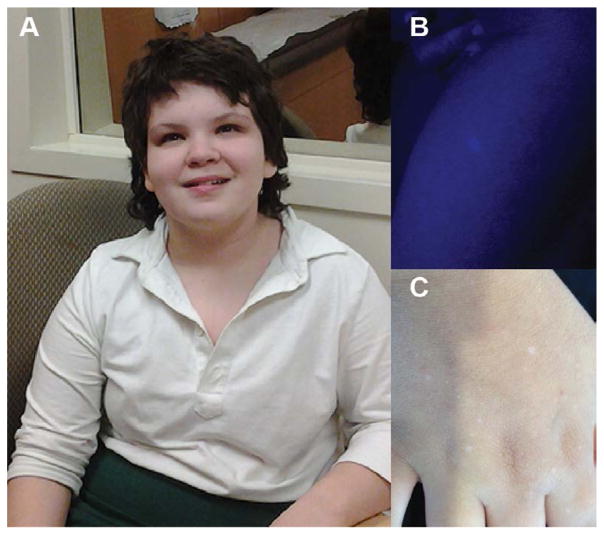
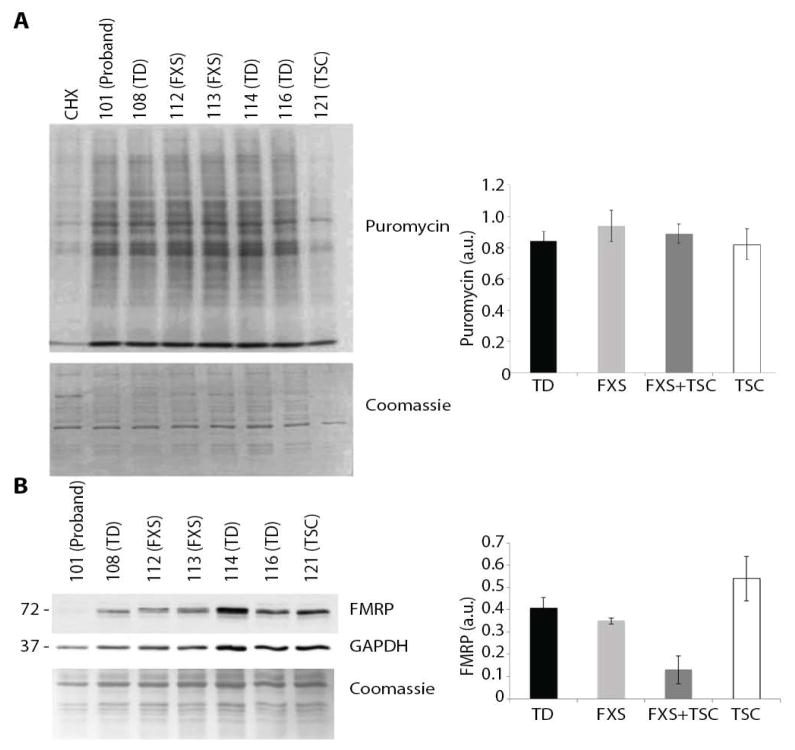
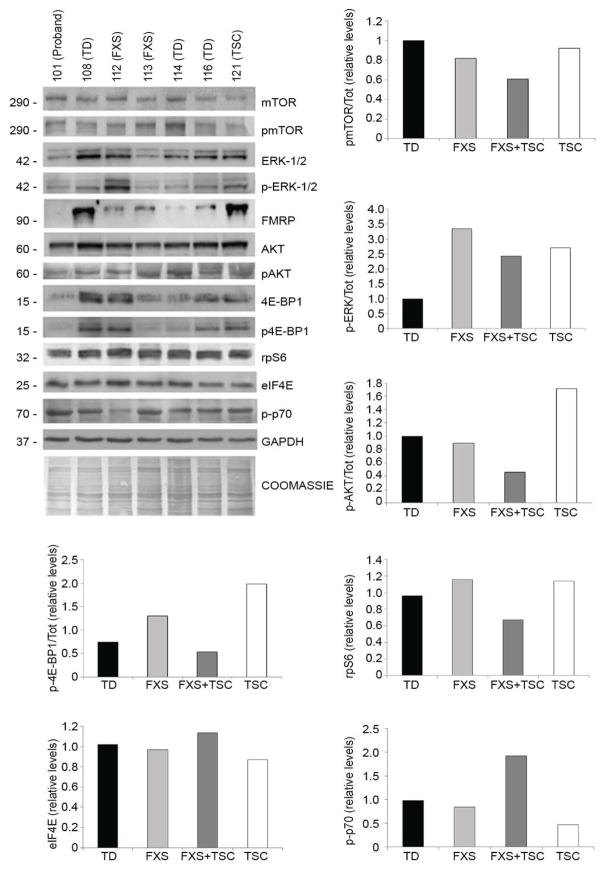
We assessed the clinical and molecular characteristics of an individual seen at the UC Davis MIND Institute with a diagnosis of FXS and TSC. Clinical evaluation of physical, behavioral, and cognitive impairments were performed. Additionally, total and phosphorylated proteins along the mTORC1 and ERK1/2 pathways were measured in primary fibroblast cell lines from the proband.
Results
In this case the phenotypic effects that result in a human with both FXS and TSC are shown to be severe. Changes in mTORC1 and ERK1/2 signaling proteins and global protein synthesis were not found to be noticeably different between four cohorts (typically developing, FMR1 full mutation, FMR1 full mutation and TSC1 loss of function mutation, and TSC1 loss of function mutation); however cohort sizes prevented stringent comparisons.
Conclusion
It has previously been suggested that disruption of the mTORC1 pathway was reciprocal in TSC and FXS double knock-out mouse models so that the regulation of these pathways were more similar to wild-type mice compared to mice harboring a Fmr1−/y or Tsc2−/+ mutation alone. However, in this first reported case of a human with a diagnosis of both FXS and TSC, substantial clinical impairments, as a result of these two disorders were observed. Differences in the mTORC and ERK1/2 pathways were not clearly established when compared between individuals with either disorder, or both.
-
Keywords:
-
Source:J Genet Disord Genet Rep. 5(3)
-
Pubmed ID:28232951
-
Pubmed Central ID:PMC5319728
-
Document Type:
-
Funding:
-
Volume:5
-
Issue:3
-
Collection(s):
-
Main Document Checksum:urn:sha256:0524a32d3d6c5b141fc6ce0de5e30afd857a22ccbdf3dab96e9aa0a7e41bf5f3
-
Download URL:
-
File Type:
 [PDF
- 840.90 KB
]
[PDF
- 840.90 KB
]
Supporting Files


File Language:
English
ON THIS PAGE

CDC STACKS serves as an archival repository of CDC-published products including
scientific findings,
journal articles, guidelines, recommendations, or other public health information authored or
co-authored by CDC or funded partners.
As a repository, CDC STACKS retains documents in their original published format to ensure public access to scientific information.
As a repository, CDC STACKS retains documents in their original published format to ensure public access to scientific information.
You May Also Like
COLLECTION
CDC Public Access