



A comprehensive assessment of selective amino acid 15N-labeling in human embryonic kidney 293 cells for NMR spectroscopy
Supporting Files

-
6 2024
-

File Language:
English
Details
-
Alternative Title:J Biomol NMR
-
Personal Author:
-
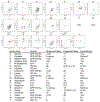
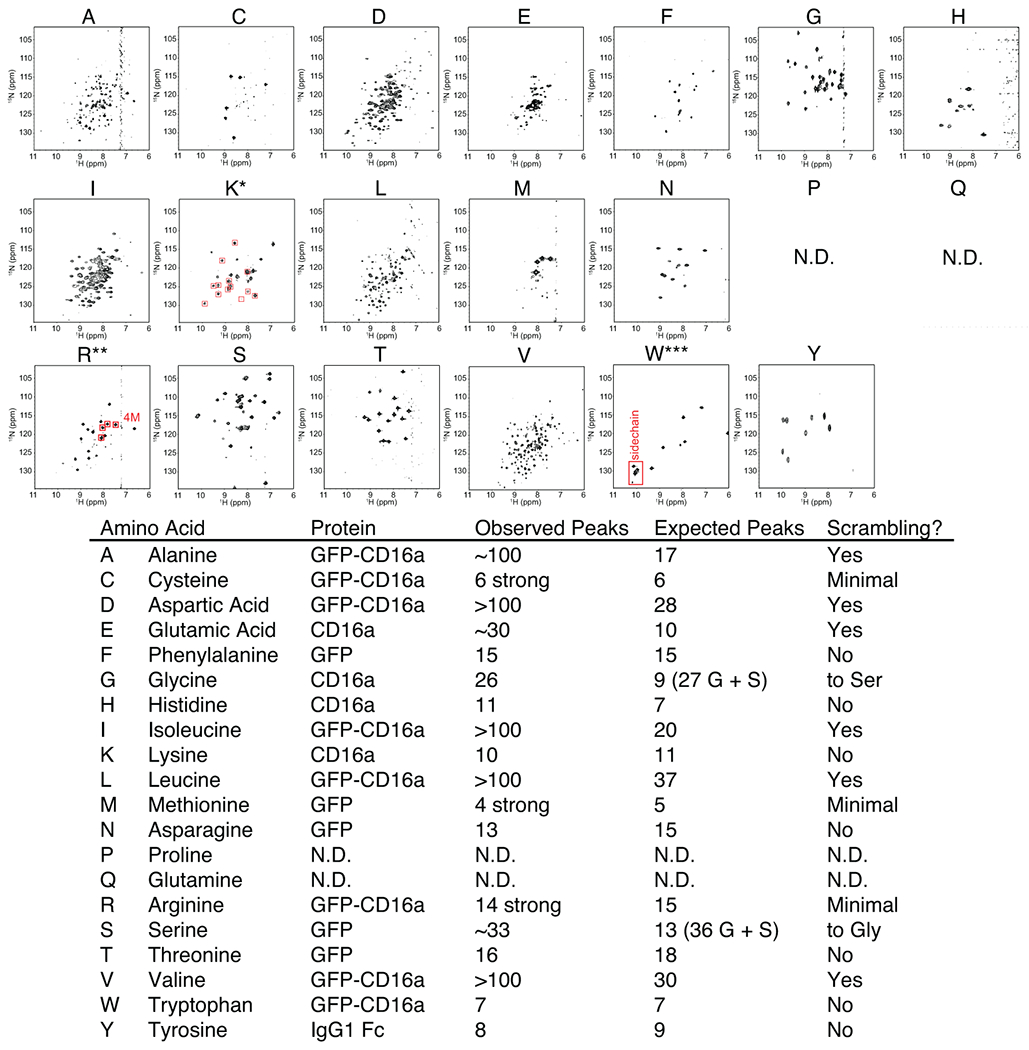
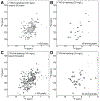
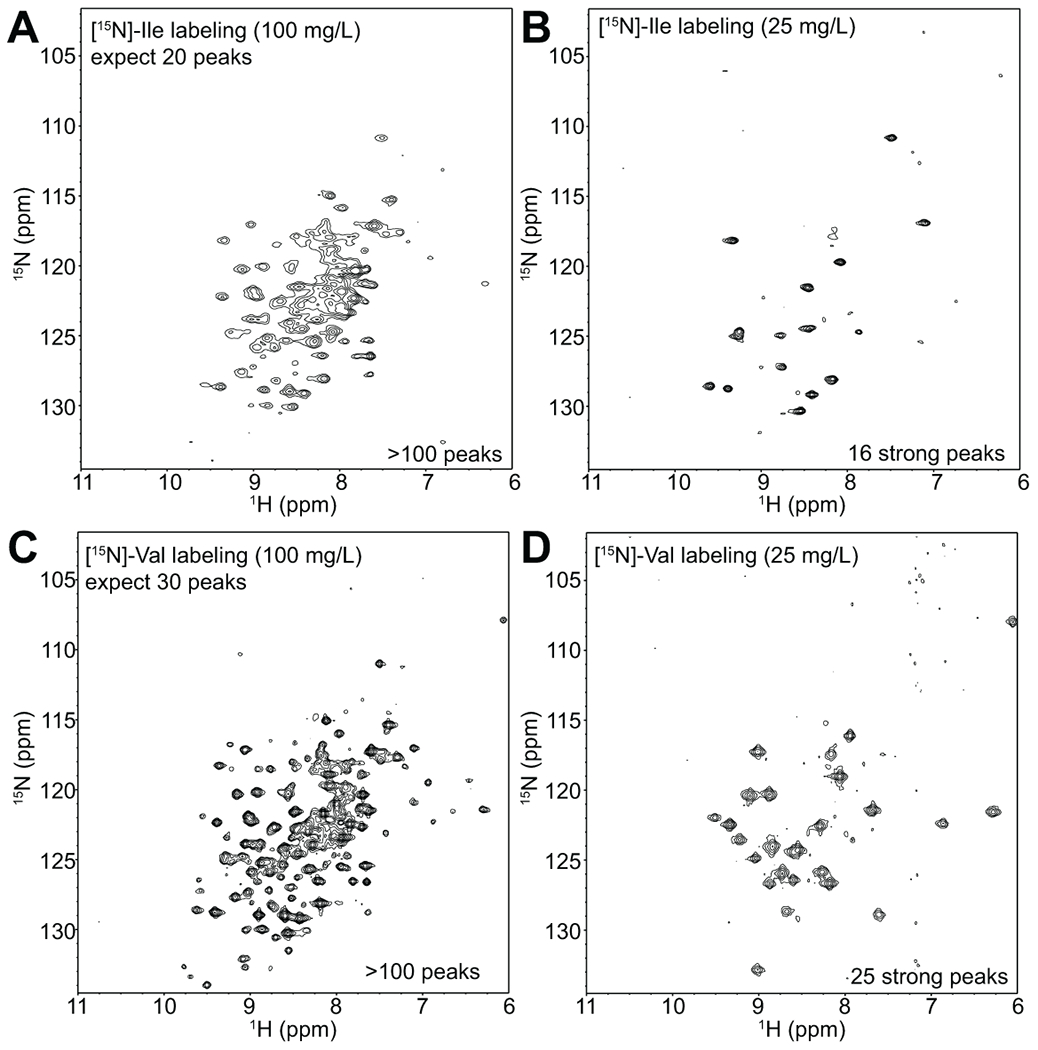
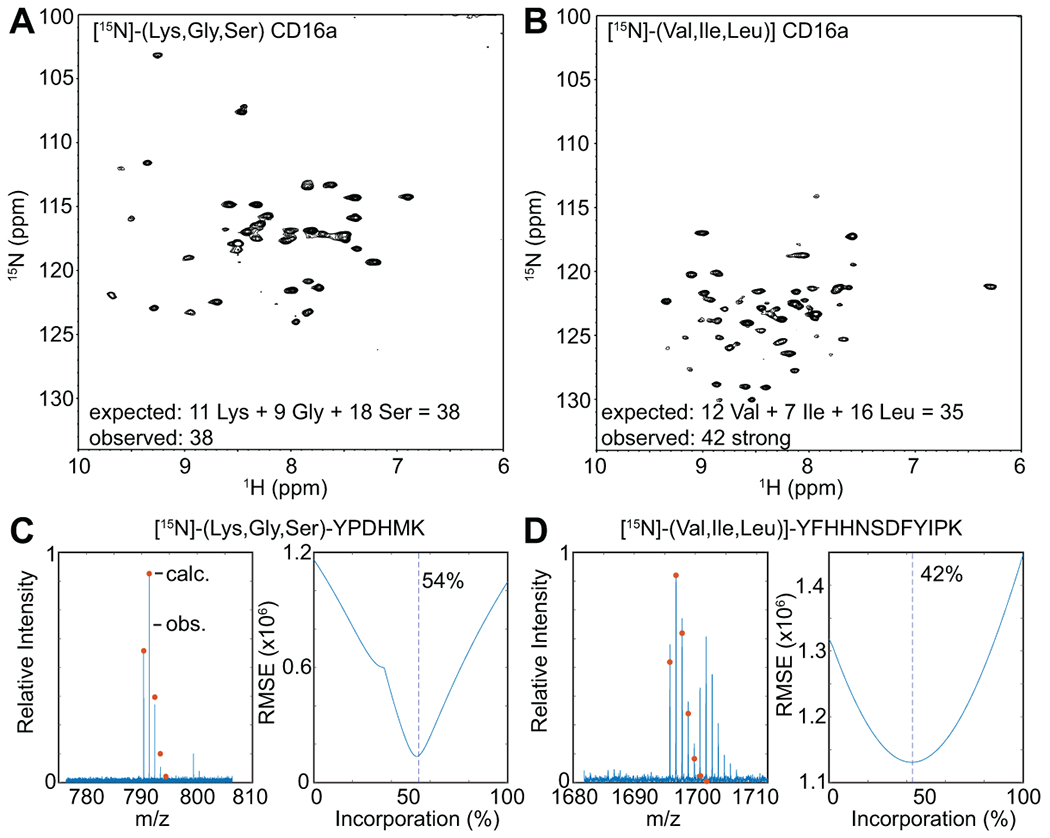
Description:A large proportion of human proteins contain post-translational modifications that cannot be synthesized by prokaryotes. Thus, mammalian expression systems are often employed to characterize structure/function relationships using NMR spectroscopy. Here we define the selective isotope labeling of secreted, post-translationally modified proteins using human embryonic kidney (HEK)293 cells. We determined that alpha-[|N]- atoms from 10 amino acids experience minimal metabolic scrambling (C, F, H, K, M, N, R, T, W, Y). Two more interconvert to each other (G, S). Six others experience significant scrambling (A, D, E, I, L, V). We also demonstrate that tuning culture conditions suppressed V and I scrambling. These results define expectations for |N-labeling in HEK293 cells.
-
Subjects:
-
Keywords:
-
Source:J Biomol NMR. 78(2):125-132
-
Pubmed ID:38407675
-
Pubmed Central ID:PMC11178438
-
Document Type:
-
Funding:
-
Volume:78
-
Issue:2
-
Collection(s):
-
Main Document Checksum:urn:sha256:5bae604a5f9a668e2455087a347a0925e87740d53441e070a2d8400d8c80f972
-
Download URL:
-
File Type:
 [PDF
- 731.77 KB
]
[PDF
- 731.77 KB
]
Supporting Files


File Language:
English
 Was this page helpful?
 Found an issue?
CDC STACKS serves as an archival repository of CDC-published products including
scientific findings,
journal articles, guidelines, recommendations, or other public health information authored or
co-authored by CDC or funded partners.
As a repository, CDC STACKS retains documents in their original published format to ensure public access to scientific information.
As a repository, CDC STACKS retains documents in their original published format to ensure public access to scientific information.
You May Also Like
COLLECTION
CDC Public Access