



Iterative Development of a Tailored mHealth Intervention for Adolescent and Young Adult Survivors of Childhood Cancer
Supporting Files

-
2019 ; 2019
-
Available in CDC Stacks on 2024-06-14T00:00:00Z
File Language:
English
Details
-
Alternative Title:Clin Pract Pediatr Psychol
-
Personal Author:Schwartz, Lisa A. ; Psihogios, Alexandra M. ; Henry-Moss, Dare ; Daniel, Lauren C. ; Ver Hoeve, Elizabeth S. ; Velazquez-Martin, Blanca ; Butler, Eliana ; Hobbie, Wendy L. ; Lunsford, Natasha Buchanan ; Sabatino, Susan A. ; Barakat, Lamia P. ; Ginsberg, Jill P. ; Fleisher, Linda ; Deatrick, Janet A. ; Jacobs, Linda A. ; O’Hagan, Bridget ; Anderson, Lindsay ; Fredericks, Emily ; Amaral, Sandra ; Dowshen, Nadia ; Houston, Keisha ; Vachani, Carolyn ; Hampshire, Margaret K. ; Metz, James M. ; Hill-Kayser, Christine E. ; Szalda, Dava
-
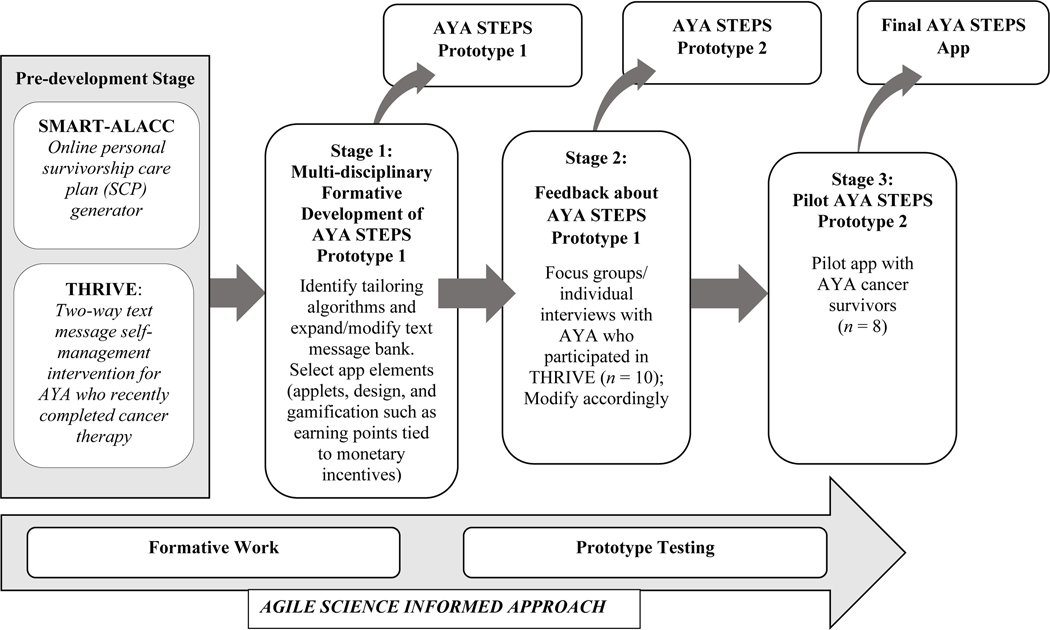
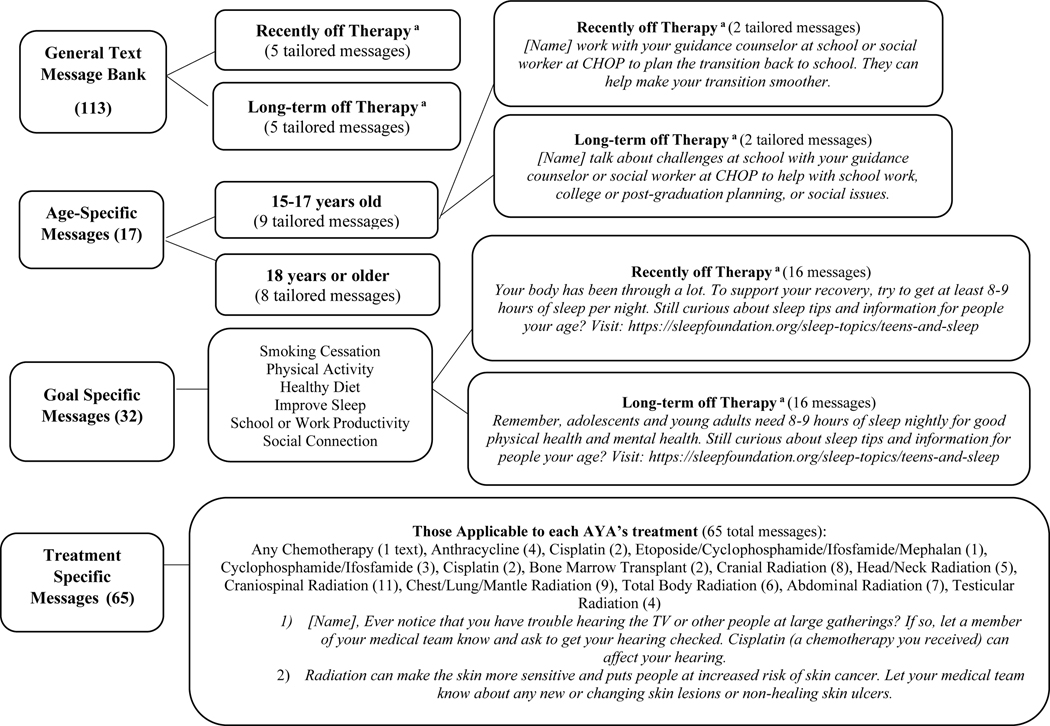
Description:Objectives. ; Methods for developing mobile health (mHealth) interventions are not well described. To guide the development of future mHealth interventions, we describe the application of the agile science framework to iteratively develop a mHealth intervention for adolescent and young adult (AYA) survivors of childhood cancer. ; Methods. ; We created the AYA STEPS mobile app (AYA Self-management via Texting, Education, and Plans for Survivorship) by modifying and integrating two existing programs: an online survivorship care plan (SCP) generator and a text messaging self-management intervention for AYA off treatment. The iterative development process involved three stages of agile science: 1) Formative work, 2) Obtaining feedback about the first AYA STEPS prototype, and 3) Pilot testing and finalization of a prototype. We determined preferences of AYA stakeholders as well as discovered and addressed technology problems prior to beginning a subsequent randomized controlled trial. ; Results. ; AYA survivors reported that the app and the embedded tailored messages related to their health and SCP, were easy to use and generally satisfying and beneficial. Usage data supported that AYA were engaged in the app. Technology glitches were discovered in the pilot and addressed. ; Conclusions. ; The iterative development of AYA STEPS was essential for creating a consistent and acceptable end user experience. This study serves as one example of how behavioral scientists may apply agile science to their own mHealth research.
-
Keywords:
-
Source:Clin Pract Pediatr Psychol. 7(1):31-43
-
Pubmed ID:38882593
-
Pubmed Central ID:PMC11177339
-
Document Type:
-
Funding:
-
Volume:7
-
Issue:1
-
Download URL:
-
File Type:
 [PDF - 1.40 MB]
 -
Collection(s):
-
Main Document Checksum:urn:sha256:f21d6438d878c56af1444cbe53c5461873dbe2b3bb40ea1a6b88d1a9e385b4d4
Supporting Files


File Language:
English
 Was this page helpful?
 Found an issue?

CDC STACKS serves as an archival repository of CDC-published products including
scientific findings, journal articles, guidelines, recommendations, or other public health information authored or
co-authored by CDC or funded partners.
As a repository, CDC STACKS retains documents in their original published format to ensure public access to scientific information.
As a repository, CDC STACKS retains documents in their original published format to ensure public access to scientific information.
You May Also Like
COLLECTION
CDC Public Access