


Interrelationships among age at adiposity rebound, BMI during childhood, and BMI after age 14 years in an electronic health record database
Supporting Files

-
1 2022

File Language:
English
Details
-
Alternative Title:Obesity (Silver Spring)
-
Personal Author:
-
Description:Objective:
This study compared the importance of age at adiposity rebound versus childhood BMI to subsequent BMI levels in a longitudinal analysis.
Methods:
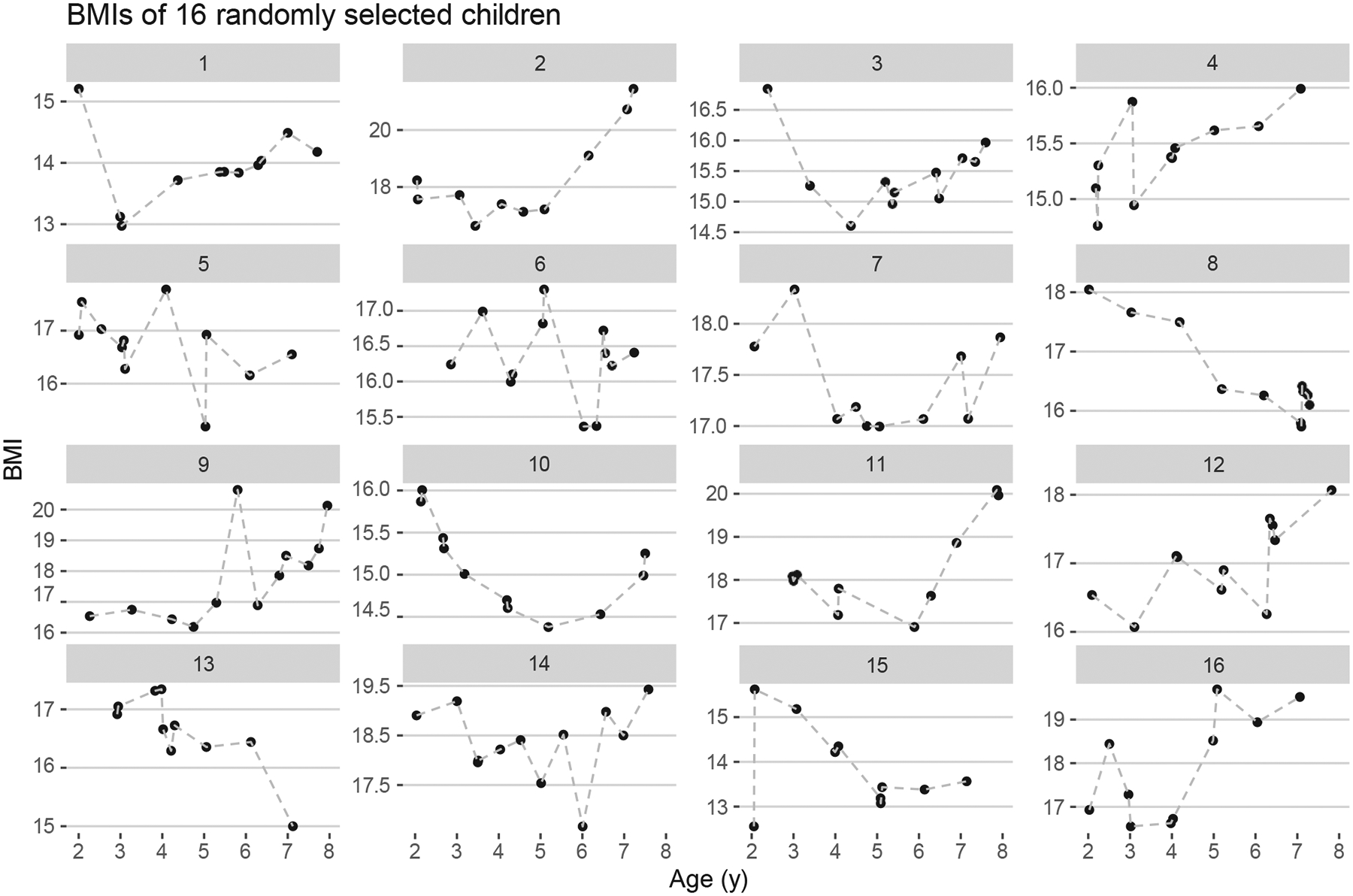
From the electronic health records of 4.35 million children, a total of 12,228 children were selected who were examined at least once each year between ages 2 and 7 years and reexamined after age 14 years. The minimum number of examinations per child was six. Each child’s rebound age was estimated using locally weighted regression (lowess), a smoothing technique.
Results:
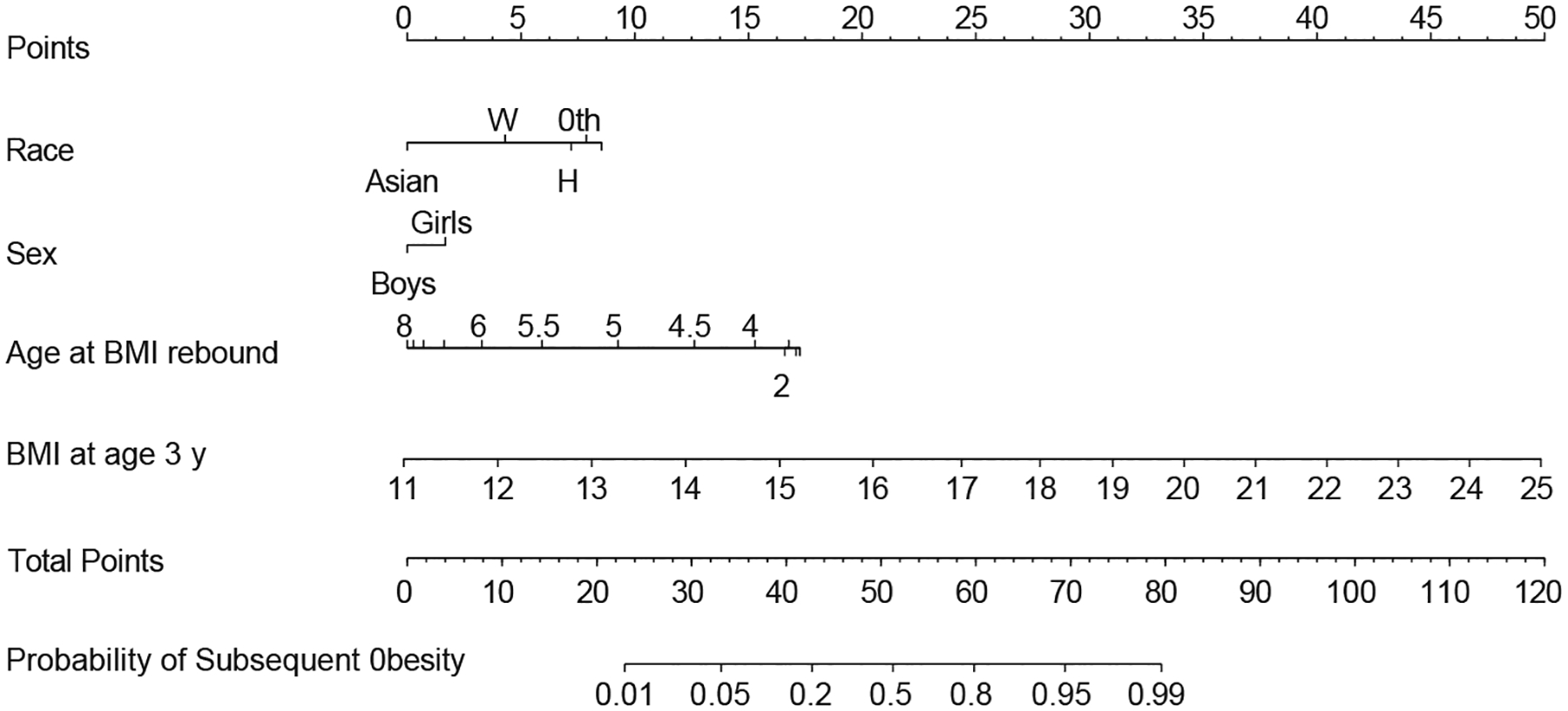
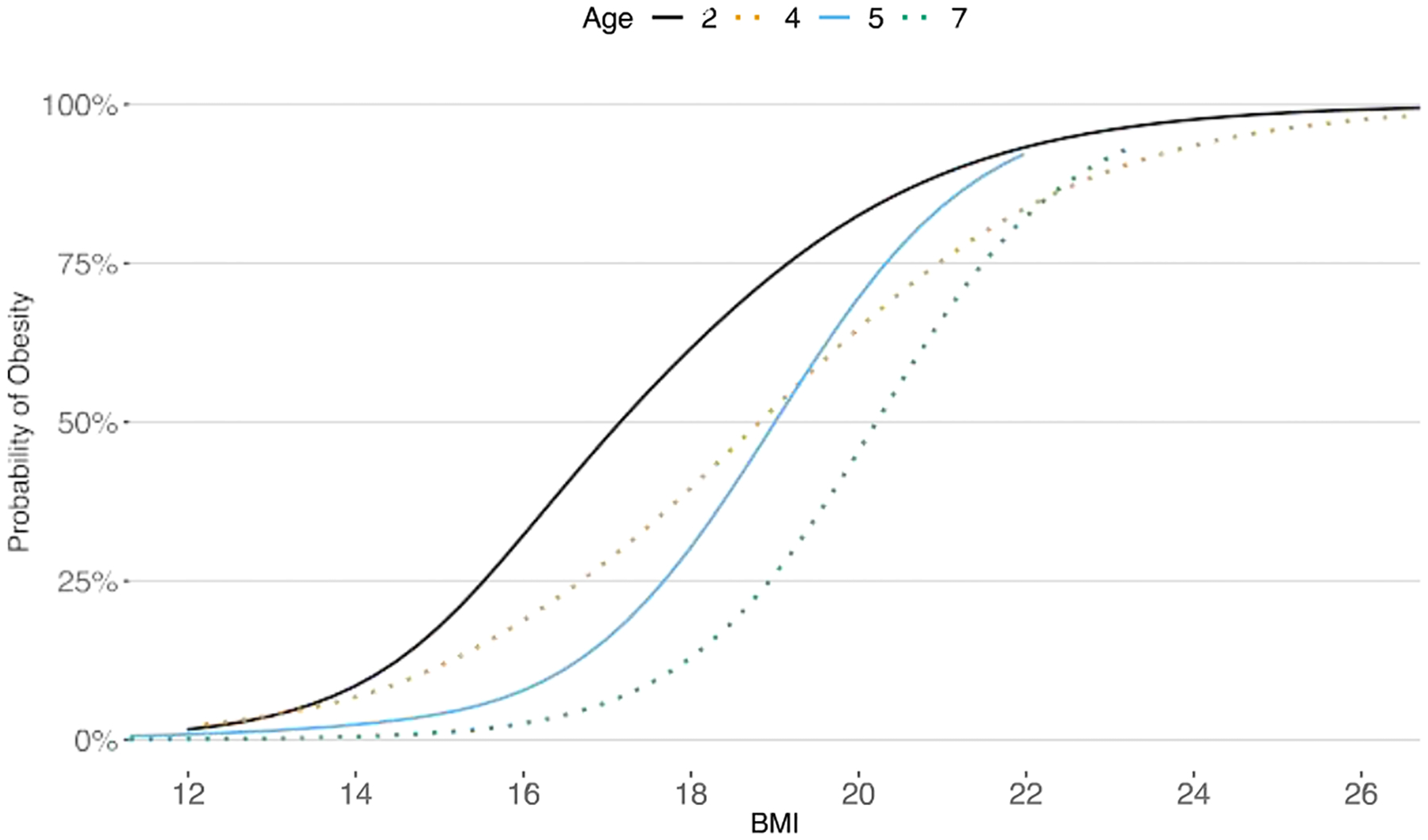
Children who had a rebound age < 3 years were, on average, 7 kg/m2 heavier after age 14 years than were children with a rebound age ≥ 7 years. However, BMI after age 14 years was more strongly associated with BMI at the rebound than with rebound age (r = 0.57 vs. −0.44). Furthermore, a child’s BMI at age 3 years provided more information on BMI after age 14 years than did rebound age. In addition, rebound age provided no information on subsequent BMI if a child’s BMI at age 6 years was known.
Conclusions:
Although rebound age is related to BMI after age 14 years, a child’s BMI at age 3 years provides more information and is easier to obtain.
-
Subjects:
-
Source:Obesity (Silver Spring). 30(1):201-208
-
Pubmed ID:34932881
-
Pubmed Central ID:PMC11066771
-
Document Type:
-
Funding:
-
Volume:30
-
Issue:1
-
Collection(s):
-
Main Document Checksum:urn:sha256:04a5aaea83b964b0b622b58e89039de7c22f45e5861310d2cc80d171937c45c0
-
Download URL:
-
File Type:
 [PDF
- 427.40 KB
]
[PDF
- 427.40 KB
]

Supporting Files


File Language:
English
ON THIS PAGE


CDC STACKS serves as an archival repository of CDC-published products including
scientific findings,
journal articles, guidelines, recommendations, or other public health information authored or
co-authored by CDC or funded partners.
As a repository, CDC STACKS retains documents in their original published format to ensure public access to scientific information.
As a repository, CDC STACKS retains documents in their original published format to ensure public access to scientific information.
You May Also Like
COLLECTION
CDC Public Access