


Crush: A randomized trial to evaluate the impact of a mobile health app on adolescent sexual health
Supporting Files

-
2 2023
File Language:
English
Details
-
Alternative Title:J Adolesc Health
-
Personal Author:
-
Description:Purpose:
Mobile technology allows delivery of sexual and reproductive health (SRH) information directly to youth. We tested the efficacy of Crush, a mobile application aimed at improving sexual health by promoting the use of SRH services and contraception among female adolescents.
Methods:
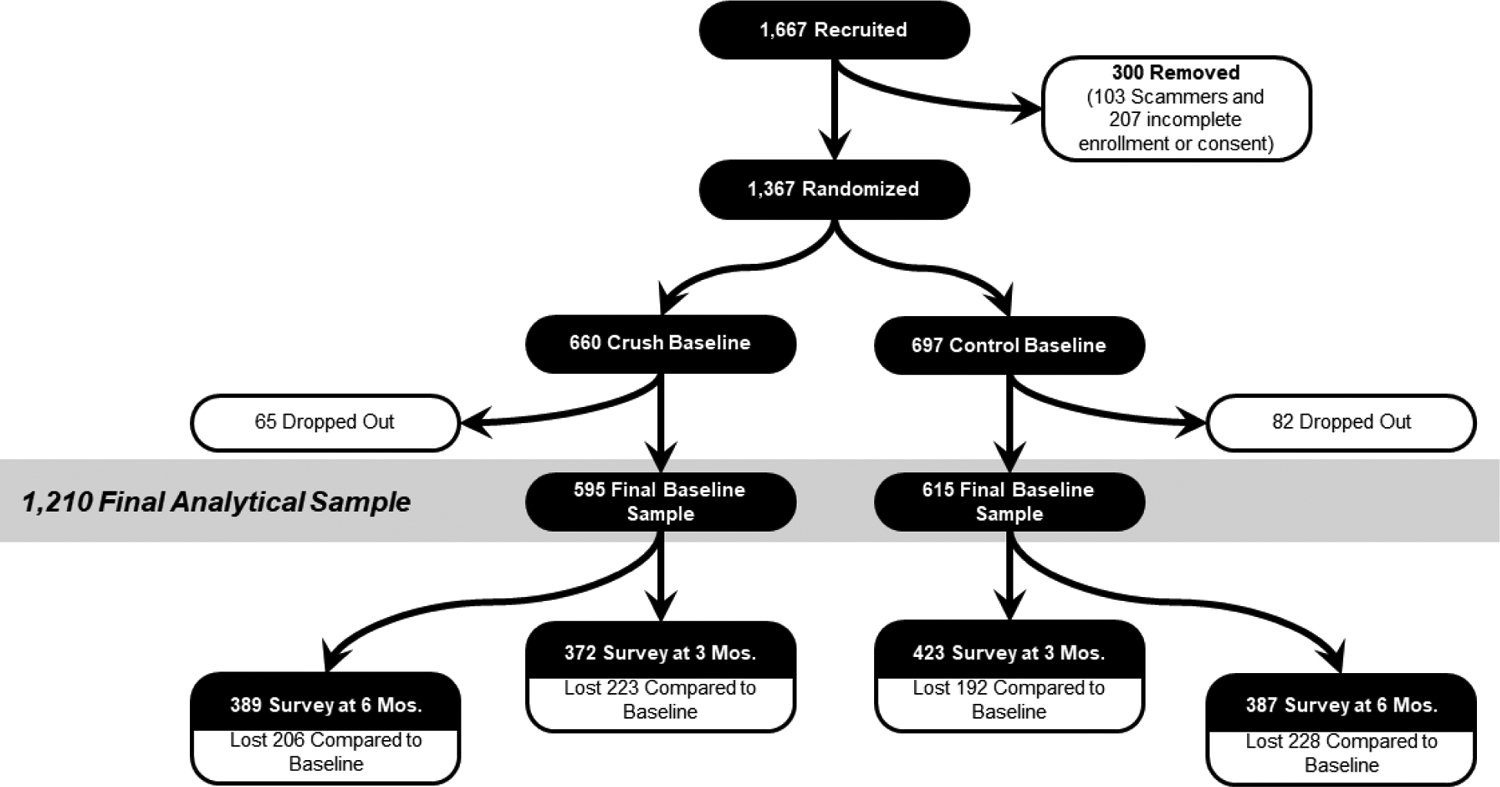
We recruited 1,210 women ages 14 to 18 years through social media advertising and randomized them into a Crush intervention group and a control group that received a wellness app. At 3 and 6 months post-randomization, we compared changes from baseline in behaviors, attitudes, self-efficacy, perceived social norms, birth control knowledge, perceived control and use intentions, and SRH service utilization. Odds ratios were estimated with multivariable logistic regression and adjusted for baseline outcome, age, race/ethnicity, mother’s education, and sexual experience.
Results:
There was no difference in accessing SRH services according to study group. Three months post-baseline, Crush users had higher odds (p<0.05) than control participants of reporting confidence in accessing SRH services (aOR= 1.6, 95% CI: 1.1–2.3) and of believing that it is a good thing to use birth control consistently (aOR= 2.3, 95% CI: 1.4–3.8). Six months post-baseline, Crush users had higher odds than control participants of reporting they can control whether birth control is used every time they have sex (aOR= 1.8, 95% CI: 1.2–2.6) and perceiving they would get pregnant if they did not use birth control (aOR: 1.5, 95% CI: 1.1–2.2). Impacts on other behavioral constructs were also found.
Conclusions:
Crush was associated with improvements in knowledge, attitudes and self-efficacy related to key SRH behaviors and may be a strategy to deliver SRH education to adolescent women. Studies including larger numbers of sexually active adolescents are needed to demonstrate behavioral impacts.
-
Subjects:
-
Keywords:
-
Source:J Adolesc Health. 72(2):287-294
-
Pubmed ID:36424332
-
Pubmed Central ID:PMC11036548
-
Document Type:
-
Funding:
-
Volume:72
-
Issue:2
-
Collection(s):
-
Main Document Checksum:urn:sha256:011b12c6308f978ccfba6a104ef9a5a713a5cf5a97e1bf599a9b546ba5bee6c2
-
Download URL:
-
File Type:
 [PDF
- 472.05 KB
]
[PDF
- 472.05 KB
]
Supporting Files


File Language:
English
ON THIS PAGE


CDC STACKS serves as an archival repository of CDC-published products including
scientific findings,
journal articles, guidelines, recommendations, or other public health information authored or
co-authored by CDC or funded partners.
As a repository, CDC STACKS retains documents in their original published format to ensure public access to scientific information.
As a repository, CDC STACKS retains documents in their original published format to ensure public access to scientific information.
You May Also Like
COLLECTION
CDC Public Access