



Predicting neurobehavioral performance of resident physicians in a Randomized Order Safety Trial Evaluating Resident-physician Schedules (ROSTERS)
Supporting Files

-
2 2024 ; 2-2024
-
Available in CDC Stacks on February 01, 2025, 12:00 AM
File Language:
English
Details
-
Alternative Title:Sleep Health
-
Personal Author:
-
Description:Objectives:
Mathematical models of human neurobehavioral performance that include the effects of acute and chronic sleep restriction can be key tools in assessment and comparison of work schedules, allowing quantitative predictions of performance when empirical assessment is impractical.
Methods:
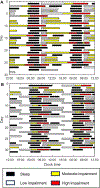
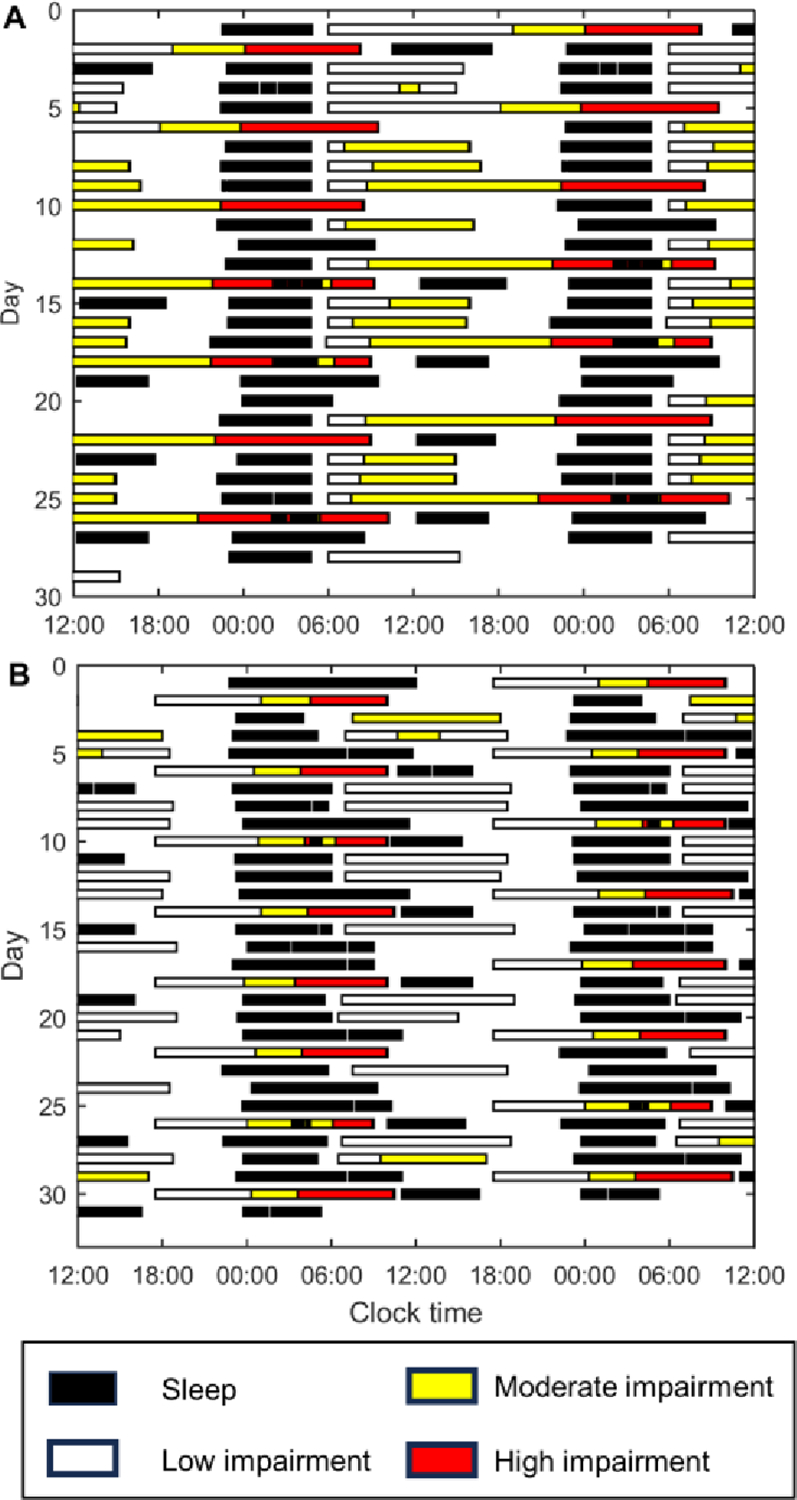
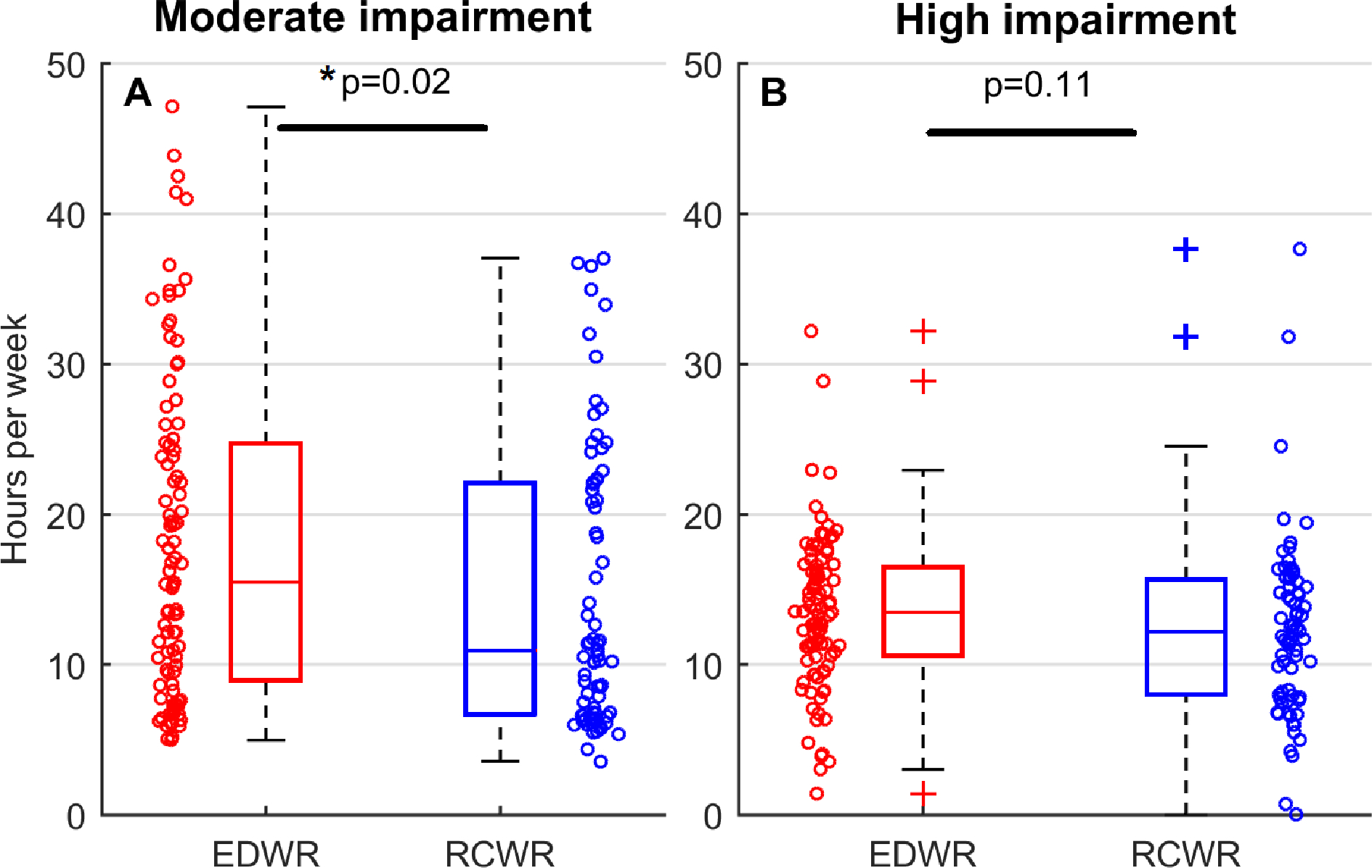
Using such a model, we tested the hypothesis that resident physicians working an extended duration work roster (EDWR), including 24–28 hours of continuous duty and up to 88 hours per week averaged over 4 weeks, would have worse predicted performance than resident physicians working a rapidly cycling work roster (RCWR) intervention designed to reduce the duration of extended shifts. The performance metric used was attentional failures (i.e., PVT lapses). Model input was 169 actual work and sleep schedules. Outcomes were predicted hours per week during work hours spent at moderate (equivalent to 16–20 hours of continuous wakefulness) or high (equivalent to ≥20 hours of continuous wakefulness) performance impairment.
Results:
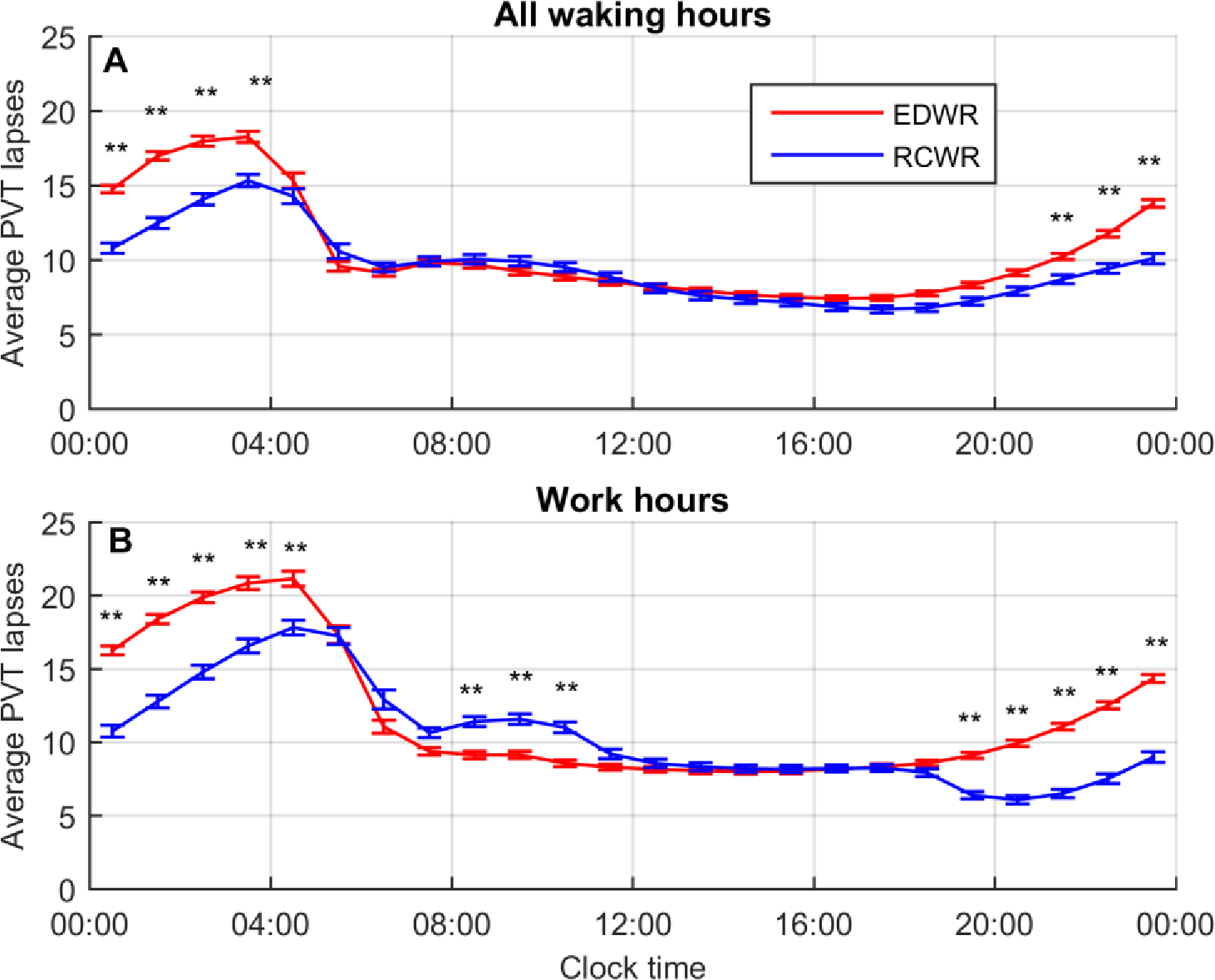
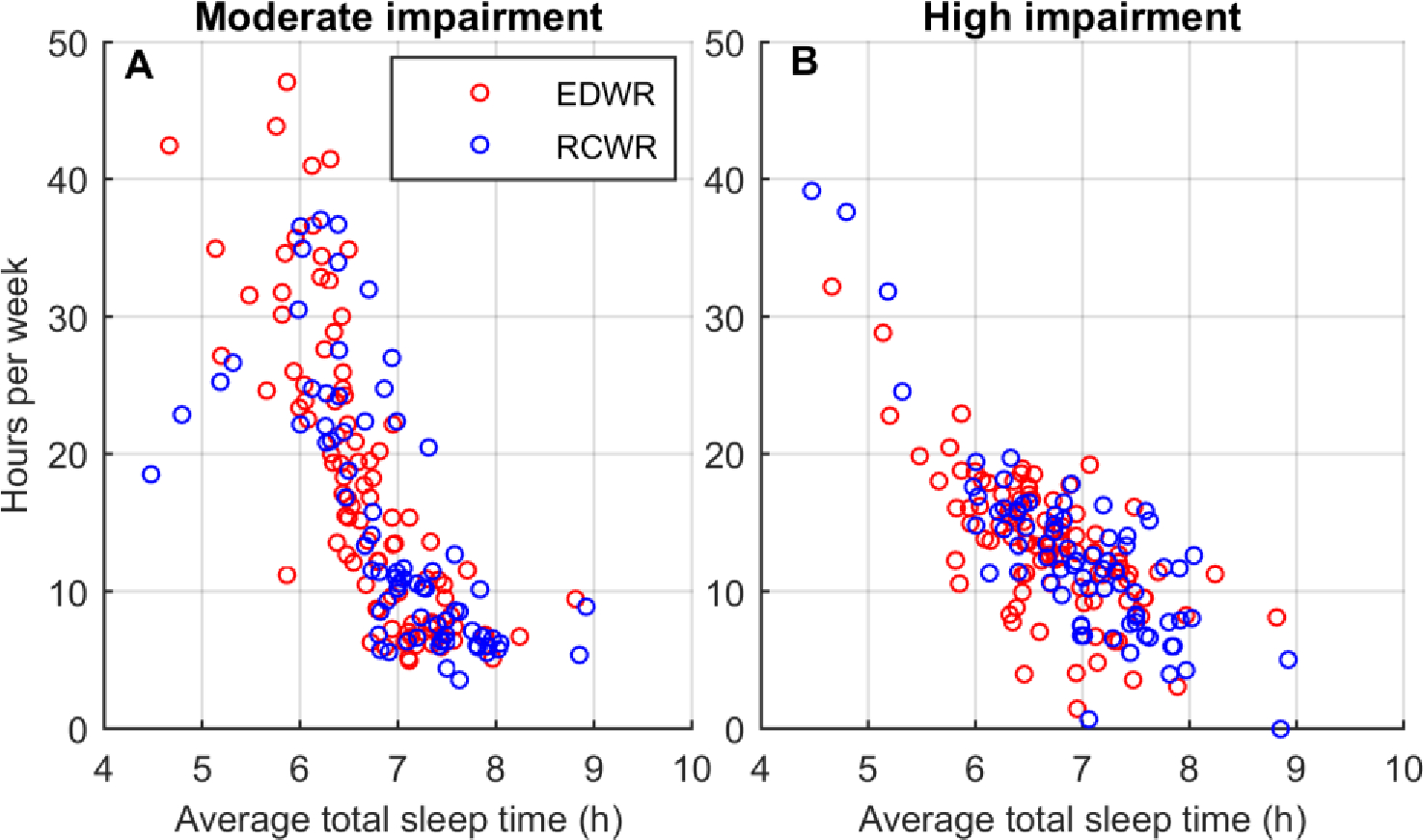
The model predicted that resident physicians working EDWR would spend significantly more time at moderate impairment (p=0.02, effect size=0.2) than those working RCWR; this difference was most pronounced during the circadian night (p<0.001). On both schedules, performance was predicted to decline from weeks 1+2 to weeks 3+4 (p<0.001), but the rate of decline was significantly greater on EDWR (p<0.01). Predicted performance impairment was inversely related to prior sleep duration (p<0.001).
Conclusions:
These findings demonstrate the utility of a mathematical model to evaluate the predicted performance profile of schedules for resident physicians and others who experience chronic sleep restriction and circadian misalignment. -
Subjects:
-
Keywords:
-
Source:Sleep Health. 10(1 Suppl):S25-S33
-
Pubmed ID:38007304
-
Pubmed Central ID:PMC11031327
-
Document Type:
-
Funding:R01 HL128538/HL/NHLBI NIH HHSUnited States/ ; U54 AG062322/AG/NIA NIH HHSUnited States/ ; R01OH011773/ACL/ACL HHSUnited States/ ; K24 HL105664/HL/NHLBI NIH HHSUnited States/ ; R01 NS114526/NS/NINDS NIH HHSUnited States/ ; R01 OH010300/OH/NIOSH CDC HHSUnited States/ ; R01 HD107064/HD/NICHD NIH HHSUnited States/ ; U01 NS114001/NS/NINDS NIH HHSUnited States/ ; U01 HL111478/HL/NHLBI NIH HHSUnited States/ ; R01 GM105018/GM/NIGMS NIH HHSUnited States/ ; R21 HD086392/HD/NICHD NIH HHSUnited States/ ; R01 HL114088/HL/NHLBI NIH HHSUnited States/ ; R01 NS099055/NS/NINDS NIH HHSUnited States/ ; R01 OH011773/OH/NIOSH CDC HHSUnited States/ ; U01 HL111691/HL/NHLBI NIH HHSUnited States/ ; R21 DA052861/DA/NIDA NIH HHSUnited States/ ; P01 AG009975/AG/NIA NIH HHSUnited States/
-
Volume:10
-
Download URL:
-
File Type:
 [PDF - 648.67 KB]
 -
Collection(s):
-
Main Document Checksum:urn:sha-512:b91e08a2728a77fb47c9b45c5003fbefbc290f4c1b786abeb6524f44f9860da7a9248bc4dd8d4db8880970f3579c98a9e7b66ed3bb8a96cf91070768283544da
Supporting Files


File Language:
English
 Was this page helpful?
 Found an issue?

CDC STACKS serves as an archival repository of CDC-published products including
scientific findings, journal articles, guidelines, recommendations, or other public health information authored or
co-authored by CDC or funded partners.
As a repository, CDC STACKS retains documents in their original published format to ensure public access to scientific information.
As a repository, CDC STACKS retains documents in their original published format to ensure public access to scientific information.
You May Also Like
COLLECTION
CDC Public Access