



Sex differences in alcohol’s effects on fronto-amygdalar functional connectivity during processing of emotional stimuli
Supporting Files

-
4 2024 ; 4-2024
-
Available in CDC Stacks on 2025-04-01T00:00:00Z
File Language:
English
Details
-
Alternative Title:Alcohol Clin Exp Res (Hoboken)
-
Personal Author:
-
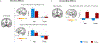
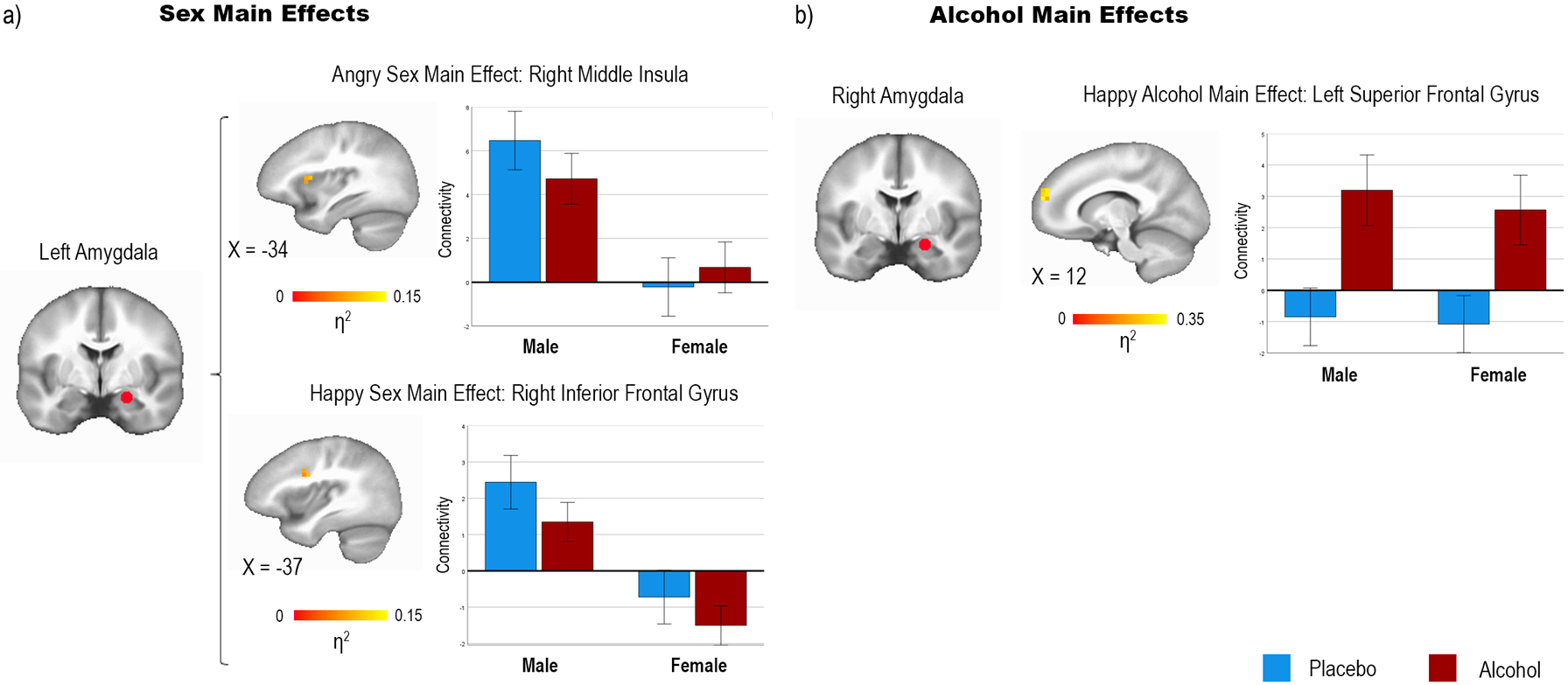
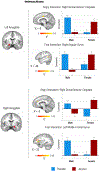
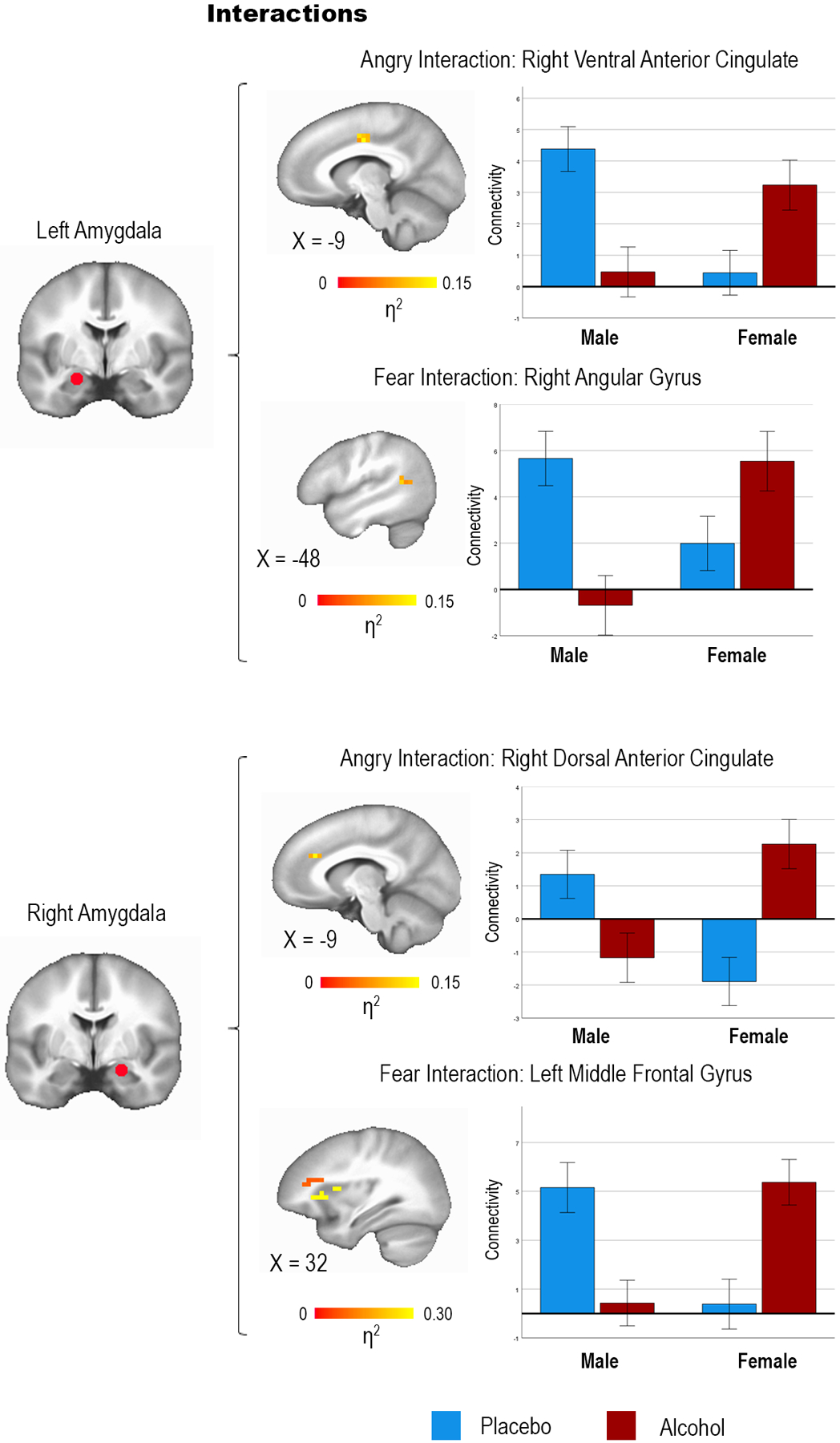
Description:Background: ; Amygdala function underlying emotion processing has been shown to vary with an individuals’ biological sex. Expanding upon functional magnetic resonance imaging (fMRI) findings reported previously where a low level of response was the focus, we examined alcohol and sex effects on functional connectivity between the amygdala and other brain regions. The central hypothesis predicted that sex would influence alcohol’s effects on frontal-limbic functional circuits underlying the processing of negative and positive facial emotions. ; Methods: ; Secondary analyses were conducted on data from a double-blind, placebo controlled, within-subjects, cross-over study in 54 sex-matched pairs (N=108) of 18- to 25-year-old individuals without an alcohol use disorder at baseline. Participants performed an emotional faces fMRI processing task after placebo or approximately 0.7 mL/kg of ethanol. Psychophysiological interaction analyses examined functional connectivity between the amygdala with other brain regions. ; Results: ; Significant alcohol-by-sex interactions were found when processing negatively-valenced faces. Intoxicated men exhibited decreased functional connectivity between the amygdala and ventral and dorsal anterior cingulate, angular gyrus, and middle frontal gyrus whereas connectivity was increased in inebriated women. There was also a main sex effect where women exhibited decreased functional connectivity in the middle insula compared with men regardless of alcohol or placebo condition. For happy faces, main effects of both sex and alcohol were observed. Women exhibited decreased amygdala functional connectivity in right inferior frontal gyrus compared with men. Both men and women exhibited increased functional connectivity in the superior frontal gyrus in response to alcohol versus placebo. ; Conclusions: ; Alcohol’s effects on amygdala functional circuits underlying emotional processing vary with sex. Women had higher functional connectivity than men following exposure to a moderate dose of alcohol which might indicate that women can better process affectively-laden stimuli when intoxicated.
-
Keywords:
-
Source:Alcohol Clin Exp Res (Hoboken). 48(4):612-622
-
Pubmed ID:38379361
-
Pubmed Central ID:PMC11015979
-
Document Type:
-
Funding:R21 AA027634/AA/NIAAA NIH HHSUnited States/ ; 1R21 AA027634/AA/NIAAA NIH HHSUnited States/ ; RO1 AA021162/AA/NIAAA NIH HHSUnited States/ ; R01 AA021162/AA/NIAAA NIH HHSUnited States/ ; U01 IP000379/IP/NCIRD CDC HHSUnited States/ ; U01 DA041731/DA/NIDA NIH HHSUnited States/ ; R33 AA027634/AA/NIAAA NIH HHSUnited States/ ; U01 DA051077/DA/NIDA NIH HHSUnited States/
-
Volume:48
-
Issue:4
-
Download URL:
-
File Type:
 [PDF - 423.80 KB]
 -
Collection(s):
-
Main Document Checksum:urn:sha-512:9a6adae5c0f720714838adedae170e7f26e37e2af2eaefbef40820c713b19fc864abfd9e56f8c04876a5a85b17a770b9c61c2035922f933f616bb49a16570a4f
Supporting Files


File Language:
English
 Was this page helpful?
 Found an issue?

CDC STACKS serves as an archival repository of CDC-published products including
scientific findings, journal articles, guidelines, recommendations, or other public health information authored or
co-authored by CDC or funded partners.
As a repository, CDC STACKS retains documents in their original published format to ensure public access to scientific information.
As a repository, CDC STACKS retains documents in their original published format to ensure public access to scientific information.
You May Also Like
COLLECTION
CDC Public Access