



Correlations Between Anxiety and/or Depression Diagnoses and Dysphagia Severity
Supporting Files

-
5 2024 ; 5-2024
-
Available in CDC Stacks on May 01, 2025, 12:00 AM
File Language:
English
Details
-
Alternative Title:Laryngoscope
-
Personal Author:
-
Description:Objective:
An increased prevalence of mood and anxiety disorders in patients with dysphagia has been noted previously, but whether dysphagia severity may be exacerbated by anxiety and depression has never been studied before. The purpose of this study is to identify the effect of pre-existing diagnosis of anxiety and/or depression (anxiety/depression) on the Eating Assessment Tool (EAT-10), a validated patient reported outcome measure for dysphagia. We hypothesized that patients with dysphagia and normal instrumental evaluation have higher EAT-10 score in the presence of pre-existing anxiety and depression.
Methods:
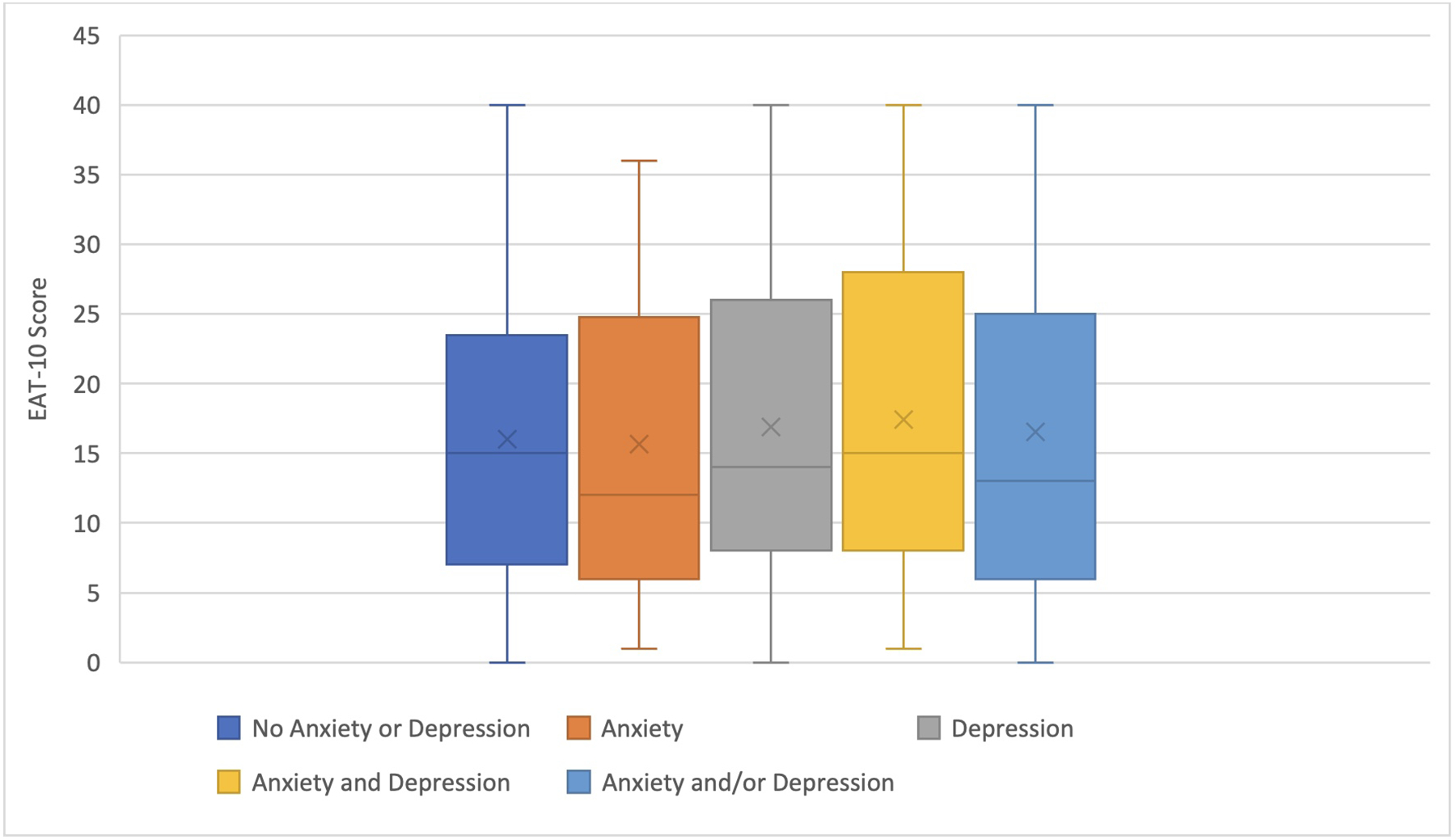
A retrospective chart review was conducted of patients seen at the multi-disciplinary dysphagia clinic of an urban academic institution. EAT-10 scores and pre-existing diagnoses of anxiety/depression were collected at the first visit with laryngologists. The two-sample t-test was used to compare mean EAT-10 scores between the anxiety/depression and no anxiety/depression groups, stratified by swallowing dysfunction etiology.
Results:
The study included 290 consecutive patients seen starting in January 2018. In this cohort, 60 (21%) had pre-existing anxiety, 49 (17%) depression and 36 (12%) both. Overall, 59 patients had normal swallowing based on instrumental swallowing testing (flexible endoscopic evaluation of swallowing, videofluoroscopic swallow study, esophagram, or esophagoscopy). Among those, mean EAT-10 score was significantly higher in patients with anxiety and/or depression (n=30) (14.63, SD=11.42) compared to those with no anxiety and/or depression (n=29) (8.93, SD=6.59) (P=0.023).
Conclusion:
While anxiety/depression may aggravate dysphagia in patients with normal swallowing function, this correlation may not hold in those with objective swallowing dysfunction. -
Subjects:
-
Keywords:
-
Source:Laryngoscope. 134(5):2115-2120
-
Pubmed ID:37942834
-
Pubmed Central ID:PMC11006580
-
Document Type:
-
Funding:
-
Volume:134
-
Issue:5
-
Download URL:
-
File Type:
 [PDF - 209.80 KB]
 -
Collection(s):
-
Main Document Checksum:urn:sha-512:5f01c70bcb418451e2fb15eb682f3f7365809ac96b9f0d7c626135a19eb52ab521fc0f53559a45338c2146a6d5e6ac24d9821ffeba29286079a65b7cadb9b742
Supporting Files


File Language:
English
 Was this page helpful?
 Found an issue?


CDC STACKS serves as an archival repository of CDC-published products including
scientific findings, journal articles, guidelines, recommendations, or other public health information authored or
co-authored by CDC or funded partners.
As a repository, CDC STACKS retains documents in their original published format to ensure public access to scientific information.
As a repository, CDC STACKS retains documents in their original published format to ensure public access to scientific information.
You May Also Like
COLLECTION
CDC Public Access