


Retention Among Participants in the National Diabetes Prevention Program Lifestyle Change Program, 2012–2017
Supporting Files

-
9 2020
-
File Language:
English
Details
-
Alternative Title:Diabetes Care
-
Personal Author:
-
Description:OBJECTIVE
To assess retention in the National Diabetes Prevention Program (DPP) lifestyle change program, which seeks to prevent type 2 diabetes in adults at high risk.
RESEARCH DESIGN AND METHODS
We analyzed retention among 41,203 individuals who enrolled in Centers for Disease Control and Prevention (CDC)-recognized in-person lifestyle change programs at organizations that submitted data to CDC’s Diabetes Prevention Recognition Program during January 2012–February 2017.
RESULTS
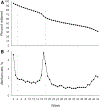
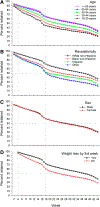
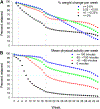
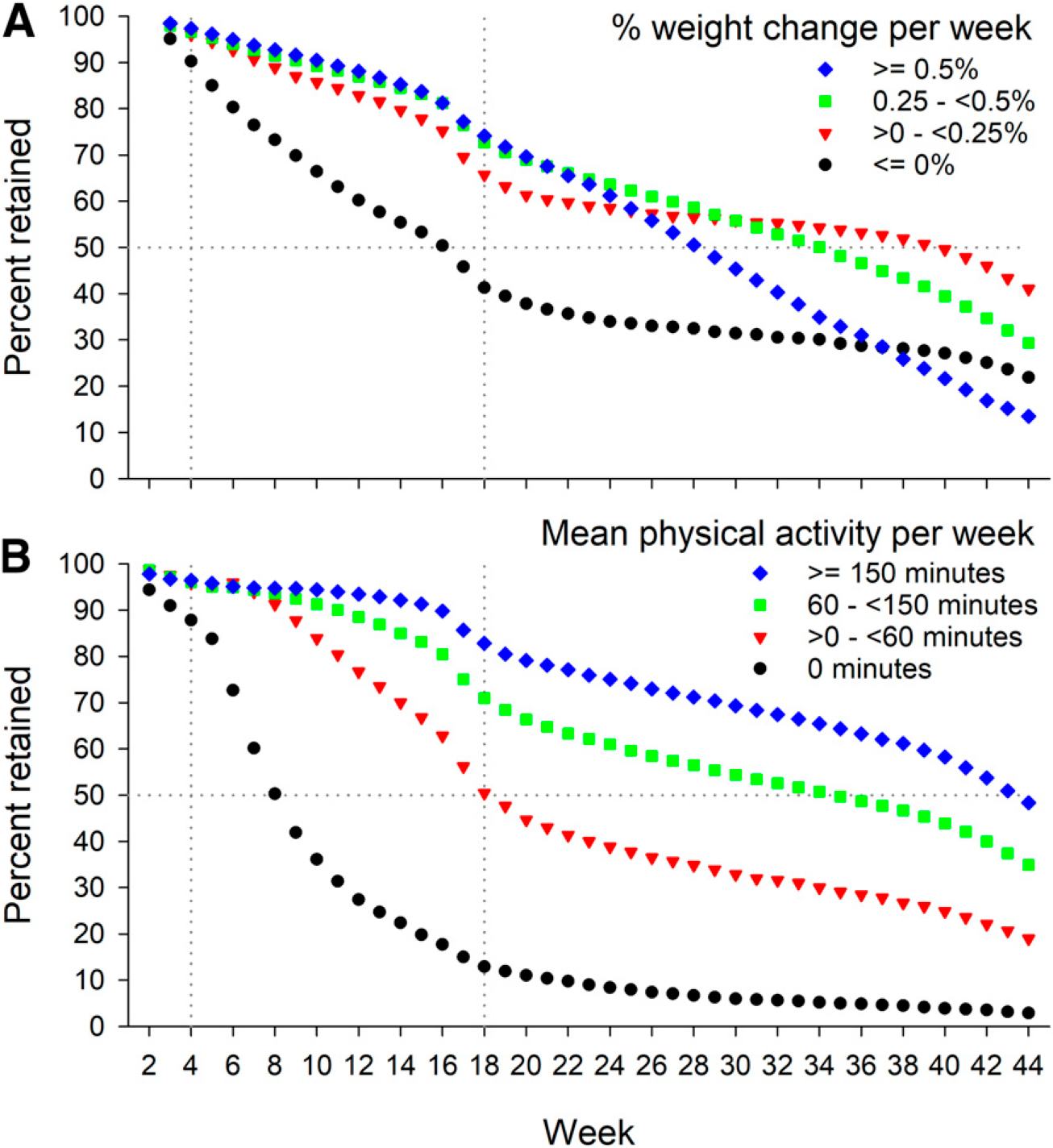
Weekly attrition rates were typically <1–2% but were between 3.5% and 5% at week 2 and at weeks 17 and 18, where session frequency typically transitions from weekly to monthly. The percentage of participants retained through 18 weeks varied by age (45.9% for 18–29 year olds, 53.4% for 30–44 year olds, 60.2% for 45–54 year olds, 66.7% for 55–64 year olds, and 67.6% for ≥65 year olds), race/ethnicity (70.5% for non-Hispanic whites, 60.5% for non-Hispanic blacks, 52.6% for Hispanics, and 50.6% for other), mean weekly percentage of body weight lost (41.0% for ≤0% lost, 66.2% for >0% to <0.25% lost, 72.9% for 0.25% to <0.5% lost, and 73.9% for ≥0.5% lost), and mean weekly physical activity minutes (12.8% for 0 min, 56.1% for >0 to <60 min, 74.8% for 60 to <150 min, and 82.8% for ≥150 min) but not by sex (63.0% for men and 63.1% for women).
CONCLUSIONS
Our results demonstrate the need to identify strategies to improve retention, especially among individuals who are younger or are members of racial/ethnic minority populations and among those who report less physical activity or less early weight loss. Strategies that address retention after the first session and during the transition from weekly to monthly sessions offer the greatest opportunity for impact.
-
Subjects:
-
Source:Diabetes Care. 43(9):2042-2049
-
Pubmed ID:32616617
-
Pubmed Central ID:PMC11000538
-
Document Type:
-
Funding:
-
Volume:43
-
Issue:9
-
Collection(s):
-
Main Document Checksum:urn:sha256:adb7d0a98ef0e4673176e96264cc4b91368f6d76def3681db66a7e5d2adb2d21
-
Download URL:
-
File Type:
 [PDF
- 700.74 KB
]
[PDF
- 700.74 KB
]
Supporting Files


File Language:
English
ON THIS PAGE

CDC STACKS serves as an archival repository of CDC-published products including
scientific findings,
journal articles, guidelines, recommendations, or other public health information authored or
co-authored by CDC or funded partners.
As a repository, CDC STACKS retains documents in their original published format to ensure public access to scientific information.
As a repository, CDC STACKS retains documents in their original published format to ensure public access to scientific information.
You May Also Like
COLLECTION
CDC Public Access