



Male partner age, viral load, and HIV infection in adolescent girls and young women: evidence from eight sub-Saharan African countries
Supporting Files

-
1 01 2023 ; 1-01-
-
Available in CDC Stacks on April 08, 2024, 12:00 AM
File Language:
English
Details
-
Alternative Title:AIDS
-
Personal Author:Ayton, Sarah ; Schwitters, Amee ; Mantell, Joanne E. ; Nuwagaba-Biribonwoha, Harriet ; Hakim, Avi ; Hoffman, Susie ; Biraro, Sam ; Philip, Neena ; Wiesner, Lubbe ; Gummerson, Elizabeth ; Brown, Kristin ; Nyogea, Daniel ; Barradas, Danielle ; Nzima, Masauso ; Fischer-Walker, Christa ; Payne, Danielle ; Mulenga, Lloyd ; Mgomella, George ; Kirungi, Wilford L. ; Maile, Limpho ; Aibo, Dorothy ; Musuka, Godfrey ; Mugurungi, Owen ; Low, Andrea
-
Description:Objective:
We aimed to elucidate the role of partnerships with older men in the HIV epidemic among adolescent girls and young women (AGYW) aged 15–24 years in sub-Saharan Africa.
Design:
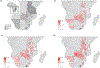
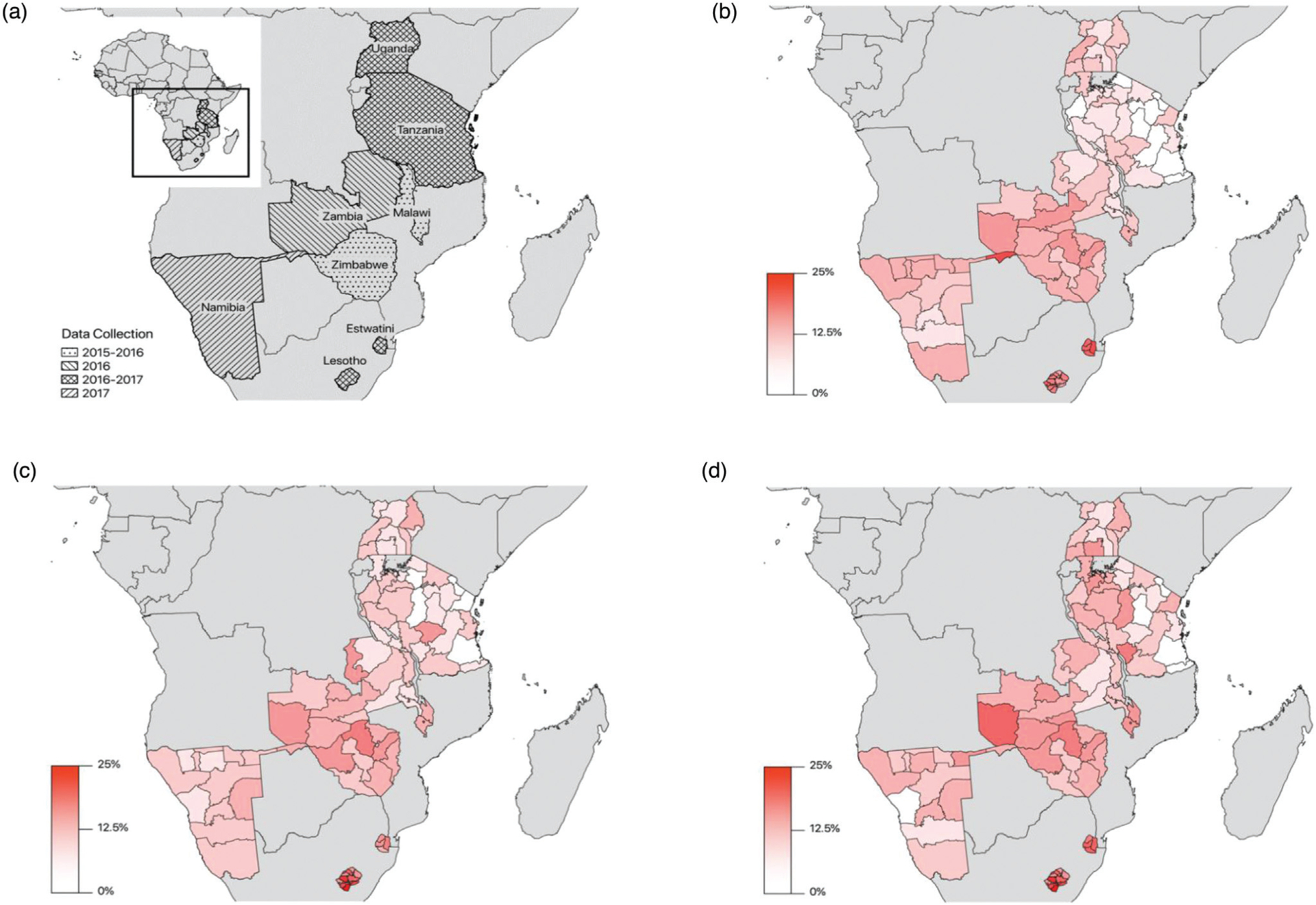
Analysis of Population-based HIV Impact Assessments in Eswatini, Lesotho, Malawi, Namibia, Tanzania, Uganda, Zambia, and Zimbabwe.
Methods:
We examined associations between reported partner age and recent HIV infection among AGYW, incorporating male population-level HIV characteristics by age-band. Recent HIV infection was defined using the LAg avidity assay algorithm. Viremia was defined as a viral load of more than 1000 copies/ml, regardless of serostatus. Logistic regression compared recent infection in AGYW with older male partners to those reporting younger partners. Dyadic analysis examined cohabitating male partner age, HIV status, and viremia to assess associations with AGYW infection.
Results:
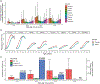
Among 17 813 AGYW, increasing partner age was associated with higher odds of recent infection, peaking for partners aged 35–44 (adjusted odds ratio = 8.94, 95% confidence interval: 2.63–30.37) compared with partners aged 15–24.Population-level viremia was highest in this male age-band. Dyadic analyses of 5432 partnerships confirmed the association between partner age-band and prevalent HIV infection (male spousal age 35–44-adjusted odds ratio = 3.82, 95% confidence interval: 2.17–6.75). Most new infections were in AGYW with partners aged 25–34, as most AGYW had partners in this age-band.
Conclusion:
These results provide evidence that men aged 25–34 drive most AGYW infections, but partners over 9 years older than AGYW in the 35–44 age-band confer greater risk. Population-level infectiousness and male age group should be incorporated into identifying high-risk typologies in AGYW. -
Subjects:
-
Keywords:
-
Source:AIDS. 37(1):113-123
-
Pubmed ID:36129107
-
Pubmed Central ID:PMC11000148
-
Document Type:
-
Funding:
-
Volume:37
-
Issue:1
-
Download URL:
-
File Type:
 [PDF - 655.59 KB]
 -
Collection(s):
-
Main Document Checksum:urn:sha256:e1f0c1e0efb008cca541b712111a3e226c20fced02da94696c3f545963e26194
Supporting Files


File Language:
English
 Was this page helpful?
 Found an issue?


CDC STACKS serves as an archival repository of CDC-published products including
scientific findings, journal articles, guidelines, recommendations, or other public health information authored or
co-authored by CDC or funded partners.
As a repository, CDC STACKS retains documents in their original published format to ensure public access to scientific information.
As a repository, CDC STACKS retains documents in their original published format to ensure public access to scientific information.
You May Also Like
COLLECTION
CDC Public Access