



Shiga Toxin–Producing Escherichia coli Infections Associated With Romaine Lettuce—United States, 2018
Supporting Files

-
11 05 2020 ; 11-05-
-
Available in CDC Stacks on April 01, 2024, 12:00 AM
File Language:
English
Details
-
Alternative Title:Clin Infect Dis
-
Personal Author:Bottichio, Lyndsay ; Keaton, Amelia ; Thomas, Deepam ; Fulton, Tara ; Tiffany, Amanda ; Frick, Anna ; Mattioli, Mia ; Kahler, Amy ; Murphy, Jennifer ; Otto, Mark ; Tesfai, Adiam ; Fields, Angela ; Kline, Kelly ; Fiddner, Jennifer ; Higa, Jeffrey ; Barnes, Amber ; Arroyo, Francine ; Salvatierra, Annabelle ; Holland, April ; Taylor, Wendy ; Nash, June ; Morawski, Bozena M. ; Correll, Sarah ; Hinnenkamp, Rachel ; Havens, Jeffrey ; Patel, Kane ; Schroeder, Morgan N. ; Gladney, Lori ; Martin, Haley ; Whitlock, Laura ; Dowell, Natasha ; Newhart, Corinne ; Watkins, Louise Francois ; Hill, Vincent ; Lance, Susan ; Harris, Stic ; Wise, Matthew ; Williams, Ian ; Basler, Colin ; Gieraltowski, Laura
-
Description:Background.
Produce-associated outbreaks of Shiga toxin–producing Escherichia coli (STEC) were first identified in 1991. In April 2018, New Jersey and Pennsylvania officials reported a cluster of STEC O157 infections associated with multiple locations of a restaurant chain. The Centers for Disease Control and Prevention (CDC) queried PulseNet, the national laboratory network for foodborne disease surveillance, for additional cases and began a national investigation.
Methods.
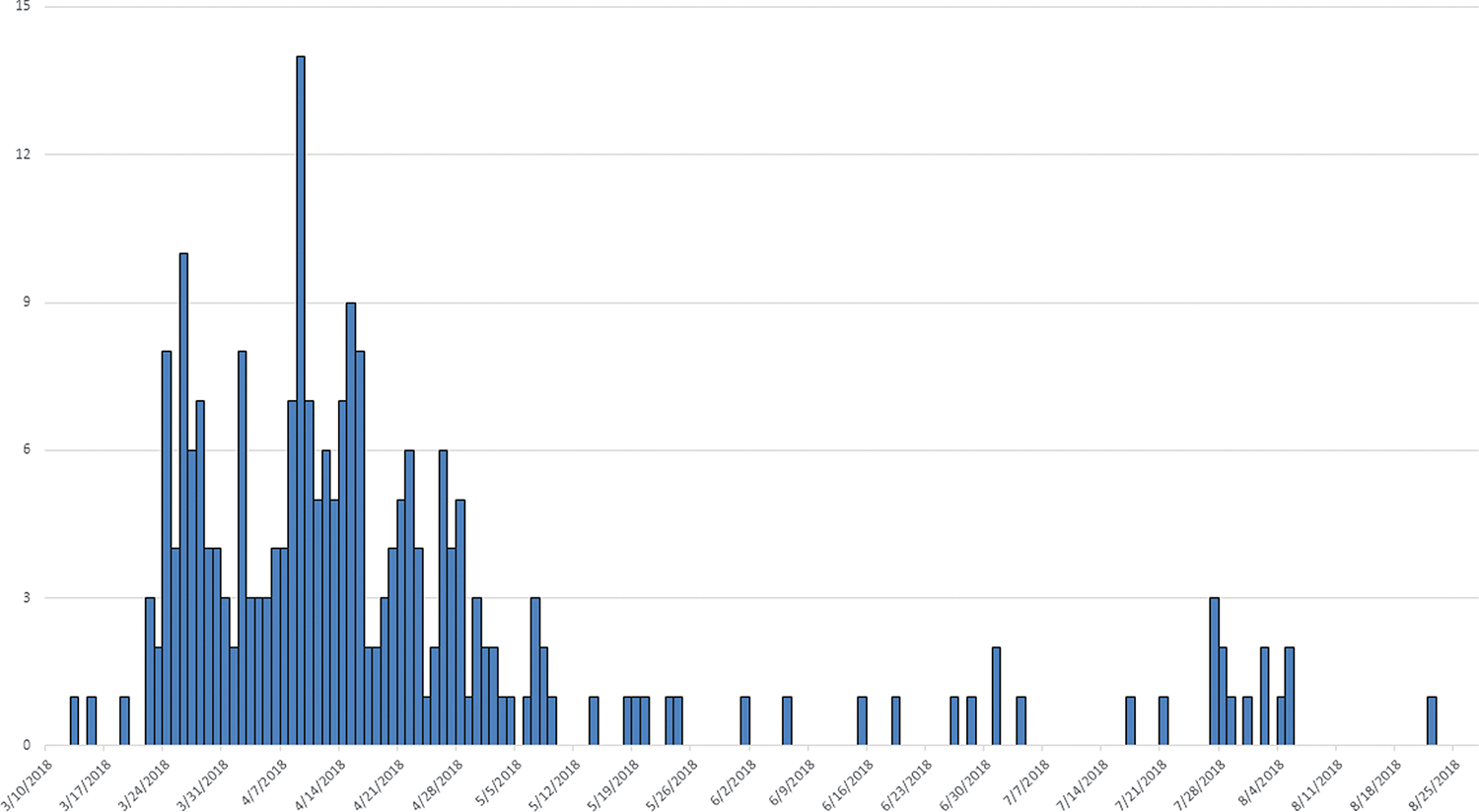
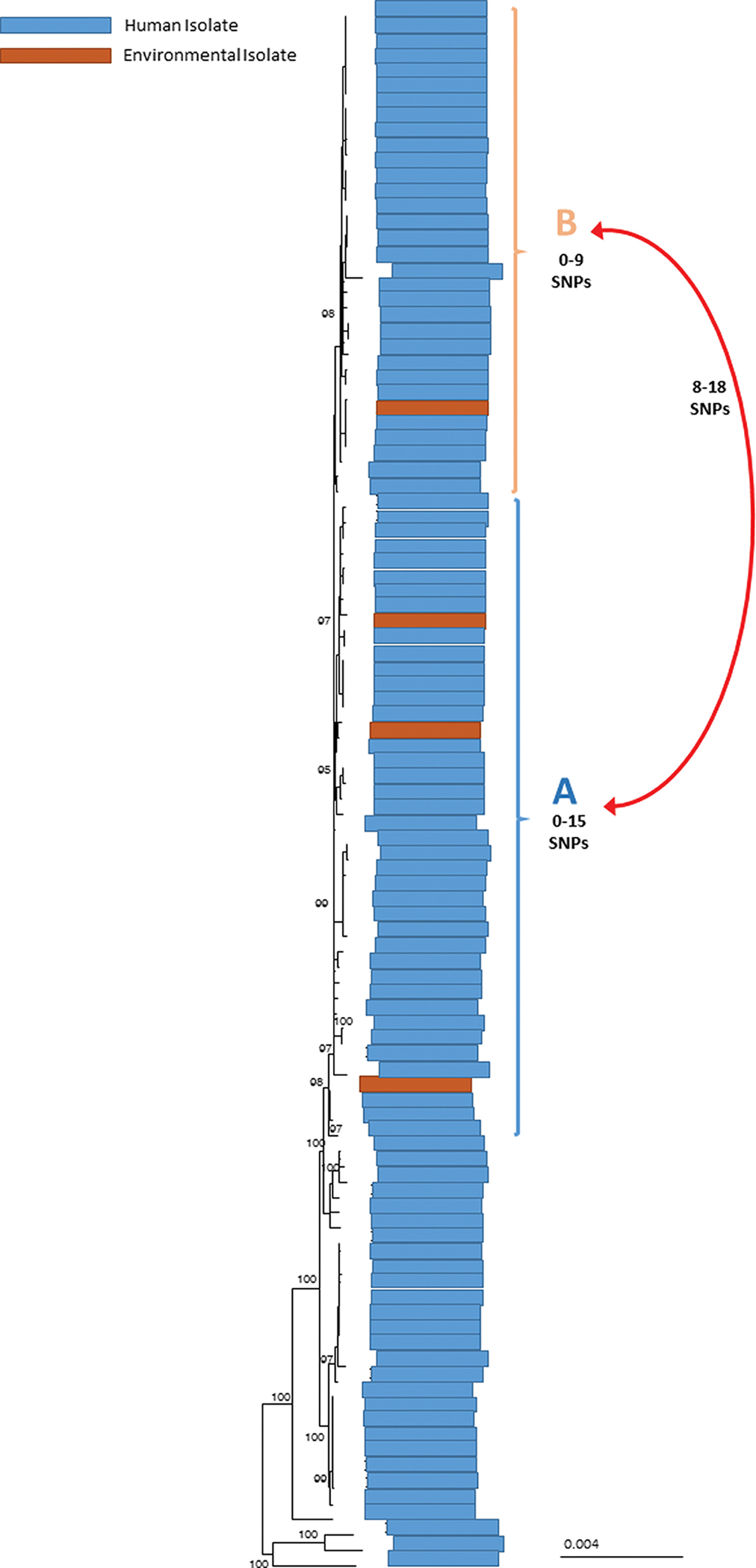
A case was defined as an infection between 13 March and 22 August 2018 with 1 of the 22 identified outbreak-associated E. coli O157:H7 or E. coli O61 pulsed-field gel electrophoresis pattern combinations, or with a strain STEC O157 that was closely related to the main outbreak strain by whole-genome sequencing. We conducted epidemiologic and traceback investigations to identify illness subclusters and common sources. A US Food and Drug Administration–led environmental assessment, which tested water, soil, manure, compost, and scat samples, was conducted to evaluate potential sources of STEC contamination.
Results.
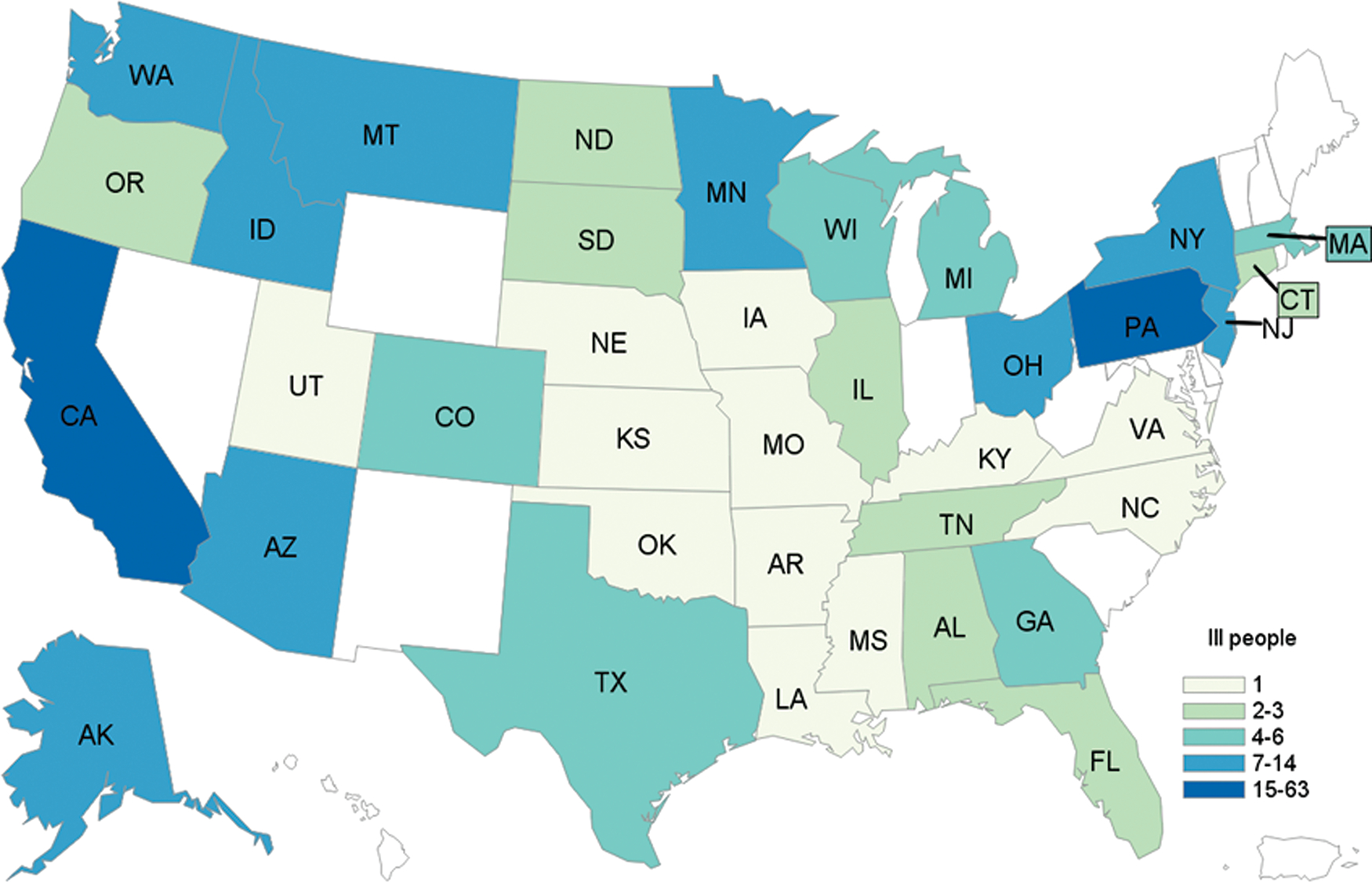
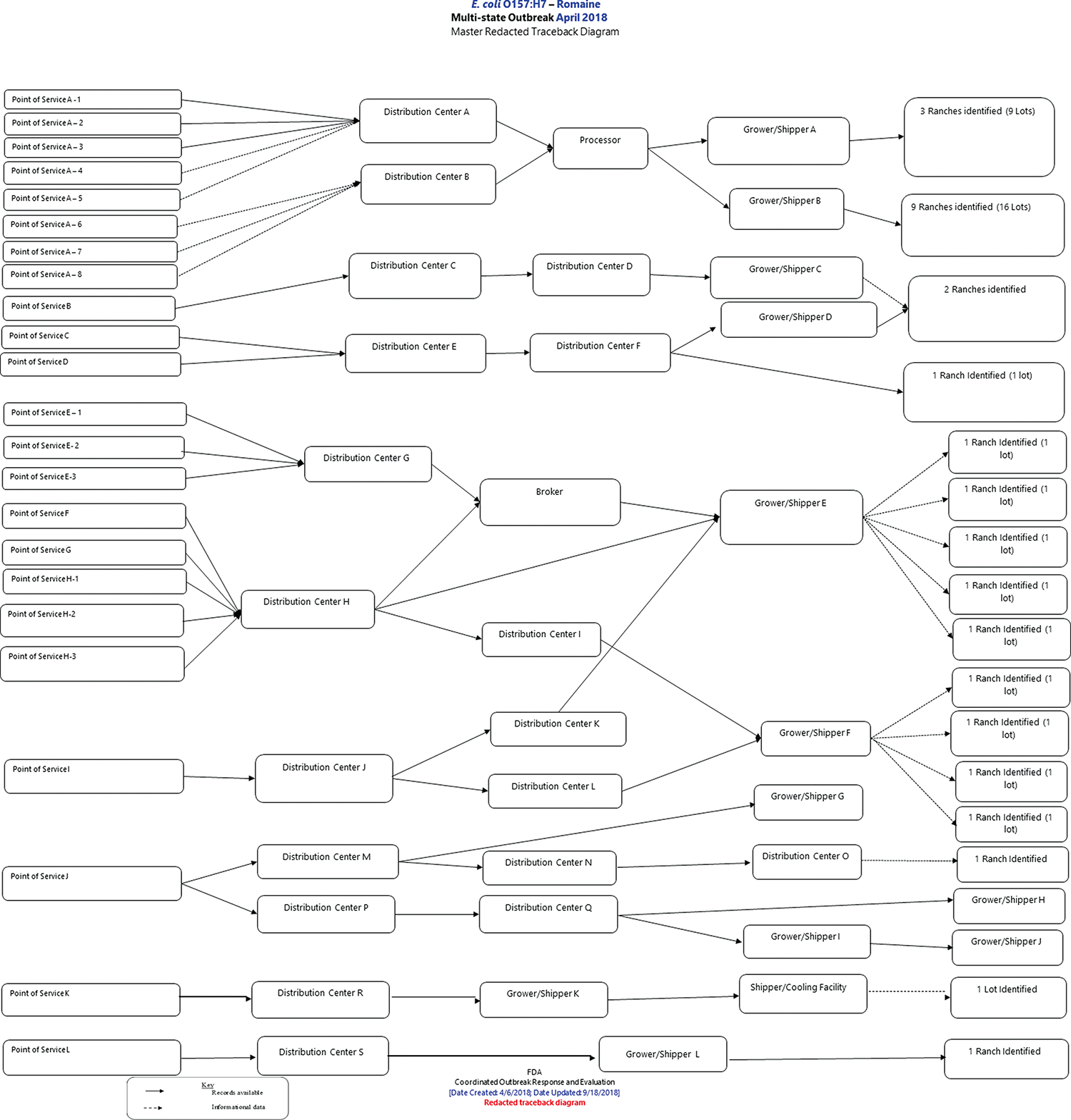
We identified 240 case-patients from 37 states; 104 were hospitalized, 28 developed hemolytic uremic syndrome, and 5 died. Of 179 people who were interviewed, 152 (85%) reported consuming romaine lettuce in the week before illness onset. Twenty subclusters were identified. Product traceback from subcluster restaurants identified numerous romaine lettuce distributors and growers; all lettuce originated from the Yuma growing region. Water samples collected from an irrigation canal in the region yielded the outbreak strain of STEC O157.
Conclusions.
We report on the largest multistate leafy greens–linked STEC O157 outbreak in several decades. The investigation highlights the complexities associated with investigating outbreaks involving widespread environmental contamination. -
Subjects:
-
Keywords:
-
Source:Clin Infect Dis. 71(8):e323-e330
-
Pubmed ID:31814028
-
Pubmed Central ID:PMC10982825
-
Document Type:
-
Funding:
-
Volume:71
-
Issue:8
-
Download URL:
-
File Type:
 [PDF - 781.55 KB]
 -
Collection(s):
-
Main Document Checksum:urn:sha256:6284c83bb82ab473d4b5d324be5cc645df0f6a204b3954e23d44bcd6f11d9679
Supporting Files


File Language:
English
 Was this page helpful?
 Found an issue?

CDC STACKS serves as an archival repository of CDC-published products including
scientific findings, journal articles, guidelines, recommendations, or other public health information authored or
co-authored by CDC or funded partners.
As a repository, CDC STACKS retains documents in their original published format to ensure public access to scientific information.
As a repository, CDC STACKS retains documents in their original published format to ensure public access to scientific information.
You May Also Like
COLLECTION
CDC Public Access