


Trends in the Prevalence and Treatment of Diabetic Macular Edema and Vision-Threatening Diabetic Retinopathy Among Commercially Insured Adults Aged <65 Years
Supporting Files

-
4 01 2023
-
File Language:
English
Details
-
Alternative Title:Diabetes Care
-
Personal Author:
-
Description:Objective:
Examine the ten-year trend in the prevalence and treatment of diabetic macular edema (DME) and vision-threatening diabetic retinopathy (VTDR) among commercially insured adults with diabetes.
Research Design and Methods:
We analyzed the ten-year trend (2009–2018) in healthcare claims for adults 18–64 years using the IBM® MarketScan® Database, a national convenience sample of employer-sponsored health insurance. We included patients continuously enrolled in commercial fee-for-service health insurance for 24 months who had a diabetes ICD-9/10-CM code on ≥1 inpatient or ≥2 different day outpatient claims in the index year or previous calendar year. We used diagnosis and procedure codes to calculate the annual prevalence of patients with ≥1 claims for: 1) any DME, 2) either DME/VTDR, and 3) anti-vascular endothelial growth factor injections [anti-VEGF] and laser photocoagulation treatment, stratified by any DME, VTDR with DME, and VTDR without DME. We calculated Average Annual Percent Change (AAPC).
Results:
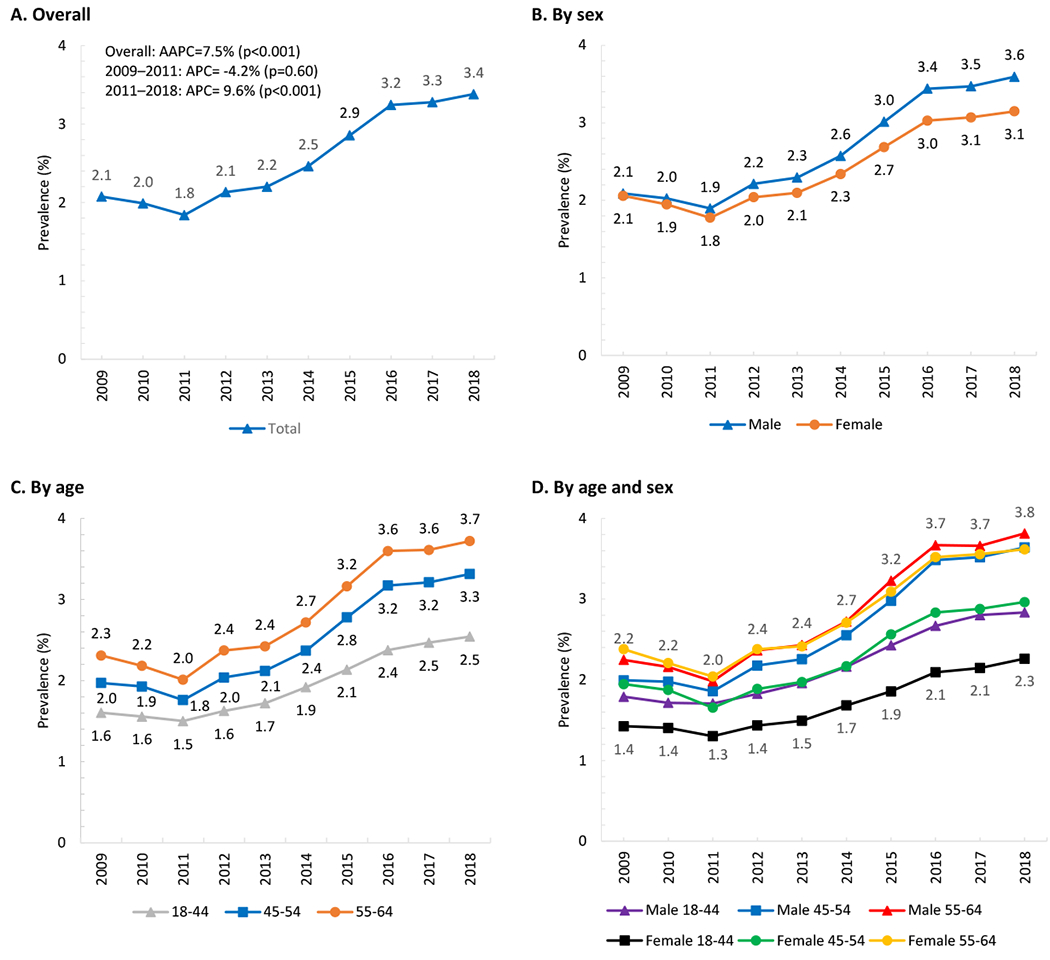
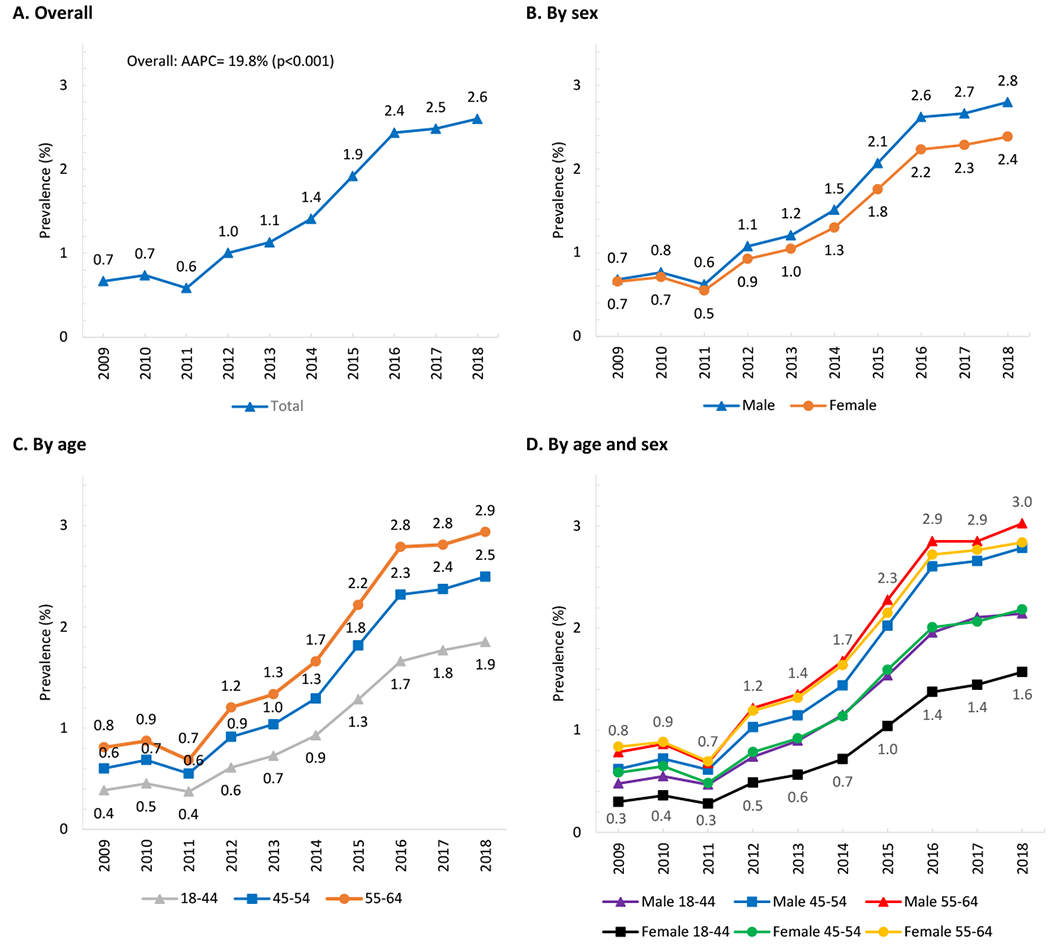
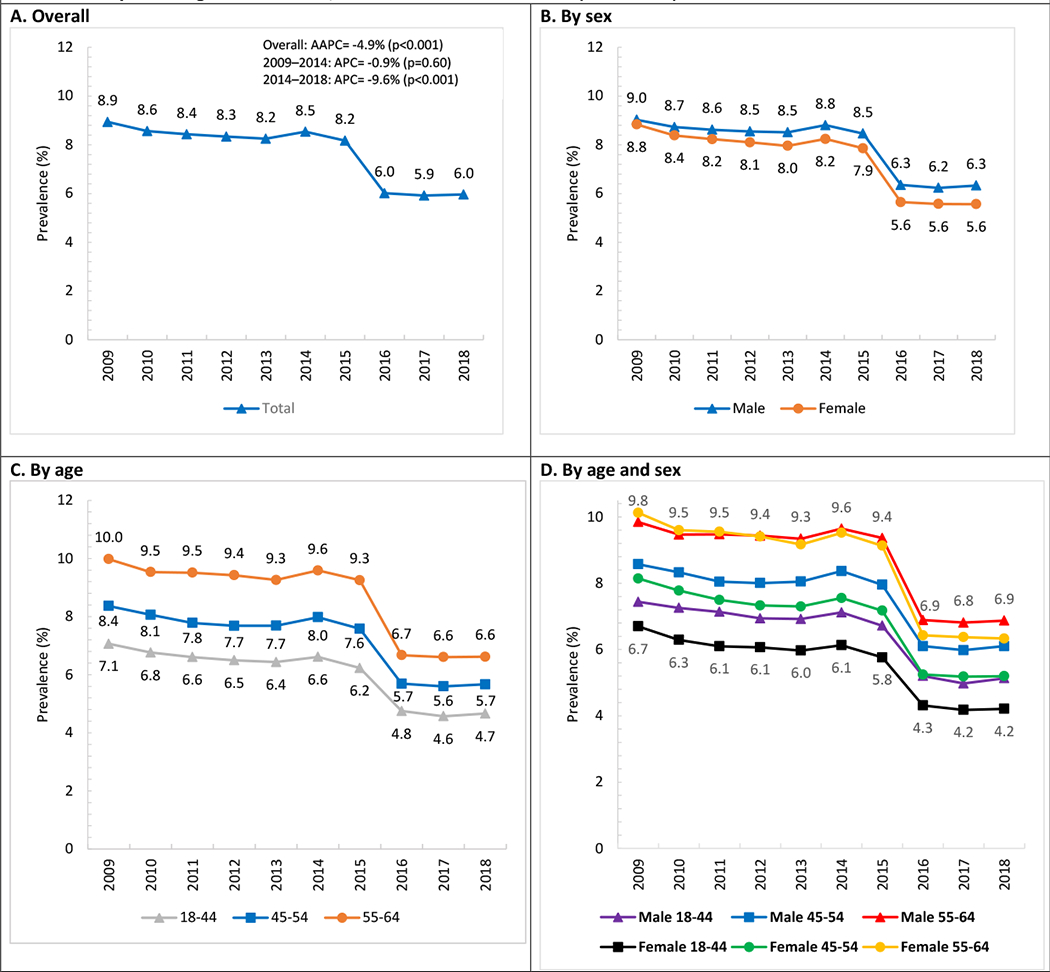
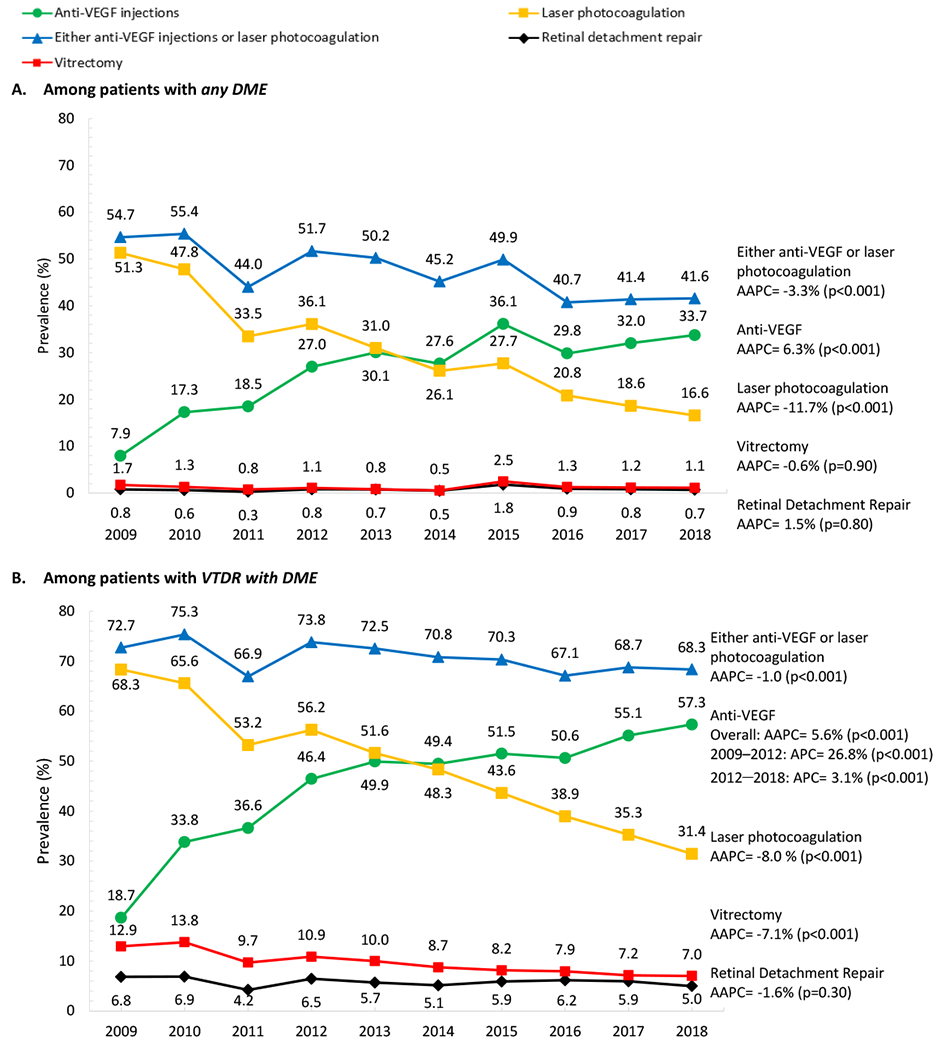
From 2009–2018, there was an increase in the annual prevalence of patients with DME/VTDR (2.1% to 3.4%; AAPC=7.5%; p<0.001) and any DME (0.7% to 2.6%; AAPC=19.8%; p<0.001). There were sex differences in the annual prevalence of DME/VTDR and any DME, with males having a higher prevalence than females. Annual claims for anti-VEGF increased among those with any DME (327%) and VTDR with DME (206%); laser photocoagulation decreased among patients with any DME (−68%), VTDR with DME (−54%), and VTDR without DME (−62%).
Conclusions:
Annual claims for DME/VTDR and anti-VEGF injections increased while laser photocoagulation decreased among commercially insured adults with diabetes.
-
Subjects:
-
Source:Diabetes Care. 46(4):687-696
-
Pubmed ID:36637915
-
Pubmed Central ID:PMC10928529
-
Document Type:
-
Funding:
-
Volume:46
-
Issue:4
-
Collection(s):
-
Main Document Checksum:urn:sha256:c7ca443a023dd452e141917c27655b5d89cb5811becba9d07e387ce770fc7d9f
-
Download URL:
-
File Type:
 [PDF
- 707.32 KB
]
[PDF
- 707.32 KB
]
Supporting Files


File Language:
English
ON THIS PAGE




CDC STACKS serves as an archival repository of CDC-published products including
scientific findings,
journal articles, guidelines, recommendations, or other public health information authored or
co-authored by CDC or funded partners.
As a repository, CDC STACKS retains documents in their original published format to ensure public access to scientific information.
As a repository, CDC STACKS retains documents in their original published format to ensure public access to scientific information.
You May Also Like
COLLECTION
CDC Public Access