


Comparison of Zika virus inactivation methods for reagent production and disinfection methods
Supporting Files
Public Domain

-
1 2021
-
File Language:
English
Details
-
Alternative Title:J Virol Methods
-
Personal Author:
-
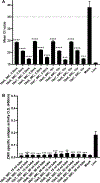
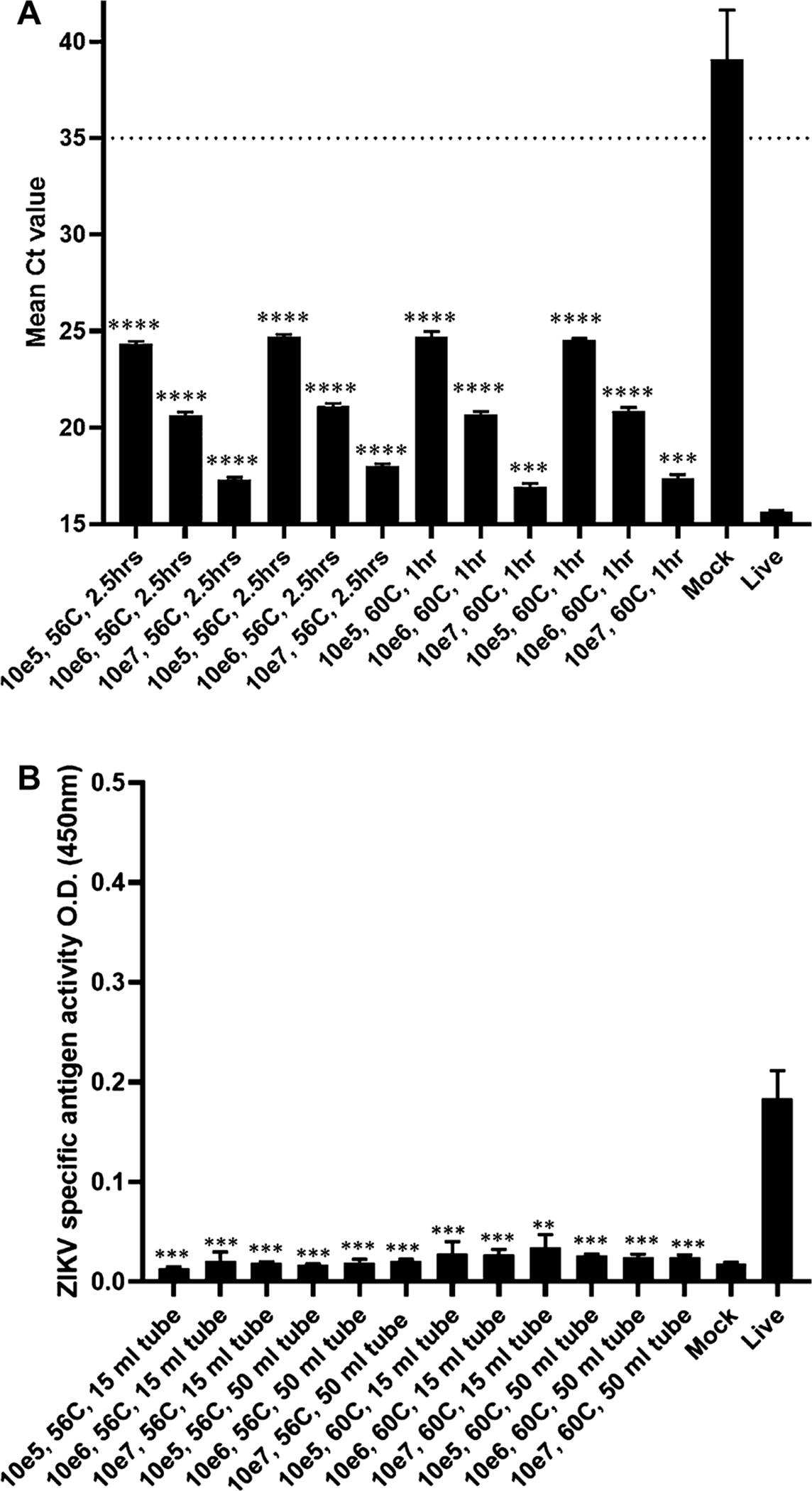
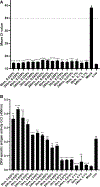
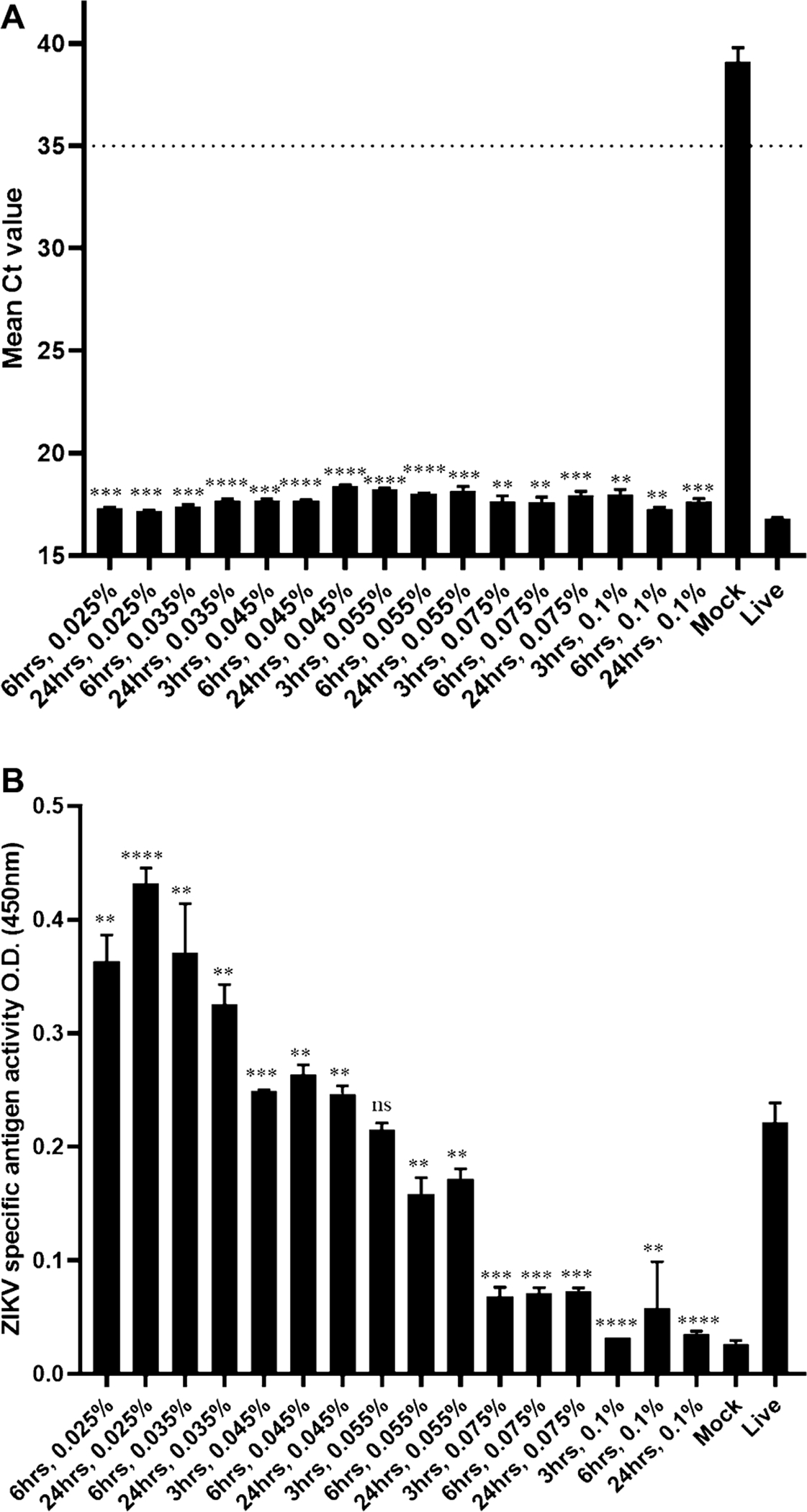
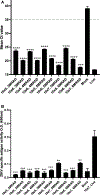
Description:Zika virus (ZIKV) infection remains a public health concern necessitating demand for long-term virus production for diagnostic assays and R&D activities. Inactivated virus constitutes an important component of the Trioplex rRT-PCR assay and serological IgM assay (MAC-ELISA). The aim of our study is to establish standard methods of ZIKV inactivation while maintaining antigenicity and RNA integrity. We tested viral supernatants by four different inactivation methods: 1. Heat inactivation at 56 °C and 60 °C; 2. Gamma-Irradiation; 3. Chemical inactivation by Beta-propiolactone (BPL) and 4. Fast-acting commercial disinfecting agents. Effectivity was measured by cytopathic effect (CPE) and plaque assay. RNA stability and antigenicity were measured by RT-PCR and MAC-ELISA, respectively. Results: Heat inactivation: Low titer samples, incubated at 56 °C for 2 h, showed neither CPE or plaques compared to high titer supernatants that required 2.5 h. Inactivation occurred at 60 °C for 60 min with all virus titers. Gamma irradiation: Samples irradiated at ≥3 Mrad for low virus concentrations and ≥5Mrad for high virus titer completely inactivated virus. Chemical Inactivation: Neither CPE nor plaques were observed with ≥0.045 % BPL inactivation of ZIKV. Disinfectant: Treatment of viral supernatants with Micro-Chem Plus™, inactivated virus in 2 min, whereas, Ethanol (70 %) and STERIS Coverage® Spray TB inactivated the virus in 5 min.
-
Source:J Virol Methods. 287:114004
-
Document Type:
-
Volume:287
-
Collection(s):
-
Main Document Checksum:urn:sha-512:296ff57eba185be7ade89e300ad7d93cb8264397b7c417005a9a82ede63c6e45cdda410d3b1d471df34371990bf607f9a67f6a8a237478071a064fdde419a933
-
Download URL:
-
File Type:
 [PDF
- 597.08 KB
]
[PDF
- 597.08 KB
]
Supporting Files


File Language:
English
ON THIS PAGE


CDC STACKS serves as an archival repository of CDC-published products including
scientific findings,
journal articles, guidelines, recommendations, or other public health information authored or
co-authored by CDC or funded partners.
As a repository, CDC STACKS retains documents in their original published format to ensure public access to scientific information.
As a repository, CDC STACKS retains documents in their original published format to ensure public access to scientific information.