


Analyzing disparity trends for health care insurance coverage among non-elderly adults in the US: evidence from the Behavioral Risk Factor Surveillance System, 1993–2009
Supporting Files

-
4 2017
-
File Language:
English
Details
-
Alternative Title:Eur J Health Econ
-
Personal Author:
-
Description:Objective
To explore the changing disparities in access to health care insurance in the United States using time-varying coefficient models.
Data
Secondary data from the Behavioral Risk Factor Surveillance System (BRFSS) from 1993 to 2009 was used.
Study design
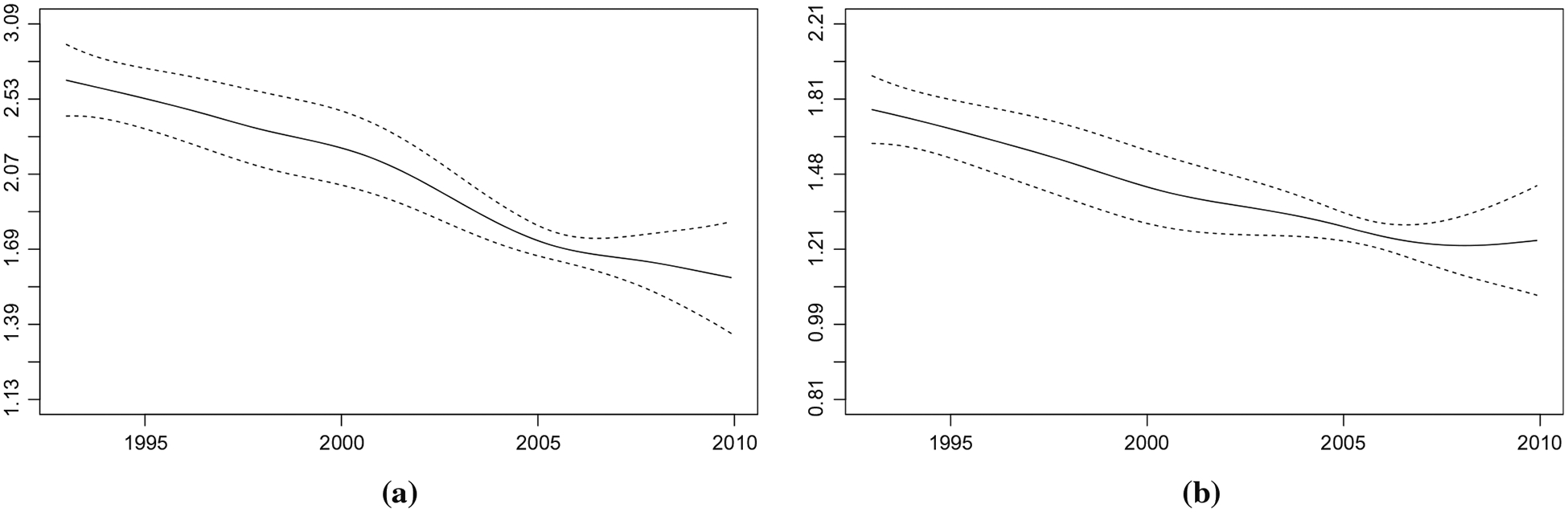
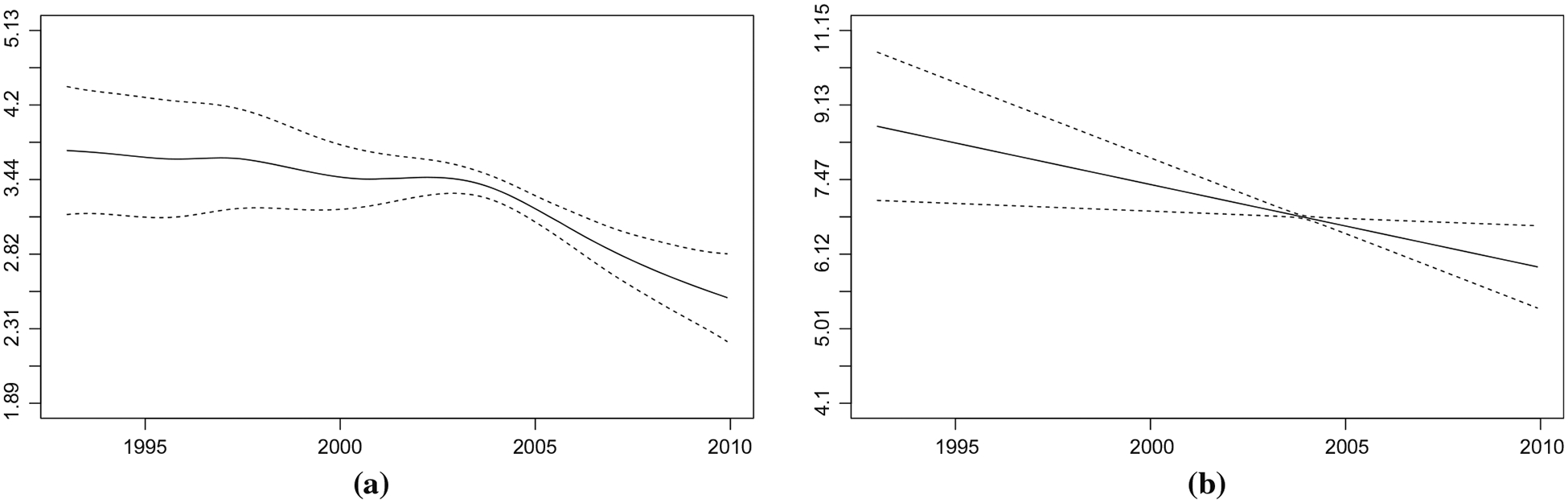
A time-varying coefficient model was constructed using a binary outcome of no enrollment in health insurance plan versus enrolled. The independent variables included age, sex, education, income, work status, race, and number of health conditions. Smooth functions of odds ratios and time were used to produce odds ratio plots.
Results
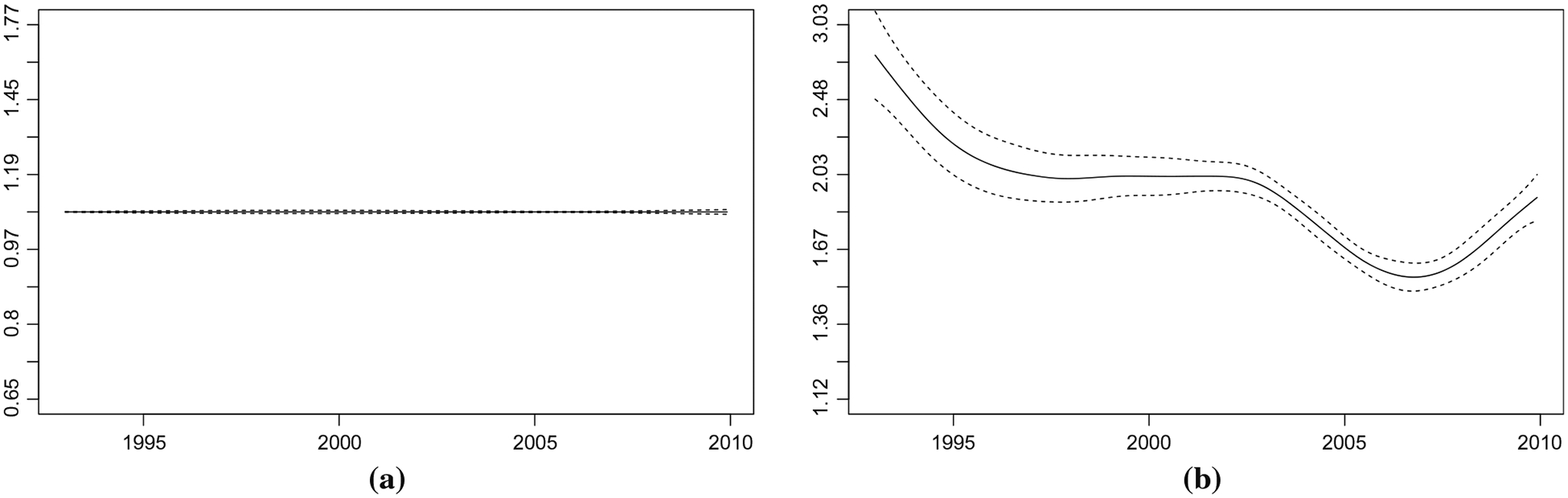
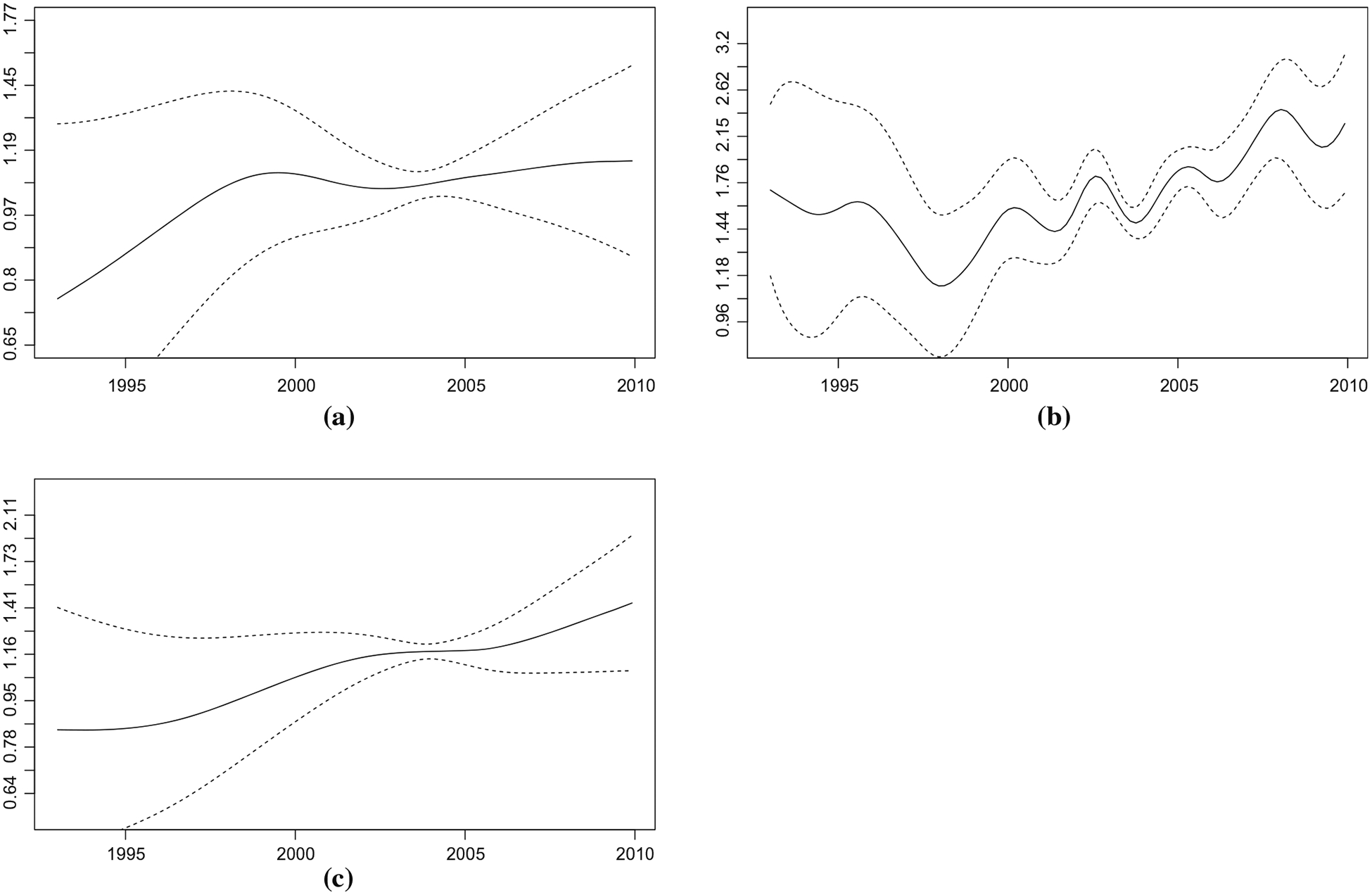
Significant time-varying coefficients were found for all the independent variables with the odds ratio plots showing changing trends except for a constant line for the categories of male, student, and having three health conditions. Some categories showed decreasing disparities, such as the income categories. However, some categories had increasing disparities in health insurance enrollment such as the education and race categories.
Conclusions
As the Affordable Care Act is being gradually implemented, studies are needed to provide baseline information about disparities in access to health insurance, in order to gauge any changes in health insurance access. The use of time-varying coefficient models with BRFSS data can be useful in accomplishing this task.
-
Keywords:
-
Source:Eur J Health Econ. 18(3):387-398
-
Pubmed ID:27241187
-
Pubmed Central ID:PMC10884940
-
Document Type:
-
Funding:
-
Volume:18
-
Issue:3
-
Collection(s):
-
Main Document Checksum:urn:sha256:3acde8e349a5db5d50578d1146879ab0ef2fc32a7f31b222d23705c15a81efe0
-
Download URL:
-
File Type:
 [PDF
- 740.80 KB
]
[PDF
- 740.80 KB
]
Supporting Files


File Language:
English
ON THIS PAGE






CDC STACKS serves as an archival repository of CDC-published products including
scientific findings,
journal articles, guidelines, recommendations, or other public health information authored or
co-authored by CDC or funded partners.
As a repository, CDC STACKS retains documents in their original published format to ensure public access to scientific information.
As a repository, CDC STACKS retains documents in their original published format to ensure public access to scientific information.
You May Also Like
COLLECTION
CDC Public Access