


Prevalence of and risk factors for microscopic and submicroscopic malaria infections in pregnancy: a systematic review and meta-analysis
Supporting Files

-
7 2023
-
File Language:
English
Details
-
Alternative Title:Lancet Glob Health
-
Personal Author:
-
Corporate Authors:
-
Description:Background
Malaria infections during pregnancy can cause adverse birth outcomes, yet many infections are undetected by microscopy. We aimed to describe the epidemiology of submicroscopic malaria infections in pregnant women in Asia, the Americas, and Africa using aggregated and individual participant data (IPD).
Methods
For this systematic review and meta-analysis, studies (published Jan 1, 1997 to Nov 10, 2021) with information on both microscopic and submicroscopic infections during pregnancy from Asia, the Americas, or Africa, identified in the Malaria-in-Pregnancy Library, were eligible. Studies (or subgroups or study groups) that selected participants on the basis of the presence of fever or a positive blood smear were excluded to avoid selection bias. We obtained IPD (when available) and aggregated data. Estimates of malaria transmission intensity and sulfadoxine–pyrimethamine resistance, matched by study location and year, were obtained using publicly available data. One-stage multivariable logit and multinomial models with random intercepts for study site were used in meta-analysis to assess prevalence of and risk factors for submicroscopic infections during pregnancy and at delivery. This study is registered with PROSPERO, number CRD42015027342.
Findings
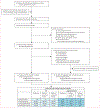
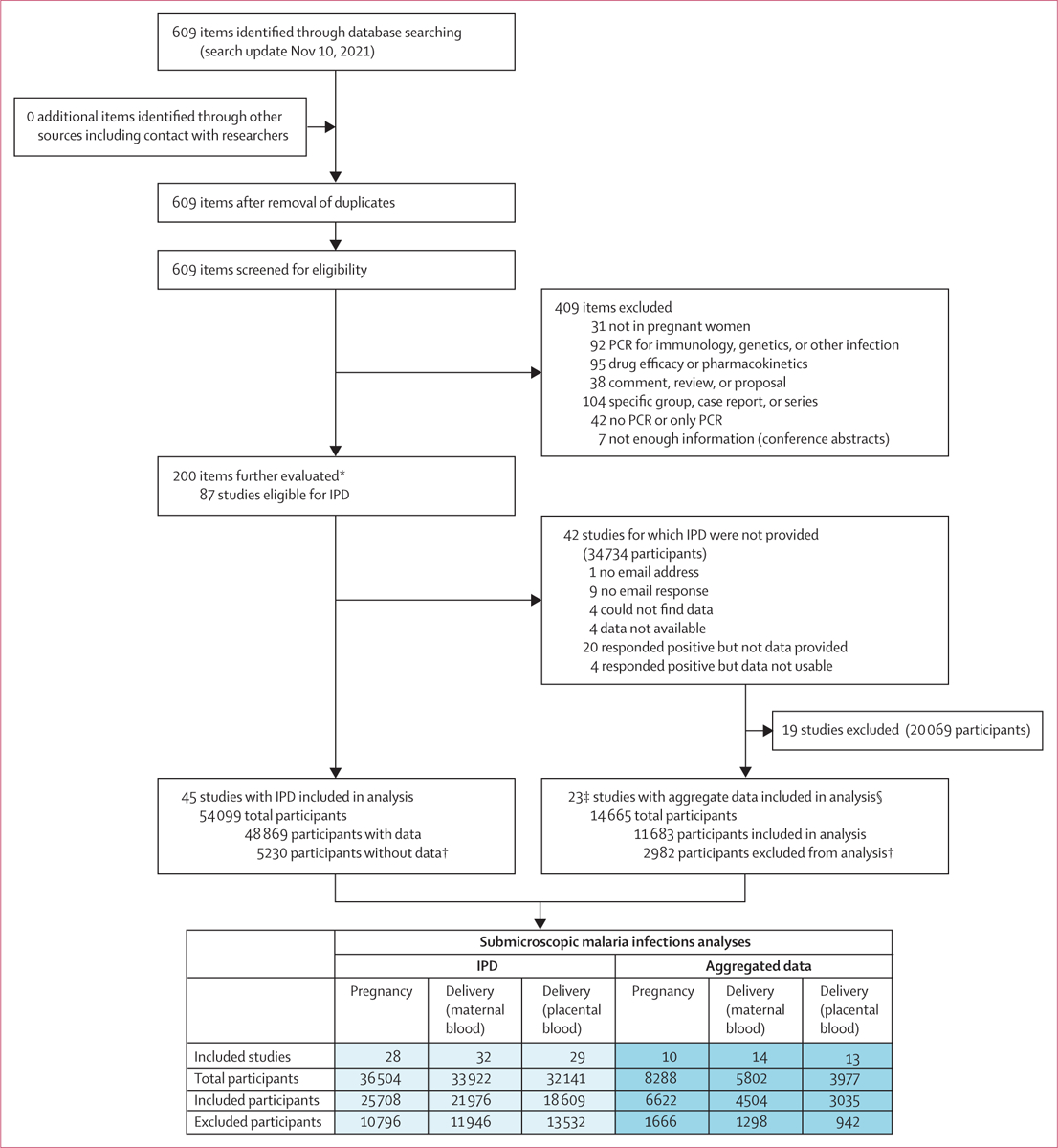
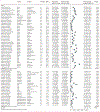
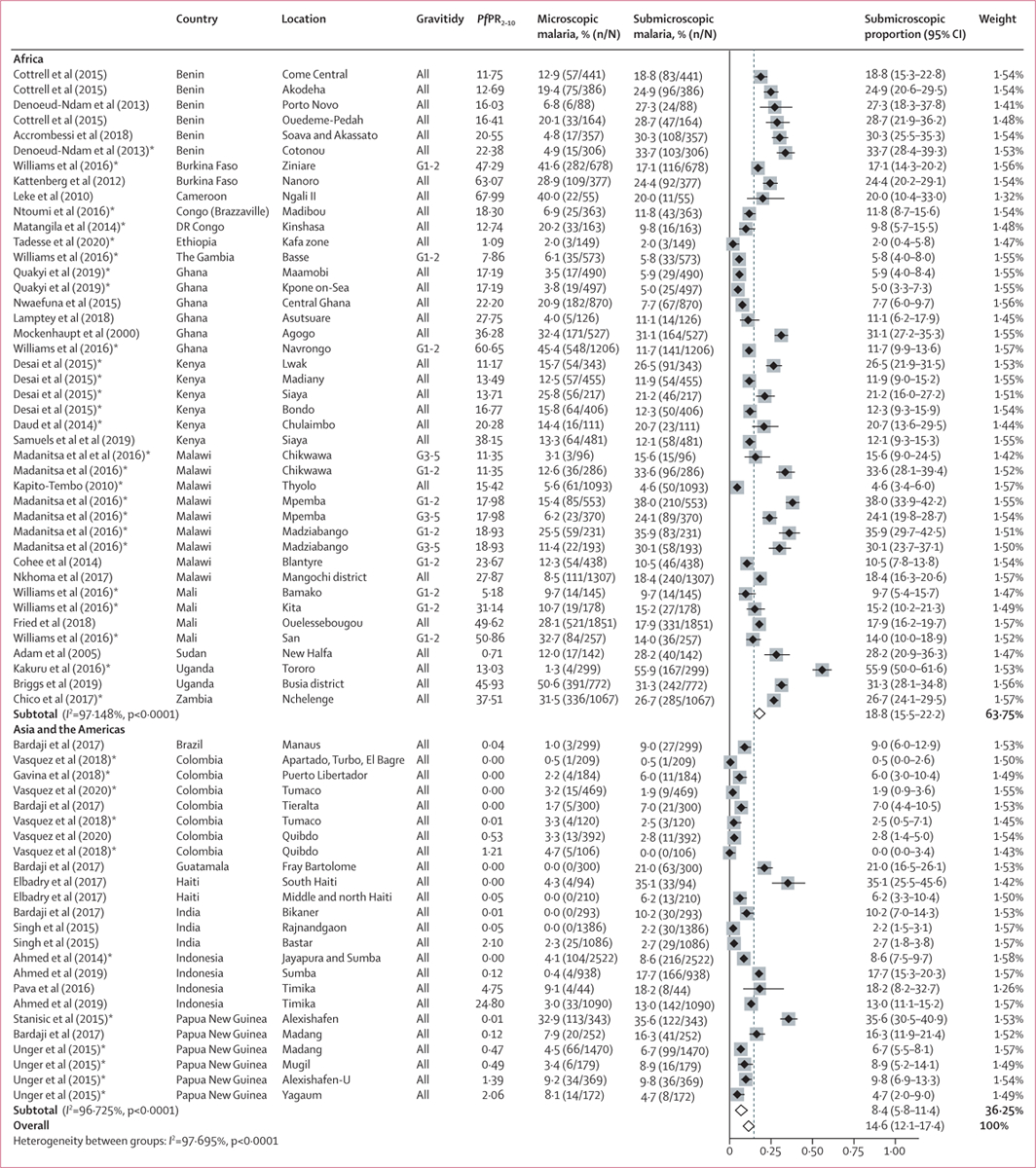
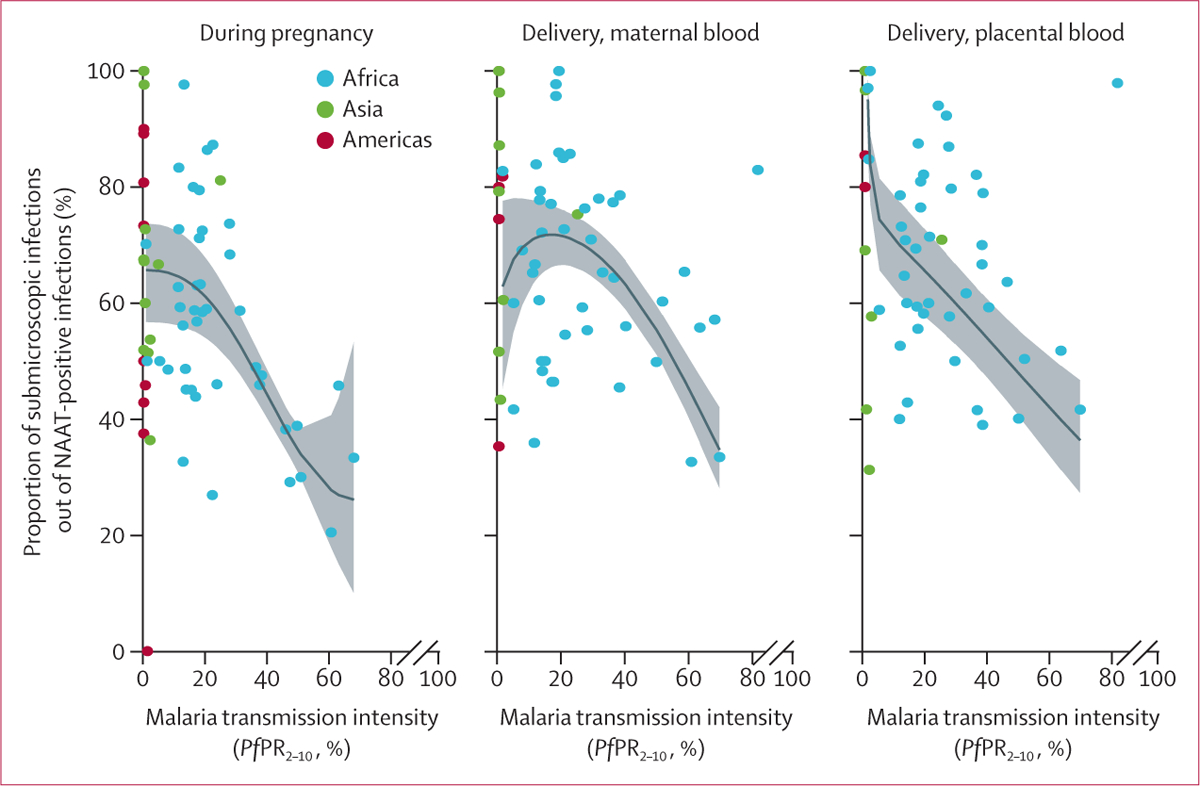
The search identified 87 eligible studies, 68 (78%) of which contributed to the analyses. Of these 68 studies, 45 (66%) studies contributed IPD (48 869 participants) and 23 (34%) studies contributed aggregated data (11 863 participants). During pregnancy, median prevalence estimates were 13·5% (range 0·0–55·9, 66 substudies) for submicroscopic and 8·0% (0·0–50·6, 66 substudies) for microscopic malaria. Among women with positive Plasmodium nucleic acid amplification tests (NAATs), the median proportion of submicroscopic infections was 58·7% (range 0·0–100); this proportion was highest in the Americas (73·3%, 0·0–100), followed by Asia (67·2%, 36·4–100) and Africa (56·5%, 20·5–97·7). In individual patient data analysis, compared with women with no malaria infections, those with submicroscopic infections were more likely to present with fever in Africa (adjusted odds ratio 1·32, 95% CI 1·02–1·72; p=0·038) but not in other regions. Among women with NAAT-positive infections in Asia and the Americas, Plasmodium vivax infections were more likely to be submicroscopic than Plasmodium falciparum infections (3·69, 2·45–5·54; p<0·0001). Risk factors for submicroscopic infections among women with NAAT-positive infections in Africa included older age (age ≥30 years), multigravidity, and no HIV infection.
Interpretation
During pregnancy, submicroscopic infections are more common than microscopic infections and are associated with fever in Africa. Malaria control in pregnancy should target both microscopic and submicroscopic infections.
Funding
Bill & Melinda Gates Foundation through the Worldwide Antimalarial Resistance Network.
-
Subjects:
-
Source:Lancet Glob Health. 11(7):e1061-e1074
-
Pubmed ID:37276878
-
Pubmed Central ID:PMC10880462
-
Document Type:
-
Funding:
-
Volume:11
-
Issue:7
-
Collection(s):
-
Main Document Checksum:urn:sha-512:0bee797cd77252e3e4e8db4a480c57e90abc880b68314eb98baa3e2ccdd6227438fa086634c6b529111c27a0a1f8f81d5a34cac821ea9ce581f387f8215e1c55
-
Download URL:
-
File Type:
 [PDF
- 791.02 KB
]
[PDF
- 791.02 KB
]
Supporting Files


File Language:
English
ON THIS PAGE

CDC STACKS serves as an archival repository of CDC-published products including
scientific findings,
journal articles, guidelines, recommendations, or other public health information authored or
co-authored by CDC or funded partners.
As a repository, CDC STACKS retains documents in their original published format to ensure public access to scientific information.
As a repository, CDC STACKS retains documents in their original published format to ensure public access to scientific information.
You May Also Like
COLLECTION
CDC Public Access