



Antihypertensive and statin medication adherence among Medicare Beneficiaries
Supporting Files

-
9 2022 ; 9-2022
-
Available in CDC Stacks on February 08, 2024, 12:00 AM
File Language:
English
Details
-
Alternative Title:Am J Prev Med
-
Personal Author:
-
Description:Introduction
Medication adherence is important for optimal management of chronic conditions, including hypertension and hypercholesterolemia. This study describes adherence to antihypertensive and statin medications, individually and collectively, and examines variation in adherence by demographic and geographic characteristics.
Methods
2017 prescription drug event data for beneficiaries with Medicare Part D coverage were assessed. Beneficiaries with a proportion of days covered ≥80% were considered adherent. Adjusted prevalence ratios were estimated to quantify associations between demographic and geographic characteristics and adherence. Adherence estimates were mapped by county of residence using a spatial empirical Bayesian smoothing technique to enhance stability. Analyses were conducted 2019–2021.
Results
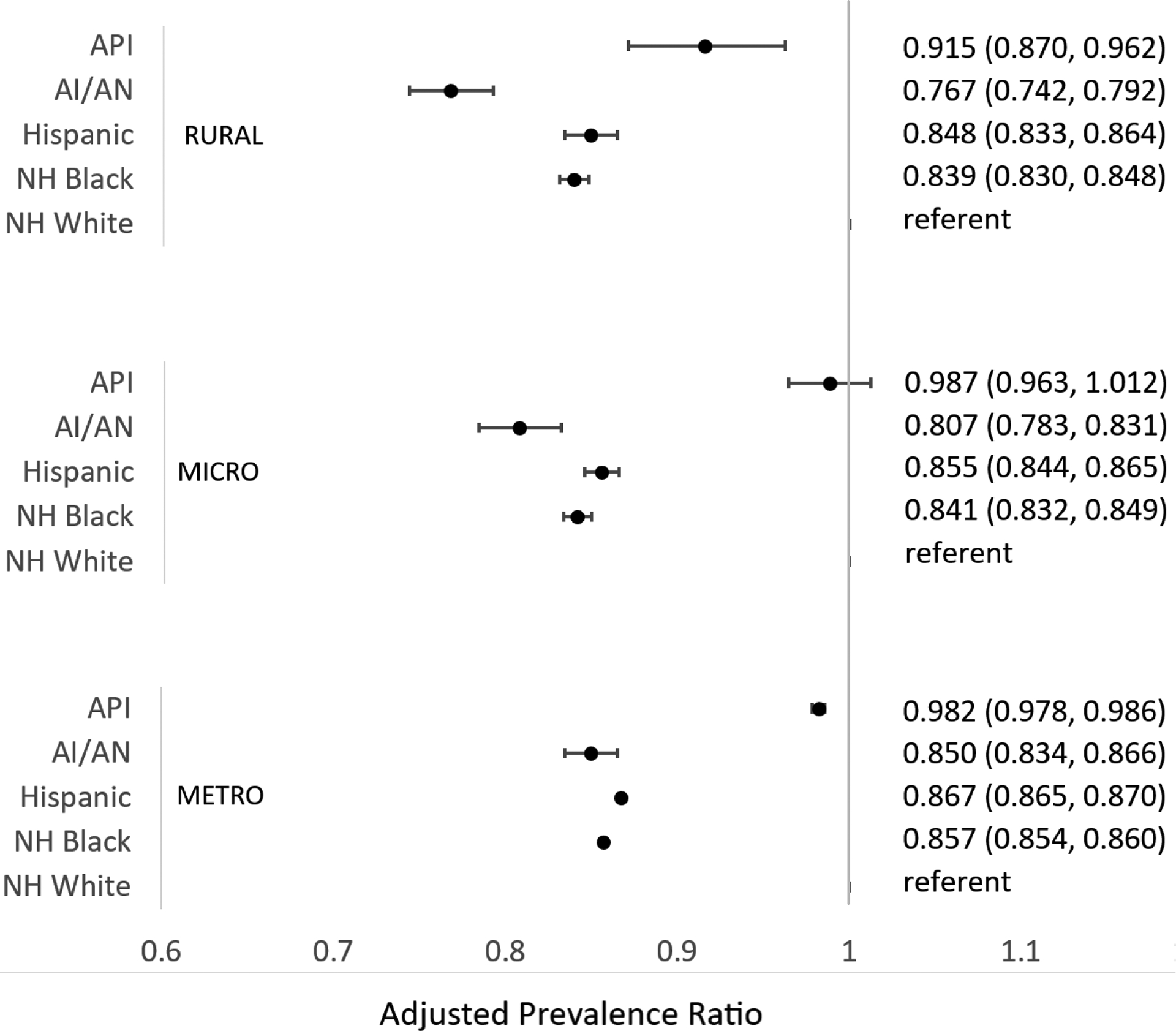
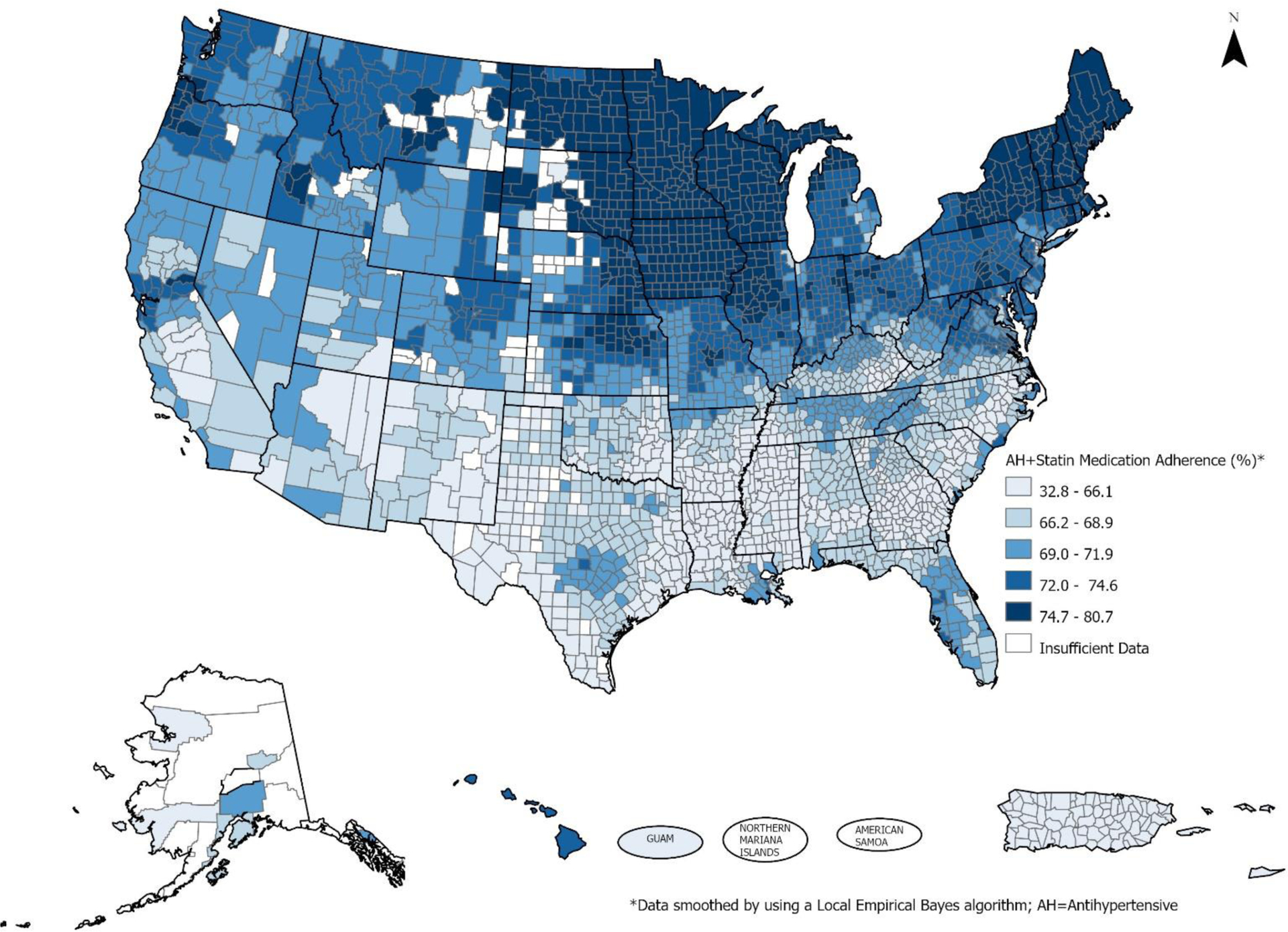
Among the 22.5 million beneficiaries prescribed antihypertensive medications, 77.1% were adherent; among the 16.1 million prescribed statin medications, 81.9% were adherent; and, among the 13.5 million prescribed antihypertensive and statin medications, 70.3% were adherent to both. Adherence varied by race/ethnicity: American Indian/Alaska Native (adjusted prevalence ratio 0.83, 95% confidence limit 0.82–0.842, Hispanic (0.90, 0.90–0.91) and non-Hispanic Black beneficiaries (0.87, 0.86–0.87) were less likely to be adherent compared to non-Hispanic White beneficiaries. County-level adherence ranged across the United States from 25.7% to 88.5% for antihypertensive medications, 36.0% to 93.8% for statin medications, and 20.8% to 92.9% for both medications combined, and tended to be the lowest in the southern United States.
Conclusions
This study highlights opportunities for efforts to remove barriers and support medication adherence, especially among racial/ethnic minority groups and within the regions at greatest risk for adverse cardiovascular outcomes. -
Keywords:
-
Source:Am J Prev Med. 63(3):313-323
-
Pubmed ID:35987557
-
Pubmed Central ID:PMC10851130
-
Document Type:
-
Funding:
-
Volume:63
-
Issue:3
-
Download URL:
-
File Type:
 [PDF - 691.34 KB]
 -
Collection(s):
-
Main Document Checksum:urn:sha256:d3359c1bf5d7a7e1a094b6475bce0991cf52e7c0c0acf306d0425f567c55f4ca
Supporting Files


File Language:
English
 Was this page helpful?
 Found an issue?

CDC STACKS serves as an archival repository of CDC-published products including
scientific findings, journal articles, guidelines, recommendations, or other public health information authored or
co-authored by CDC or funded partners.
As a repository, CDC STACKS retains documents in their original published format to ensure public access to scientific information.
As a repository, CDC STACKS retains documents in their original published format to ensure public access to scientific information.
You May Also Like
COLLECTION
CDC Public Access