



Concurrent Clade I and Clade II Monkeypox Virus Circulation, Cameroon, 1979–2022
Supporting Files
Public Domain

-
3 2024
File Language:
English
Details
-
Alternative Title:Emerg Infect Dis
-
Personal Author:Djuicy, Delia D. ; Sadeuh-Mba, Serge A. ; Bilounga, Chanceline N. ; Yonga, Martial G. ; Tchatchueng-Mbougua, Jules B. ; Essima, Gael D. ; Esso, Linda ; Nguidjol, Inès M.E. ; Metomb, Steve F. ; Chebo, Cornelius ; Agwe, Samuel M. ; Ankone, Placide A. ; Ngonla, Firmin N.N. ; Mossi, Hans M. ; Etoundi, Alain G.M. ; Eyangoh, Sara I. ; Kazanji, Mirdad ; Njouom, Richard
-
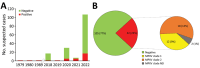
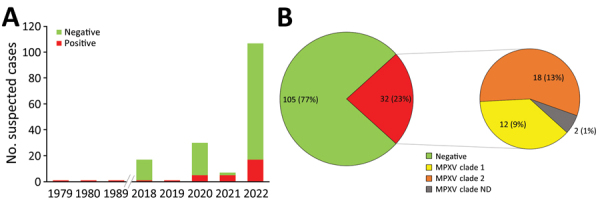
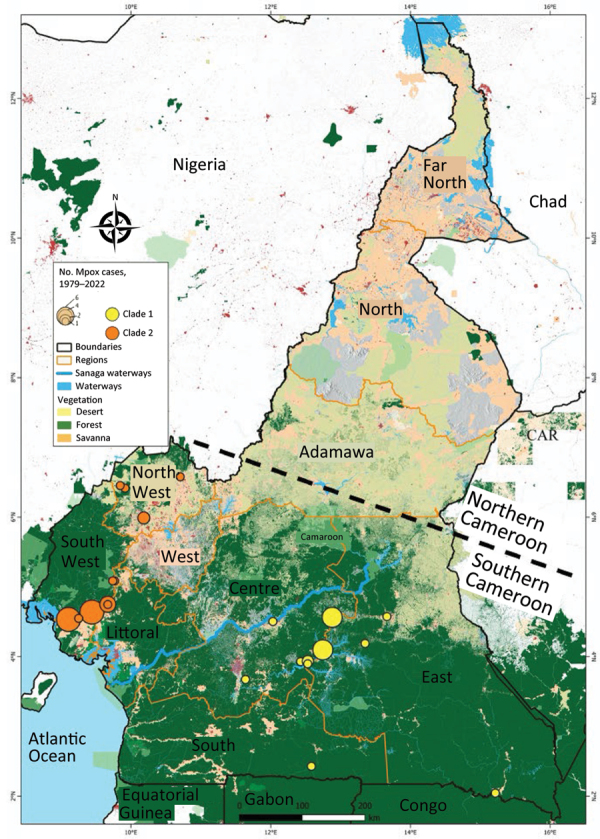
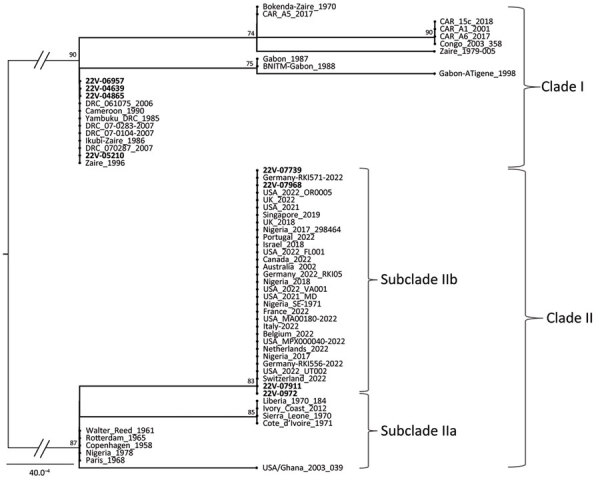
Description:During 1979-2022, Cameroon recorded 32 laboratory-confirmed mpox cases among 137 suspected mpox cases identified by the national surveillance network. The highest positivity rate occurred in 2022, indicating potential mpox re-emergence in Cameroon. Both clade I (n = 12) and clade II (n = 18) monkeypox virus (MPXV) were reported, a unique feature of mpox in Cameroon. The overall case-fatality ratio of 2.2% was associated with clade II. We found mpox occurred only in the forested southern part of the country, and MPXV phylogeographic structure revealed a clear geographic separation among concurrent circulating clades. Clade I originated from eastern regions close to neighboring mpox-endemic countries in Central Africa; clade II was prevalent in western regions close to West Africa. Our findings suggest that MPXV re-emerged after a 30-year lapse and might arise from different viral reservoirs unique to ecosystems in eastern and western rainforests of Cameroon.
-
Subjects:
-
Keywords:
-
Source:Emerg Infect Dis. 2024; 30(3):432-443
-
Pubmed ID:38325363
-
Pubmed Central ID:PMC10902553
-
Document Type:
-
Place as Subject:
-
Volume:30
-
Issue:3
-
Download URL:
-
File Type:
 [PDF - 2.78 MB]
 -
Collection(s):
-
Main Document Checksum:urn:sha256:cc40c46b1970101acaea245c2fbcc92569c9af4f09ce27abffa55610c50b6d48
Supporting Files


File Language:
English
 Was this page helpful?
 Found an issue?


CDC STACKS serves as an archival repository of CDC-published products including
scientific findings, journal articles, guidelines, recommendations, or other public health information authored or
co-authored by CDC or funded partners.
As a repository, CDC STACKS retains documents in their original published format to ensure public access to scientific information.
As a repository, CDC STACKS retains documents in their original published format to ensure public access to scientific information.
You May Also Like
COLLECTION
Emerging Infectious Diseases