



Detection of SARS-associated Coronavirus in Throat Wash and Saliva in Early Diagnosis
Supporting Files
Public Domain

-
Jul 2004
File Language:
English
Details
-
Alternative Title:Emerg Infect Dis
-
Personal Author:Wang, Wei-Kung ; Chen, Shey-Ying ; Liu, I-Jung ; Chen, Yee-Chun ; Chen, Hui-Ling ; Yang, Chao-Fu ; Chen, Pei-Jer ; Yeh, Shiou-Hwei ; Kao, Chuan-Liang ; Huang, Li-Min ; Hsueh, Po-Ren ; Wang, Jann-Tay ; Sheng, Wang-Hwei ; Fang, Chi-Tai ; Hung, Chien-Ching ; Hsieh, Szu-Min ; Su, Chan-Ping ; Chiang, Wen-Chu ; Yang, Jyh-Yuan ; Lin, Jih-Hui ; Hsieh, Szu-Chia ; Hu, Hsien-Ping ; Chiang, Yu-Ping ; Wang, Jin-Town ; Yang, Pan-Chyr ; Chang, Shan-Chwen
-
Corporate Authors:
-
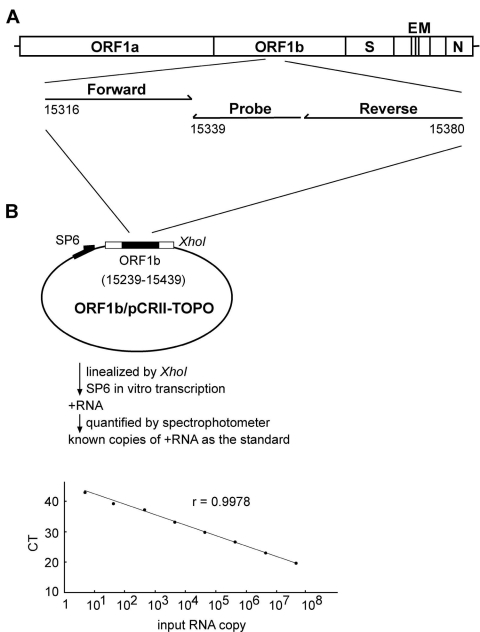
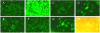
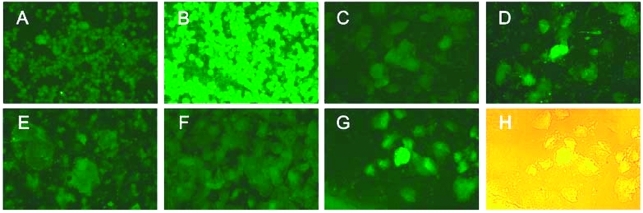
Description:The severe acute respiratory syndrome-associated coronavirus (SARS-CoV) is thought to be transmitted primarily through dispersal of droplets, but little is known about the load of SARS-CoV in oral droplets. We examined oral specimens, including throat wash and saliva, and found large amounts of SARS-CoV RNA in both throat wash (9.58 x 10(2) to 5.93 x 10(6) copies/mL) and saliva (7.08 x 10(3) to 6.38 x 10(8) copies/mL) from all specimens of 17 consecutive probable SARS case-patients, supporting the possibility of transmission through oral droplets. Immunofluorescence study showed replication of SARS-CoV in the cells derived from throat wash, demonstrating the possibility of developing a convenient antigen detection assay. This finding, with the high detection rate a median of 4 days after disease onset and before the development of lung lesions in four patients, suggests that throat wash and saliva should be included in sample collection guidelines for SARS diagnosis.
-
Subjects:
-
Source:Emerg Infect Dis. 10(7):1213-1219.
-
Document Type:
-
Place as Subject:
-
Volume:10
-
Issue:7
-
Download URL:
-
File Type:
 [PDF - 146.18 KB]
 -
Collection(s):
-
Main Document Checksum:urn:sha256:7a5161e5a70c2ed0d2c070f2e3bf5ab2ee9a8b701f4fd71c5e901cb8e4abeede
Supporting Files


File Language:
English
 Was this page helpful?
 Found an issue?

CDC STACKS serves as an archival repository of CDC-published products including
scientific findings, journal articles, guidelines, recommendations, or other public health information authored or
co-authored by CDC or funded partners.
As a repository, CDC STACKS retains documents in their original published format to ensure public access to scientific information.
As a repository, CDC STACKS retains documents in their original published format to ensure public access to scientific information.
You May Also Like
COLLECTION
Emerging Infectious Diseases