


Using Machine Learning Techniques and National Tuberculosis Surveillance Data to Predict Excess Growth in Genotyped Tuberculosis Clusters
Supporting Files

-
10 20 2022
-
File Language:
English
Details
-
Alternative Title:Am J Epidemiol
-
Personal Author:
-
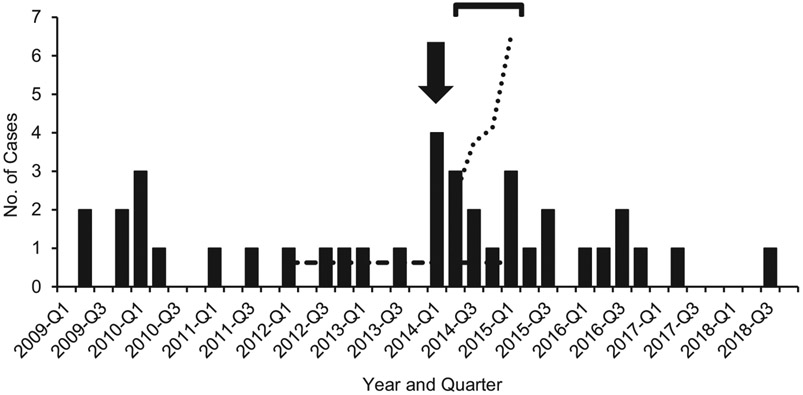
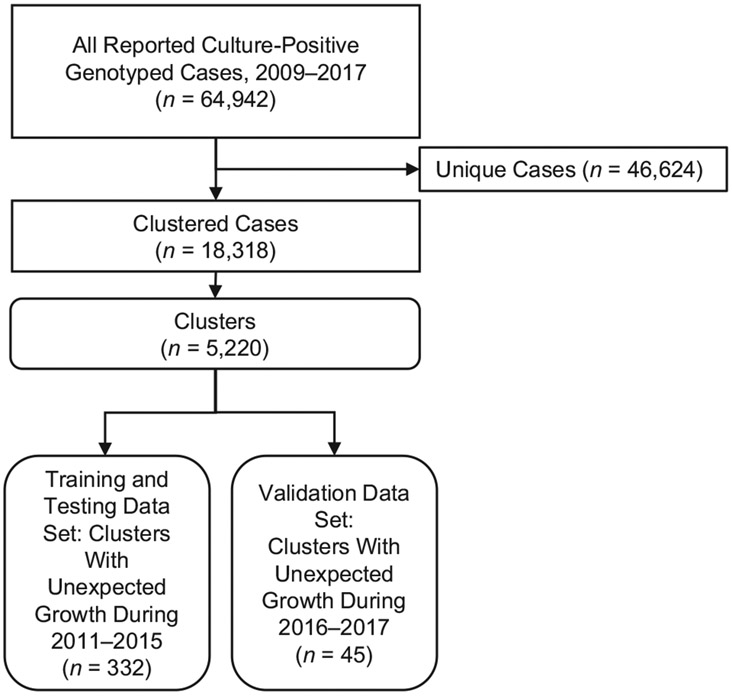
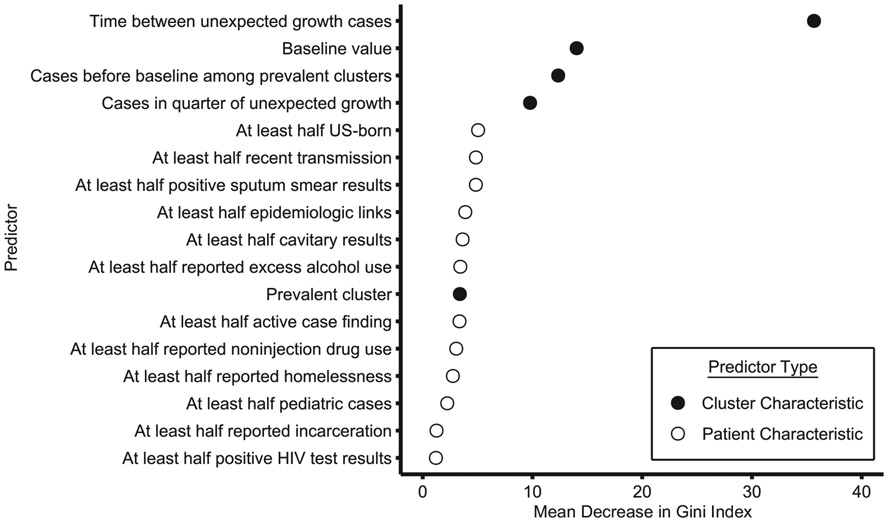
Description:The early identification of clusters of persons with tuberculosis (TB) that will grow to become outbreaks creates an opportunity for intervention in preventing future TB cases. We used surveillance data (2009-2018) from the United States, statistically derived definitions of unexpected growth, and machine-learning techniques to predict which clusters of genotype-matched TB cases are most likely to continue accumulating cases above expected growth within a 1-year follow-up period. We developed a model to predict which clusters are likely to grow on a training and testing data set that was generalizable to a validation data set. Our model showed that characteristics of clusters were more important than the social, demographic, and clinical characteristics of the patients in those clusters. For instance, the time between cases before unexpected growth was identified as the most important of our predictors. A faster accumulation of cases increased the probability of excess growth being predicted during the follow-up period. We have demonstrated that combining the characteristics of clusters and cases with machine learning can add to existing tools to help prioritize which clusters may benefit most from public health interventions. For example, consideration of an entire cluster, not only an individual patient, may assist in interrupting ongoing transmission.
-
Keywords:
-
Source:Am J Epidemiol. 191(11):1936-1943
-
Pubmed ID:35780450
-
Pubmed Central ID:PMC10790200
-
Document Type:
-
Funding:
-
Volume:191
-
Issue:11
-
Collection(s):
-
Main Document Checksum:urn:sha256:867ccb2a3e0b970ea8f8158898ade9769ee2374af2bc4948f5c9d6050632324c
-
Download URL:
-
File Type:
 [PDF
- 449.84 KB
]
[PDF
- 449.84 KB
]
Supporting Files


File Language:
English
ON THIS PAGE

CDC STACKS serves as an archival repository of CDC-published products including
scientific findings,
journal articles, guidelines, recommendations, or other public health information authored or
co-authored by CDC or funded partners.
As a repository, CDC STACKS retains documents in their original published format to ensure public access to scientific information.
As a repository, CDC STACKS retains documents in their original published format to ensure public access to scientific information.
You May Also Like
COLLECTION
CDC Public Access