



Peripheral blood DNA methylation-based machine learning models for prediction of knee osteoarthritis progression: biospecimens and data from the Osteoarthritis Initiative and Johnston County Osteoarthritis Project
Supporting Files

-
1 2023
-
Available in CDC Stacks on January 01, 2024, 12:00 AM

File Language:
English
Details
-
Alternative Title:Arthritis Rheumatol
-
Personal Author:
-
Description:Objective:
The lack of accurate biomarkers to predict knee osteoarthritis (OA) progression is a key unmet need in the OA field. The objective of this study was to develop baseline peripheral blood epigenetic biomarker models to predict knee OA progression.
Methods:
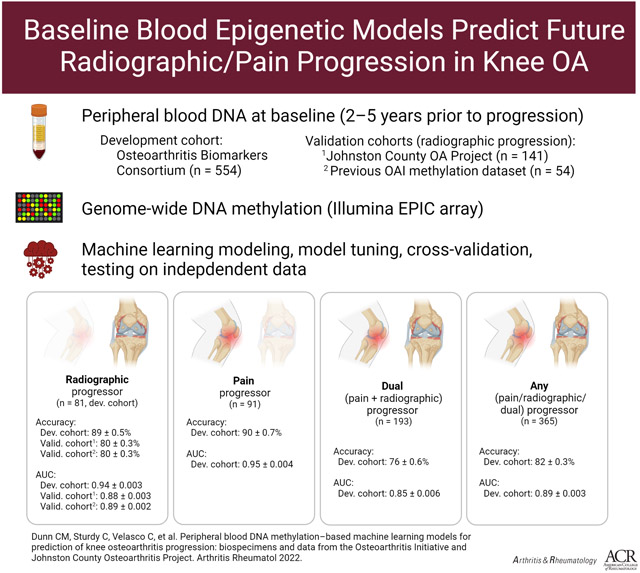
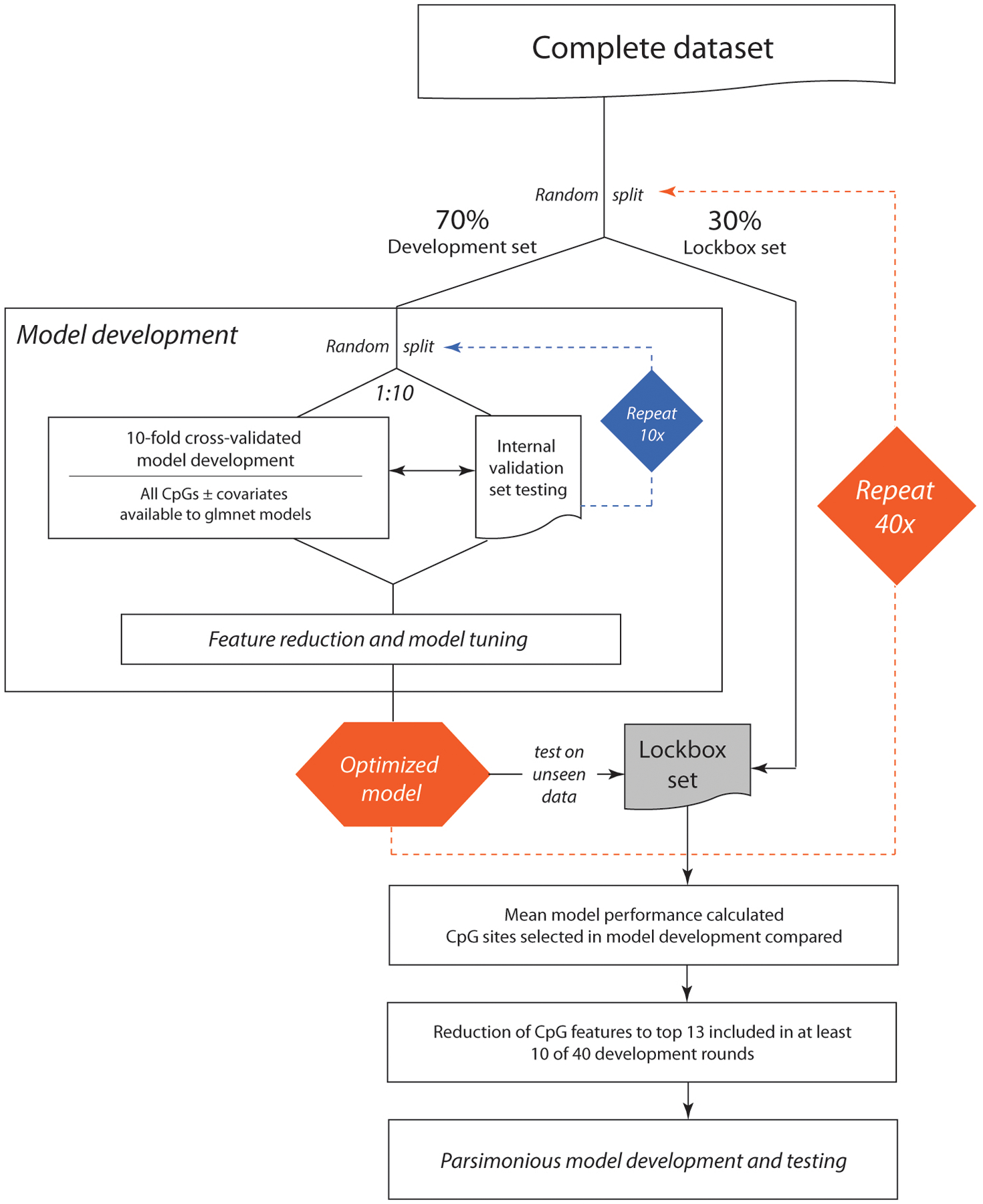
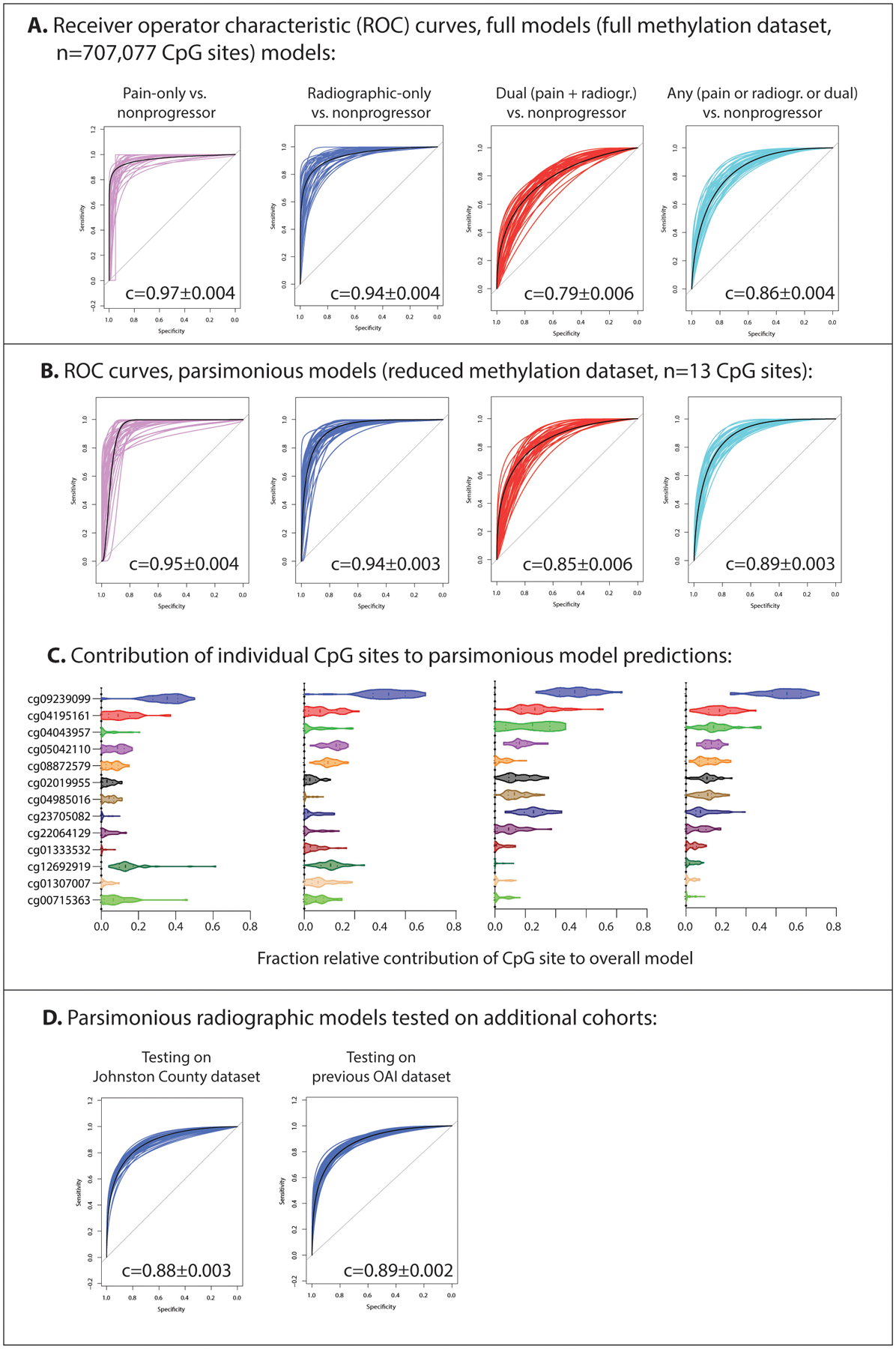
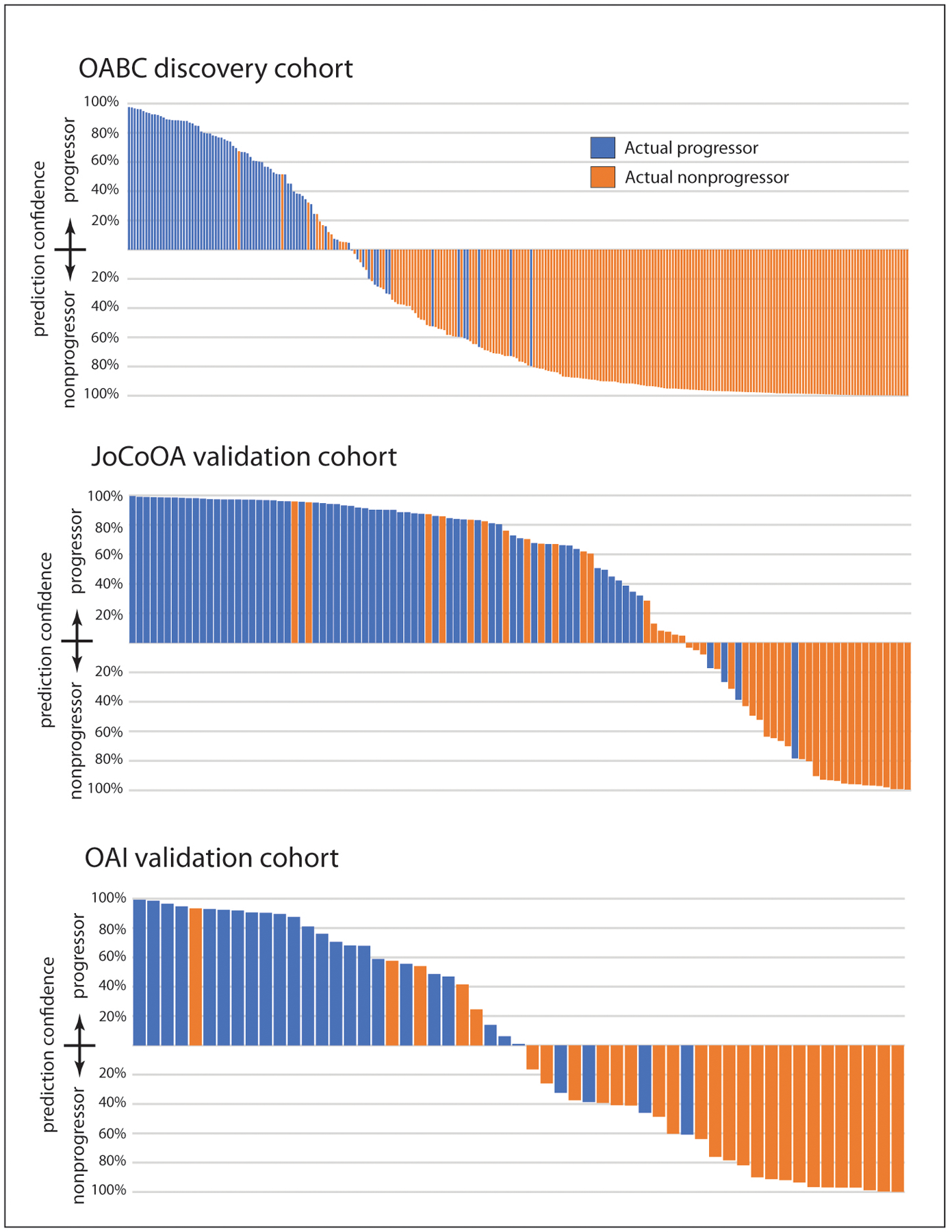
Genome-wide buffy coat DNA methylation patterns from the Osteoarthritis Biomarkers Consortium (OABC, n=554) were determined using Illumina MethylationEPIC arrays. Data were divided into development and validation sets and machine learning models were trained to classify future knee pain, radiographic, dual (pain + radiographic), and any (pain, radiographic, or dual) progression. Parsimonious models, using the top 13 CpGs most frequently selected during development, were tested on independent samples from participants in the Johnston County Osteoarthritis Project (JoCoOA, n=141) and a previously published Osteoarthritis Initiative dataset (OAI, n=54).
Results:
Full models accurately classified future radiographic (accuracy 87±0.8%, AUC=0.94±0.004, mean±SEM), pain (89±0.9%, 0.97±0.004), dual (72±0.7%, 0.79±0.006), and any progression (78±0.4%, 0.86±0.004). Pain-only and radiographic-only progressors were not distinguishable (accuracy 58±1%, AUC=0.62±0.001). Parsimonious models showed similar performance and accurately classified future radiographic progressors in OABC and in both validation cohorts (JoCoOA: accuracy 80±0.3%, AUC=0.88±0.003, OAI: accuracy 80±0.8%, AUC=0.89±0.002).
Conclusions:
Herein, we developed peripheral blood-based DNA methylation models to predict knee OA progression in the OABC cohort and validated our findings in two independent cohorts. Our data suggest that pain and structural progression share similar early systemic immune epigenotypes. Further work should focus on evaluating the pathophysiological consequences of differential DNA methylation and peripheral blood cell epigenotypes in individuals with knee OA. -
Subjects:
-
Source:Arthritis Rheumatol. 75(1):28-40
-
Pubmed ID:36411273
-
Pubmed Central ID:PMC9797424
-
Document Type:
-
Funding:U01 DP006266/DP/NCCDPHP CDC HHSUnited States/ ; P60 AR030701/AR/NIAMS NIH HHSUnited States/ ; U01 DP003206/DP/NCCDPHP CDC HHSUnited States/ ; P20GM125528/GM/NIGMS NIH HHSUnited States/ ; K08 AR070891/AR/NIAMS NIH HHSUnited States/ ; P60 AR049465/AR/NIAMS NIH HHSUnited States/ ; R61 AR078075/AR/NIAMS NIH HHSUnited States/ ; R01 AR076440/AR/NIAMS NIH HHSUnited States/ ; P60 AR064166/AR/NIAMS NIH HHSUnited States/ ; P30 AR072580/AR/NIAMS NIH HHSUnited States/ ; P20 GM125528/GM/NIGMS NIH HHSUnited States/
-
Volume:75
-
Issue:1
-
Download URL:
-
File Type:
 [PDF - 1.04 MB]
 -
Collection(s):
-
Main Document Checksum:urn:sha256:684812825019c99f123ff855cdd9176258e16865de8e5a8cde15074e0109dcf6
Supporting Files


File Language:
English
 Was this page helpful?
 Found an issue?

CDC STACKS serves as an archival repository of CDC-published products including
scientific findings, journal articles, guidelines, recommendations, or other public health information authored or
co-authored by CDC or funded partners.
As a repository, CDC STACKS retains documents in their original published format to ensure public access to scientific information.
As a repository, CDC STACKS retains documents in their original published format to ensure public access to scientific information.
You May Also Like
COLLECTION
CDC Public Access