



Highly Pathogenic Avian Influenza A(H5N1) Virus Clade 2.3.4.4b Infections in Wild Terrestrial Mammals, United States, 2022
Supporting Files
Public Domain

-
12 2023 ; 12-2023
File Language:
English
Details
-
Alternative Title:Emerg Infect Dis
-
Personal Author:Elsmo, Elizabeth J. ; Wünschmann, Arno ; Beckmen, Kimberlee B. ; Broughton-Neiswanger, Liam E. ; Buckles, Elizabeth L. ; Ellis, Jayne ; Fitzgerald, Scott D. ; Gerlach, Robert ; Hawkins, Shawna ; Ip, Hon S. ; Lankton, Julia S. ; Lemley, Erin M. ; Lenoch, Julianna B. ; Killian, Mary L. ; Lantz, Kristina ; Long, Lindsey ; Maes, Roger ; Mainenti, Marta ; Melotti, Julie ; Moriarty, Megan E. ; Nakagun, Shotaro ; Ruden, Rachel M. ; Shearn-Bochsler, Valerie ; Thompson, Danielle ; Torchetti, Mia K. ; Van Wettere, Arnaud J. ; Wise, Annabel G. ; Lim, Ailam L.
-
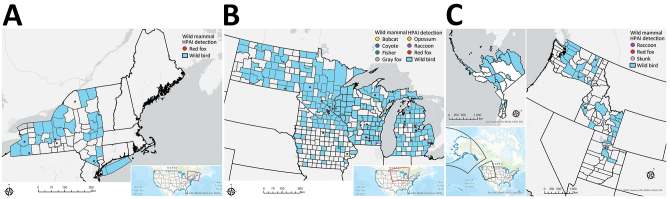
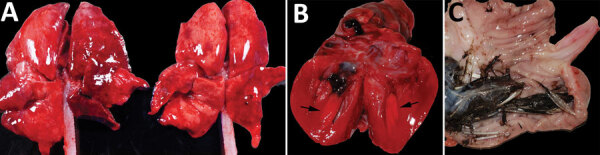
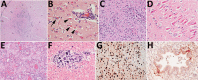
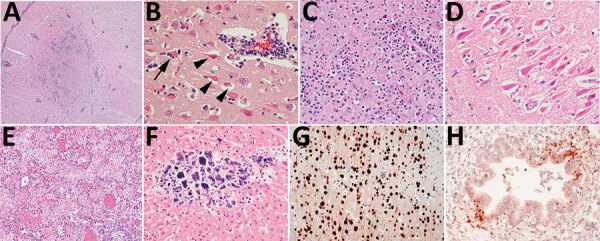
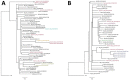
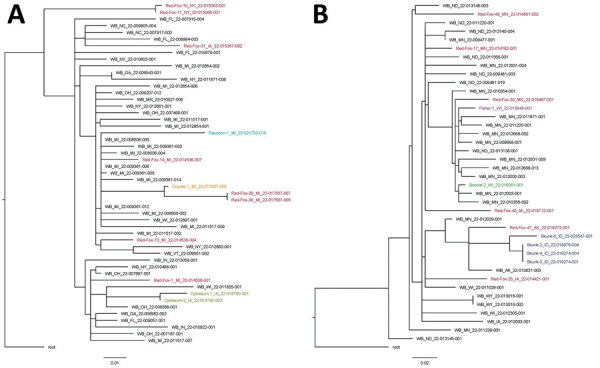
Description:We describe the pathology of natural infection with highly pathogenic avian influenza A(H5N1) virus of Eurasian lineage Goose/Guangdong clade 2.3.4.4b in 67 wild terrestrial mammals throughout the United States during April 1‒July 21, 2022. Affected mammals include 50 red foxes (Vulpes vulpes), 6 striped skunks (Mephitis mephitis), 4 raccoons (Procyon lotor), 2 bobcats (Lynx rufus), 2 Virginia opossums (Didelphis virginiana), 1 coyote (Canis latrans), 1 fisher (Pekania pennanti), and 1 gray fox (Urocyon cinereoargenteus). Infected mammals showed primarily neurologic signs. Necrotizing meningoencephalitis, interstitial pneumonia, and myocardial necrosis were the most common lesions; however, species variations in lesion distribution were observed. Genotype analysis of sequences from 48 animals indicates that these cases represent spillover infections from wild birds.
-
Subjects:
-
Keywords:
- influenza
- highly pathogenic avian influenza virus
- avian influenza
- influenza A(H5N1)
- viruses
- clade 2.3.4.4b
- respiratory infections
- wild terrestrial mammals
- fox
- bobcat
- raccoon
- skunk
- opossum
- coyote
- fisher
- meningitis/encephalitis
- zoonoses
- United States
- Animals
- United States
- Influenza A Virus, H5N1 Subtype
- Mephitidae
- Influenza in Birds
- Mammals
- Animals, Wild
- Foxes
-
Source:Emerg Infect Dis. 2023; 29(12):2451-2460
-
Pubmed ID:37987580
-
Pubmed Central ID:PMC10683806
-
Document Type:
-
Volume:29
-
Issue:12
-
Download URL:
-
File Type:
 [PDF - 3.68 MB]
 -
Collection(s):
-
Main Document Checksum:urn:sha256:6bc97e482b1face2c0cc4447322766bba49ee308b6b0d31a6814f1b74303bfc6
Supporting Files


File Language:
English
 Was this page helpful?
 Found an issue?

CDC STACKS serves as an archival repository of CDC-published products including
scientific findings, journal articles, guidelines, recommendations, or other public health information authored or
co-authored by CDC or funded partners.
As a repository, CDC STACKS retains documents in their original published format to ensure public access to scientific information.
As a repository, CDC STACKS retains documents in their original published format to ensure public access to scientific information.
You May Also Like
COLLECTION
Emerging Infectious Diseases