


Suspected Outbreak of Riboflavin Deficiency among Populations Reliant on Food Assistance: A Case Study of Drought-Stricken Karamoja, Uganda, 2009–2010
Supporting Files
Public Domain

-
May 02 2013
-
File Language:
English
Details
-
Alternative Title:PLoS One
-
Personal Author:
-
Description:Background
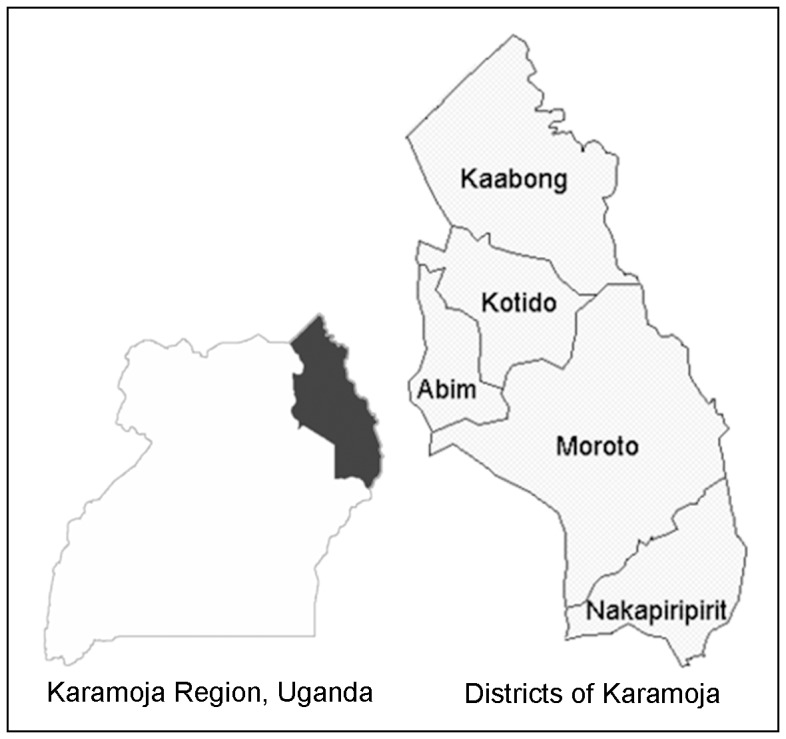
In 2009, a humanitarian response was launched to address a food security and livelihoods crisis in Karamoja, Uganda. During a polio immunization campaign in mid-August 2009, health workers in Nakapiripit District reported a concern about an increase in mouth sores, or angular stomatitis (AS) and gum ulcerations, among children in one village, and an investigation was launched.
Objective
This article describes the investigation, lessons learned, and provides guidance for monitoring micronutrient deficiencies among populations receiving food assistance.
Design
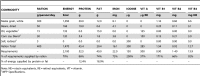
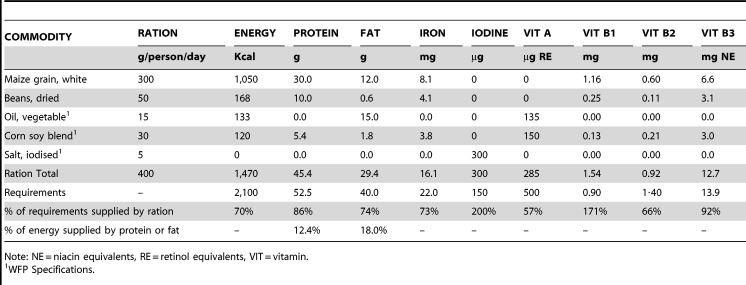
An investigation into a suspected outbreak of riboflavin (vitamin B2) deficiency was initiated, including a rapid assessment, mass screening, a convenience sample collection of blood specimens (n = 58 symptomatic cases and n = 18 asymptomatic individuals), and analysis of the general food ration (70% ration).
Results
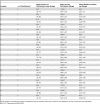
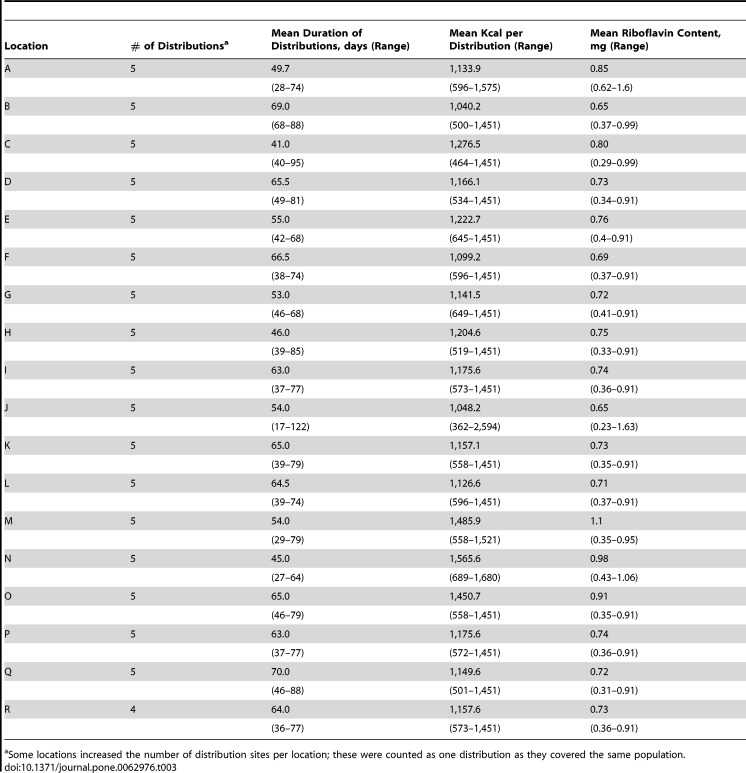
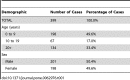
Findings showed signs of AS in only 399 (0.2%) of 179,172 screened individuals, including adults and children. Biochemical analysis confirmed riboflavin deficiency in 84.5% of specimens from symptomatic individuals and 94.4% of specimens from asymptomatic individuals. Ration distribution data showed that 55% of distributions provided less than half the riboflavin RDA.
Conclusion
Evidence was insufficient to confirm an actual outbreak of riboflavin deficiency, though the present investigation adds further documentation that micronutrient deficiencies continue to persist among populations in emergency settings. This article describes challenges, lessons learned, and guidance for monitoring micronutrient deficiencies among food assistance recipients, including: ongoing nutrition monitoring and surveillance; training and sensitization about micronutrient deficiencies, sensitization of the population about locally-available food, and identifying ways to improve micronutrient interventions.
-
Subjects:
-
Source:PLoS One. 2013; 8(5).
-
Document Type:
-
Place as Subject:
-
Volume:8
-
Issue:5
-
Collection(s):
-
Main Document Checksum:urn:sha256:3140d12de89eae92b003e0c050938be75021dc3e9f2ef03cb5c449f9c194d983
-
Download URL:
-
File Type:
 [PDF
- 273.89 KB
]
[PDF
- 273.89 KB
]
Supporting Files


File Language:
English
ON THIS PAGE


CDC STACKS serves as an archival repository of CDC-published products including
scientific findings,
journal articles, guidelines, recommendations, or other public health information authored or
co-authored by CDC or funded partners.
As a repository, CDC STACKS retains documents in their original published format to ensure public access to scientific information.
As a repository, CDC STACKS retains documents in their original published format to ensure public access to scientific information.
You May Also Like
COLLECTION
CDC Public Access