


A Cluster Randomized Study of The Safety of Integrated Treatment of Trachoma and Lymphatic Filariasis in Children and Adults in Sikasso, Mali
Supporting Files
Public Domain

-
May 09 2013
-
File Language:
English
Details
-
Alternative Title:PLoS Negl Trop Dis
-
Personal Author:
-
Description:Background
Neglected tropical diseases are co-endemic in many areas of the world, including sub Saharan Africa. Currently lymphatic filariasis (albendazole/ivermectin) and trachoma (azithromycin) are treated separately. Consequently, financial and logistical benefit can be gained from integration of preventive chemotherapy programs in such areas.
Methodology/Findings
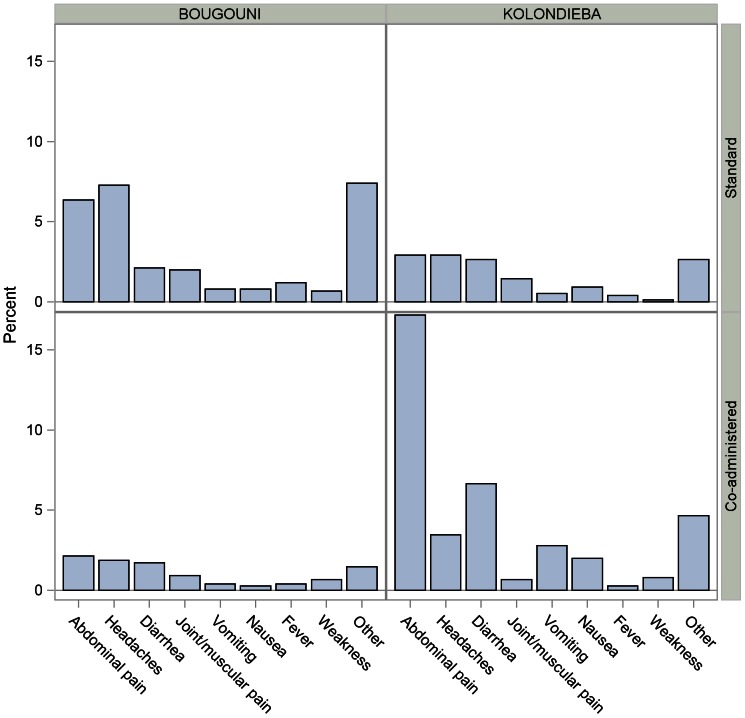
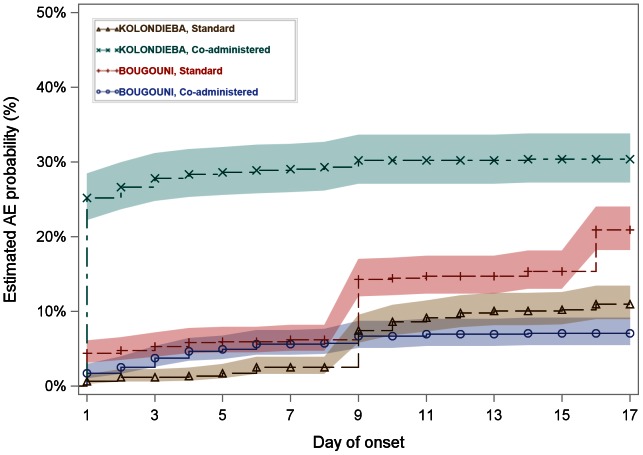
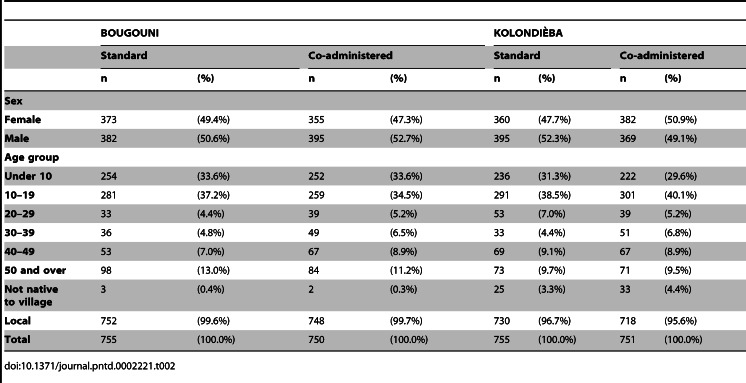
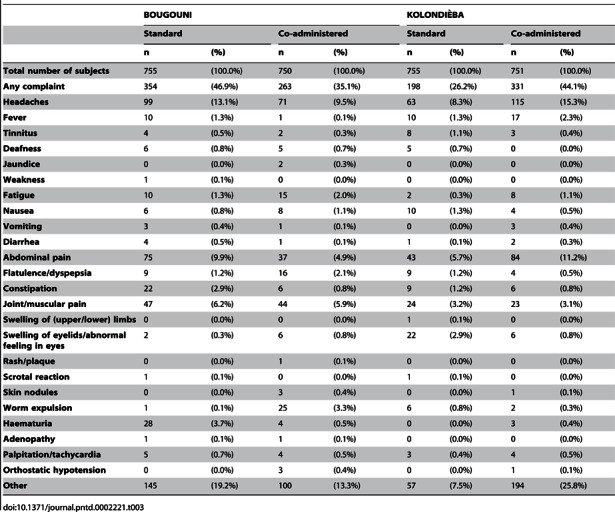
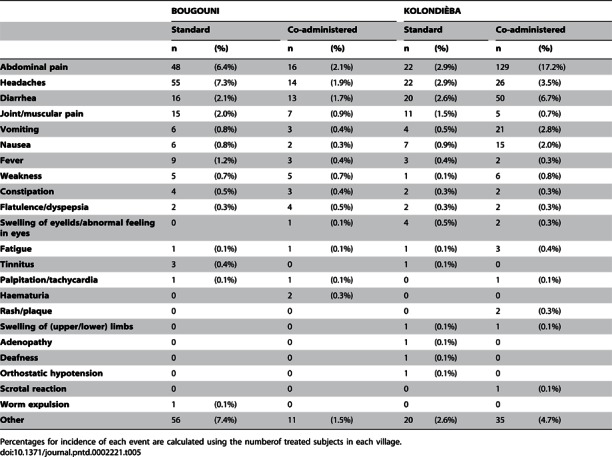
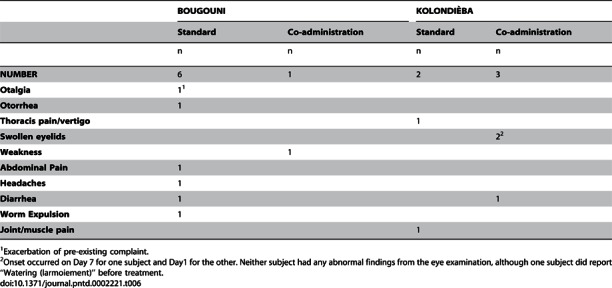
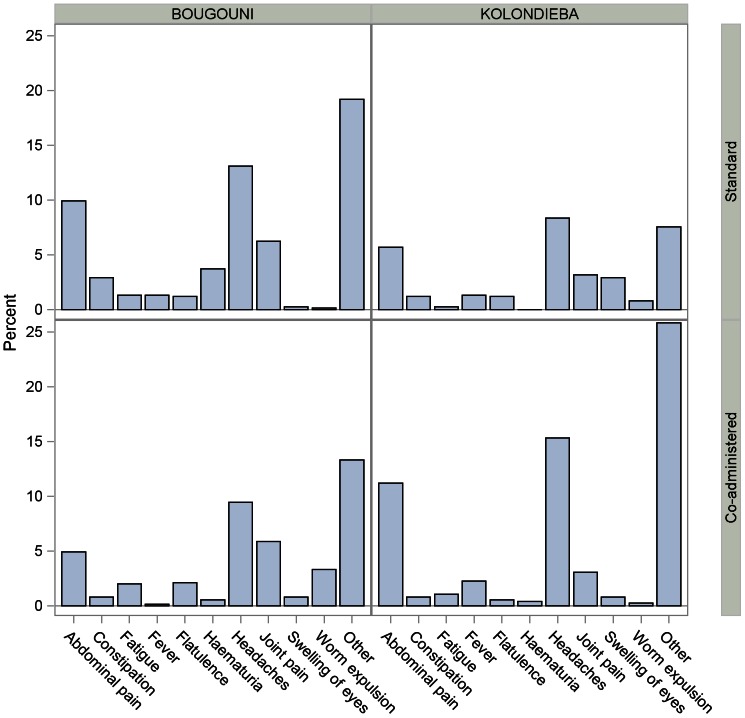
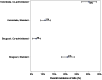
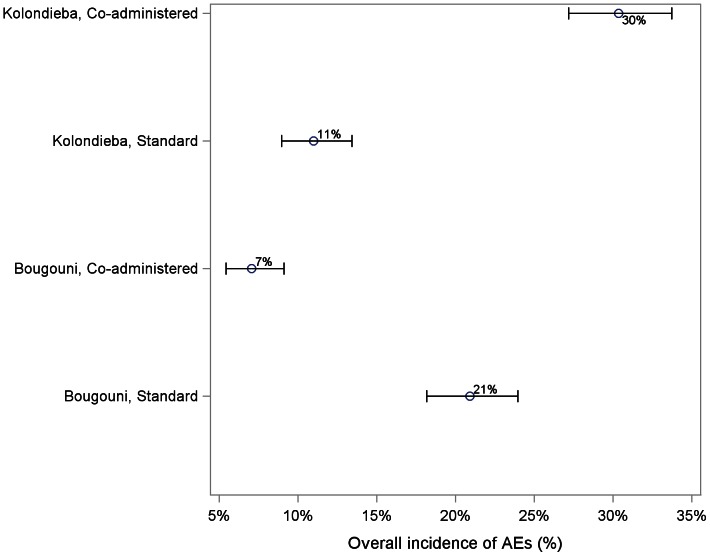
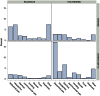
4 villages in two co-endemic districts (Kolondièba and Bougouni) of Sikasso, Mali, were randomly assigned to coadministered treatment (ivermectin/albendazole/azithromycin) or standard therapy (ivermectin/albendazole with azithromycin 1 week later). These villages had previously undergone 4 annual MDA campaigns with ivermectin/albendazole and 2 with azithromycin. One village was randomly assigned to each treatment arm in each district. There were 7515 eligible individuals in the 4 villages, 3011(40.1%) of whom participated in the study. No serious adverse events occurred, and the majority of adverse events were mild in intensity (mainly headache, abdominal pain, diarrhoea and “other signs/symptoms”). The median time to the onset of the first event, of any type, was later (8 days) in the two standard treatment villages than in the co-administration villages. Overall the number of subjects reporting any event was similar in the co-administration group compared to the standard treatment group [18.7% (281/1501) vs. 15.8% (239/1510)]. However, the event frequency was higher in the coadministration group (30.4%) than in the standard treatment group (11.0%) in Kolondièba, while the opposite was observed in Bougouni (7.1% and 20.9% respectively). Additionally, the overall frequency of adverse events in the co-administration group (18.7%) was comparable to or lower than published frequencies for ivermectin+albendazole alone.
Conclusions
These data suggest that co-administration of ivermectin+albendazole and azithromycin is safe; however the small number of villages studied and the large differences between them resulted in an inability to calculate a meaningful overall estimate of the difference in adverse event rates between the regimens. Further work is therefore needed before co-administration can be definitively recommended.
Trial Registration
ClinicalTrials.gov; NCT01586169
-
Subjects:
-
Source:PLoS Negl Trop Dis. 2013; 7(5).
-
Document Type:
-
Volume:7
-
Issue:5
-
Collection(s):
-
Main Document Checksum:urn:sha256:d4f158ec9ea2b0efc8719f0fb70b49ef522ac34feeac83160b02cdfee0294a2c
-
Download URL:
-
File Type:
 [PDF
- 532.56 KB
]
[PDF
- 532.56 KB
]
Supporting Files


File Language:
English
ON THIS PAGE









CDC STACKS serves as an archival repository of CDC-published products including
scientific findings,
journal articles, guidelines, recommendations, or other public health information authored or
co-authored by CDC or funded partners.
As a repository, CDC STACKS retains documents in their original published format to ensure public access to scientific information.
As a repository, CDC STACKS retains documents in their original published format to ensure public access to scientific information.
You May Also Like
COLLECTION
CDC Public Access