



Lay Health Educators Translating an Evidence-based Weight Loss Intervention to Obese Older Adults in Rural Senior Centers
Supporting Files

-
10 2011
-
Available in CDC Stacks on 2019-09-11T00:00:00Z
File Language:
English
Details
-
Alternative Title:Am J Prev Med
-
Personal Author:
-
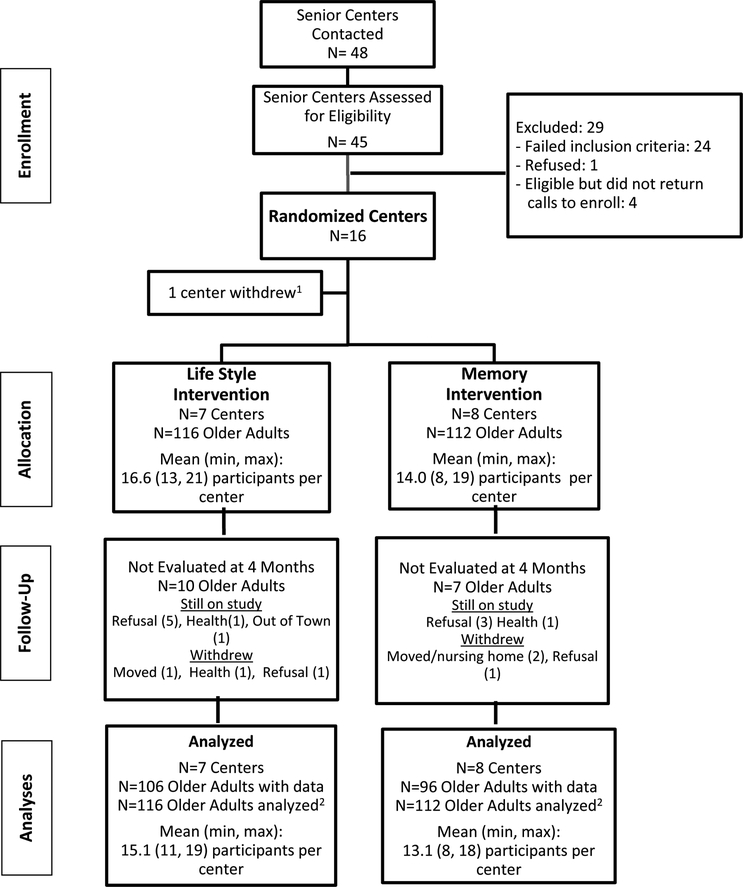
Description:Background: ; Older adults have high obesity rates and respond well to evidence-based weight loss programs, such as the Diabetes Prevention Program (DPP) Lifestyle intervention. ; Purpose: ; To determine whether a lay-health-educator-delivered translation of the DPP Lifestyle program conducted in senior centers is effective in promoting weight loss among older adults. ; Design: ; A randomized, controlled trial with older adults nested within senior centers. Senior centers identified lay health educators or “coaches” to receive training and deliver the intervention program at the senior center. Senior centers were randomized to DPP Lifestyle program or an attention control intervention (cognitive training). ; Setting: ; Senior centers (N=15) located throughout Arkansas. ; Participants: ; Participants (N=228) were obese (BMI=34.5±4.9), older (71.2± 6.6 years) adults able to engage in moderate exercise. Four-month follow-up data were collected on 93% of the original cohort between February 2009 and July 2010. ; Intervention: ; A 12-session translation of the Diabetes Prevention Lifestyle behavioral weight control program delivered in group sessions by trained lay health educators. ; Main Outcome Measure(s): ; Body weight was assessed by digital scale. Percent weight loss from baseline and proportion achieving ≥5% and ≥7% weight loss were examined. Analyses were completed in July 2011. ; Results: ; Participants attending senior centers randomized to Lifestyle lost a significantly greater percent of baseline weight (3.8% , 95% CI, 2.9 – 4.6%) than those in the control senior centers (0.2%, 95% CI, −.6 - .9%) after adjusting for baseline BMI and gender (p < .001). Among participants attending senior centers offering the Lifestyle program, 38% lost ≥ 5% of baseline weight compared with 5% in the control arm (p<.001). Similarly, significantly more participants (24%) in Lifestyle senior centers lost ≥ 7% than did control participants (3%, p=.001). ; Conclusions: ; A lay-health-educator-delivered behavioral lifestyle weight loss intervention offers a promising vehicle for translation of evidence-based obesity treatment programs in underserved areas.
-
Subjects:
-
Source:Am J Prev Med. 41(4):385-391
-
Pubmed ID:21961465
-
Pubmed Central ID:PMC6737925
-
Document Type:
-
Funding:
-
Volume:41
-
Issue:4
-
Download URL:
-
File Type:
 [PDF - 247.68 KB]
 -
Collection(s):
-
Main Document Checksum:urn:sha256:538a3473372c3bcc4d520e4b659847b8b5213b6f7d3dc2adc9b30432bc8a0312
Supporting Files


File Language:
English
 Was this page helpful?
 Found an issue?

CDC STACKS serves as an archival repository of CDC-published products including
scientific findings, journal articles, guidelines, recommendations, or other public health information authored or
co-authored by CDC or funded partners.
As a repository, CDC STACKS retains documents in their original published format to ensure public access to scientific information.
As a repository, CDC STACKS retains documents in their original published format to ensure public access to scientific information.
You May Also Like
COLLECTION
CDC Public Access