



An Assessment of the Reasons for Oral Poliovirus Vaccine Refusals in Northern Nigeria
Supporting Files

-
11 01 2014 ; 11-01-
-
Available in CDC Stacks on October 02, 2023, 12:00 AM
File Language:
English
Details
-
Alternative Title:J Infect Dis
-
Personal Author:
-
Corporate Authors:
-
Description:Background.
Accumulation of susceptible children whose caregivers refuse to accept oral poliovirus vaccine (OPV) contributes to the spread of poliovirus in Nigeria.
Methods.
During and immediately following the OPV campaign in October 2012, polio eradication partners conducted a study among households in which the vaccine was refused, using semistructured questionnaires. The selected study districts had a history of persistent OPV refusals in previous campaigns.
Results.
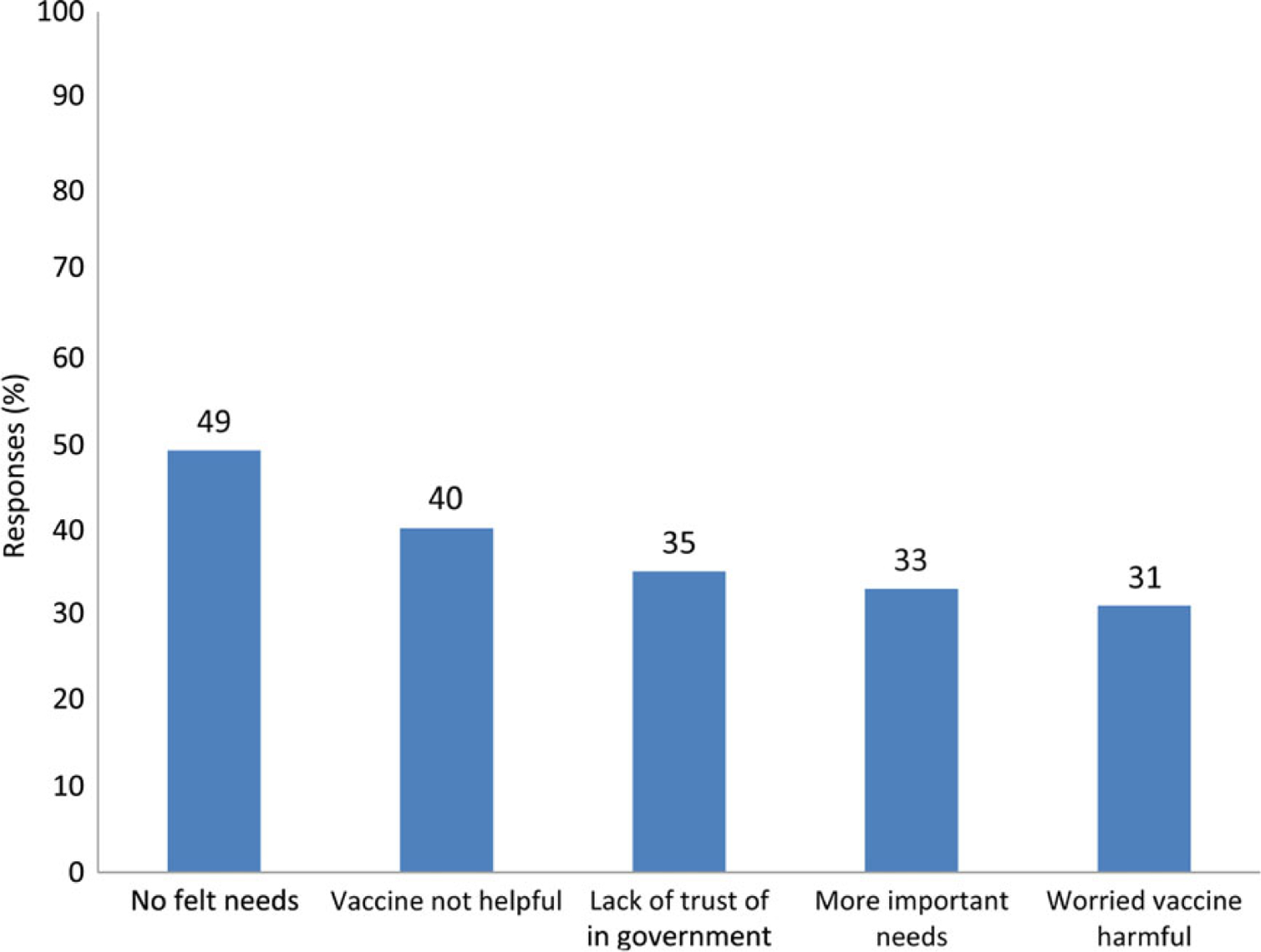
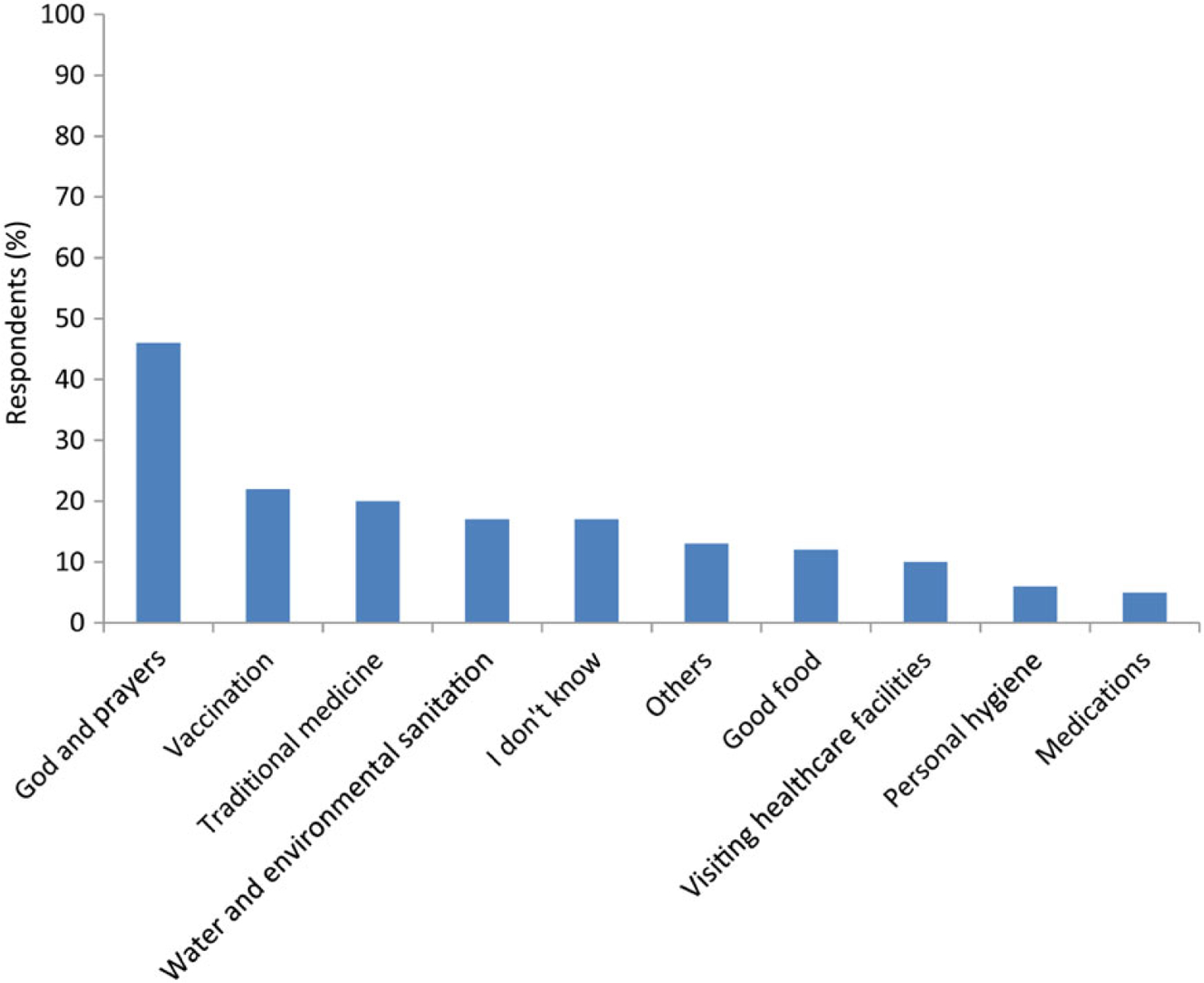
Polio risk perception was low among study participants. The majority (59%) of participants believed that vaccination was either not necessary or would not be helpful, and 30% thought it might be harmful. Religious beliefs were an important driver in the way people understood disease. Fifty-two percent of 48 respondents reported that illnesses were due to God’s will and/or destiny and that only God could protect them against illnesses. Only a minority (14%) of respondents indicated that polio was a significant problem in their community.
Conclusions.
Caregivers refuse OPV largely because of poor polio risk perception and religious beliefs. Communication strategies should, therefore, aim to increase awareness of polio as a real health threat and educate communities about the safety of the vaccine. In addition, polio eradication partners should collaborate with other agencies and ministries to improve total primary healthcare packages to address identified unmet health and social needs. -
Keywords:
-
Source:J Infect Dis. 210(Suppl 1):S125-S130
-
Pubmed ID:25316826
-
Pubmed Central ID:PMC10544260
-
Document Type:
-
Funding:
-
Volume:210
-
Download URL:
-
File Type:
 [PDF - 337.15 KB]
 -
Collection(s):
-
Main Document Checksum:urn:sha256:08cc05d80f427fa5aa06eb4cd9c6b60903fdf0a76d60b90362e2214e3a10bf34
Supporting Files


File Language:
English
 Was this page helpful?
 Found an issue?

CDC STACKS serves as an archival repository of CDC-published products including
scientific findings, journal articles, guidelines, recommendations, or other public health information authored or
co-authored by CDC or funded partners.
As a repository, CDC STACKS retains documents in their original published format to ensure public access to scientific information.
As a repository, CDC STACKS retains documents in their original published format to ensure public access to scientific information.
You May Also Like
COLLECTION
CDC Public Access