



In the era of universal test and treat in Uganda, recent intimate partner violence is not associated with subsequent ART use or viral suppression
Supporting Files

-
9 2023 ; 9-2023
-
Available in CDC Stacks on September 01, 2024, 12:00 AM

File Language:
English
Details
-
Alternative Title:AIDS Care
-
Personal Author:
-
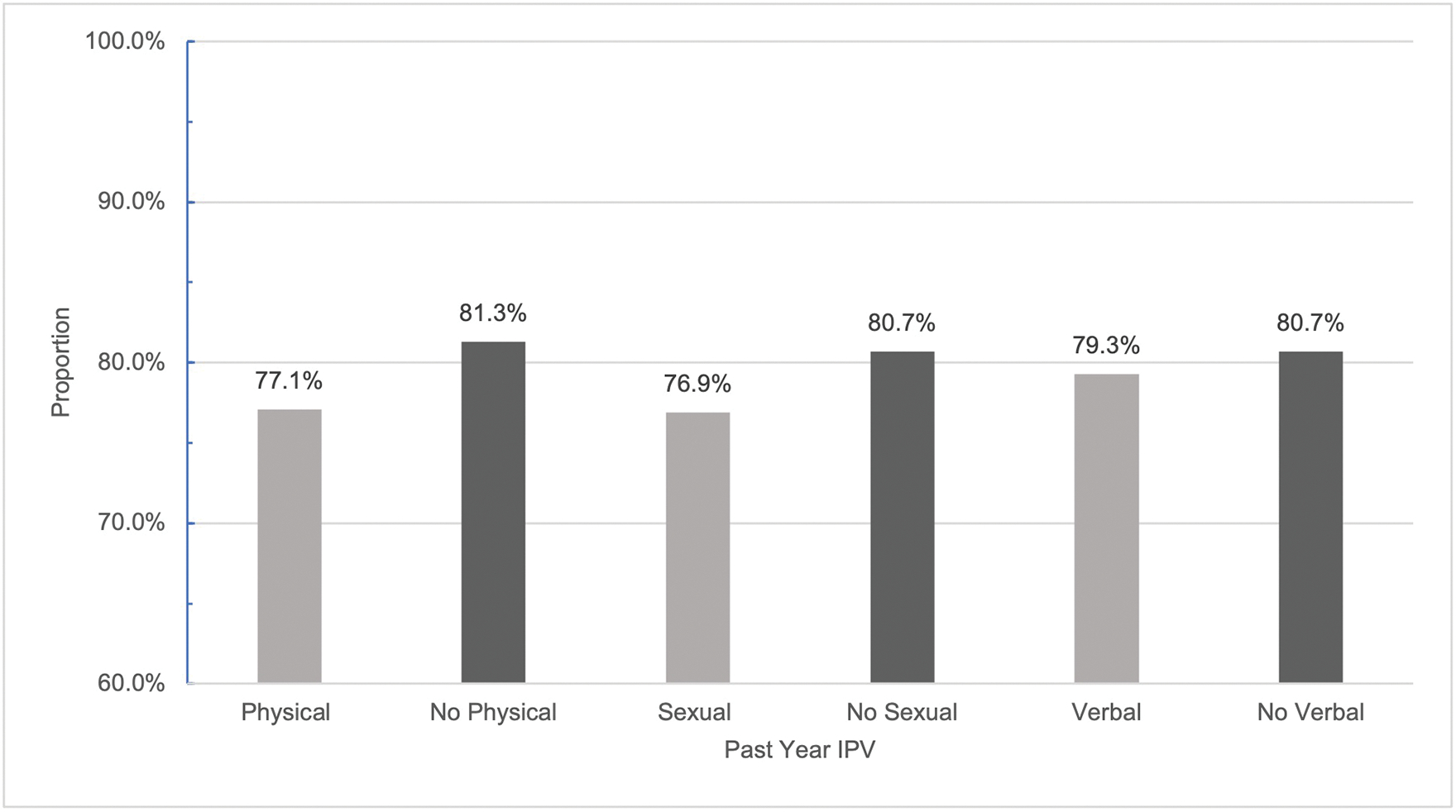
Description:Intimate partner violence (IPV) has been associated with delays throughout the HIV care continuum. This study explored prospective associations between experiences of past-year IPV and two HIV care outcomes in the context of current universal test and treat guidelines using two consecutive rounds of an ongoing HIV surveillance study conducted in the Rakai region of Uganda. Longitudinal logistic regression models examined associations between IPV, use of antiretroviral therapy (ART) and viral load suppression (VS), adjusting for outcome variables at baseline. To address differences in ART retention by IPV, propensity scores were used to create inverse-probability-of-treatment-and-censoring-weighted (IPTCW) models. At baseline, of 1923 women with HIV (WWH), 34.6%, 26.5%, 13.5% reported past-year verbal, physical and sexual IPV; a lower proportion of persons who experienced physical IPV (79.4%) were VS than those who did not (84.3%; | = 0.01). The proportion VS at baseline also significantly differed by exposure to verbal IPV (| = 0.03). However, in adjusted longitudinal models, IPV was not associated with lower odds of ART use or VS at follow-up. Among WWH in the Rakai region, IPV does not appear to be a barrier to subsequent ART use or VS. However, given the prevalence of IPV in this population, interventions are needed.
-
Subjects:
-
Keywords:
-
Source:AIDS Care. 35(9):1291-1298
-
Pubmed ID:37170392
-
Pubmed Central ID:PMC10524228
-
Document Type:
-
Funding:
-
Volume:35
-
Issue:9
-
Download URL:
-
File Type:
 [PDF - 277.96 KB]
 -
Collection(s):
-
Main Document Checksum:urn:sha-512:82de3b54396e4fd5a507c6363e9693eb1a3eaf653b0461f092d9196f63a17c07790d134c3b4bba3171defdd4c78e42f2be8a992e884ff06f6ed678e94fbddb55
Supporting Files


File Language:
English
 Was this page helpful?
 Found an issue?




CDC STACKS serves as an archival repository of CDC-published products including
scientific findings, journal articles, guidelines, recommendations, or other public health information authored or
co-authored by CDC or funded partners.
As a repository, CDC STACKS retains documents in their original published format to ensure public access to scientific information.
As a repository, CDC STACKS retains documents in their original published format to ensure public access to scientific information.
You May Also Like
COLLECTION
CDC Public Access