



Periconceptional nonsteroidal anti-inflammatory drug use, folic acid intake, and the risk of spina bifida
Supporting Files

-
-
-
Available in CDC Stacks on


File Language:
English
Details
-
Alternative Title:Birth Defects Res
-
Personal Author:
-
Description:Background:
Use of nonsteroidal anti-inflammatory drugs (NSAIDs) during pregnancy may increase risk for neural tube defects (NTDs), including spina bifida. Folic acid intake can prevent NTDs, but it is not known whether it modifies any risks associated with NSAID use.
Objectives:
To assess the impact of periconceptional NSAID use on the risk of spina bifida overall and stratified by folic acid intake.
Study Design:
We analyzed 1998–2015 data from the Slone Epidemiology Center Birth Defects Study, a multi-site, case–control study. Mothers were interviewed to identify sociodemographic factors, behaviors, and exposures during pregnancy. Periconceptional NSAID use was defined as use of aspirin, ibuprofen, naproxen, or COX2 inhibitors within the month before or after the last menstrual period. Logistic regression models were used to estimate adjusted odds ratios (aORs) and 95% confidence intervals (CIs) for NSAID use, adjusted for study center and race/ethnicity stratified by average daily folic acid intake above (“high FA”) or below (“low FA”) 400 mcg/day.
Results:
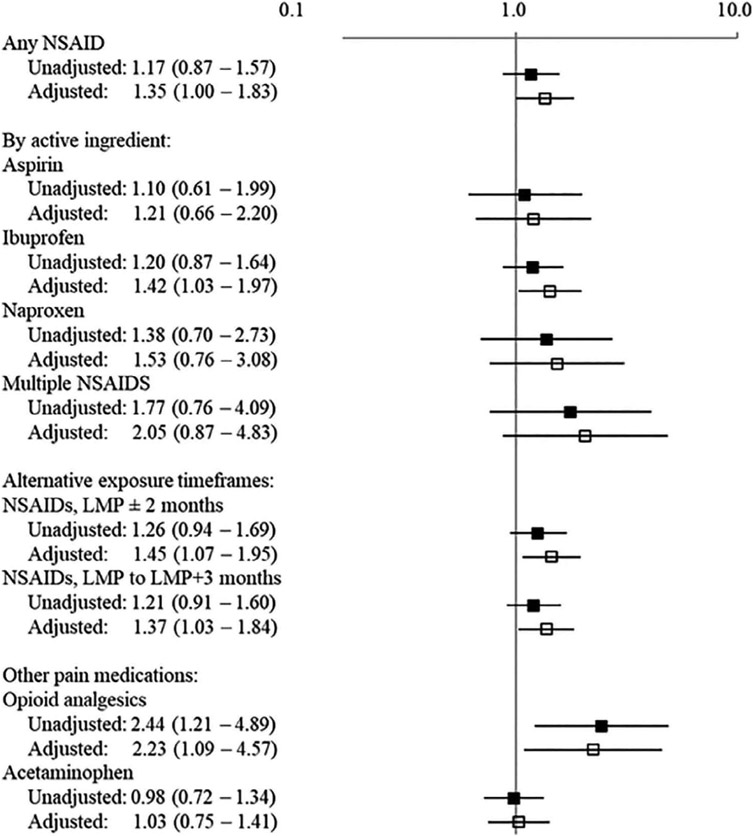
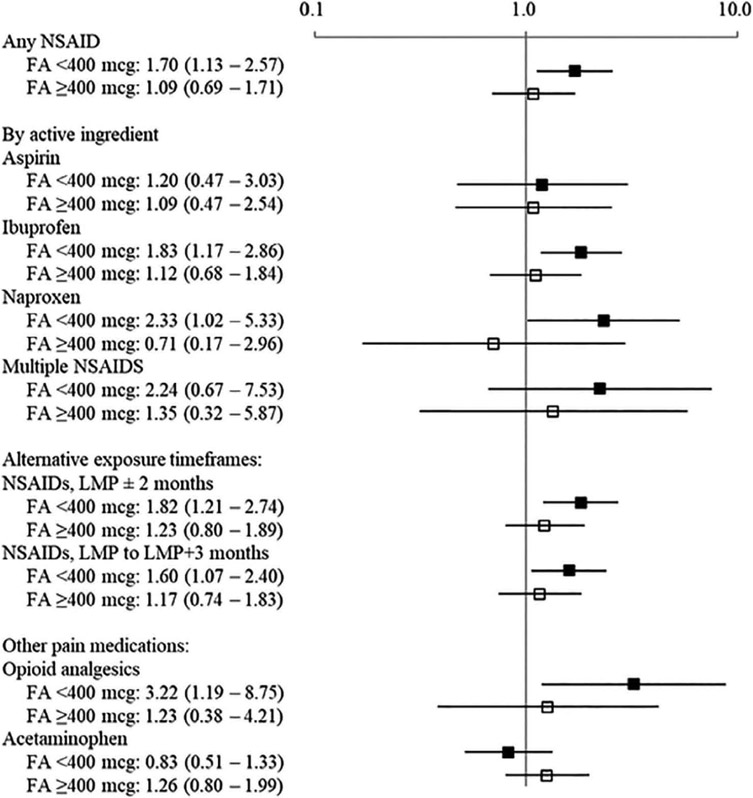
We compared mothers of 267 infants with spina bifida to mothers of 6,233 nonmalformed controls. Among control mothers, 20% used NSAIDS periconceptionally (16% ibuprofen, 4% aspirin, 3% naproxen, and <1% COX-2 inhibitors). For any NSAID use, the aORs among low FA and high FA women were 1.70 (95% CI [1.13, 2.57]) and 1.09 (95% CI [0.69, 1.71]), respectively.
Conclusions:
We observed a small increase in the risk for spina bifida among infants born to women who used NSAIDs periconceptionally, but this risk was limited to those who had inadequate folic acid intake. -
Subjects:
-
Pubmed ID:34346174
-
Pubmed Central ID:PMC10311430
-
Document Type:
-
Funding:
-
Volume:113
-
Issue:17
-
Download URL:
-
File Type:
 [PDF - 891.18 KB]
-
Collection(s):
-
Main Document Checksum:urn:sha256:308e0cb330206f1a34b1bfe02dce22b97c870adbb3efbc1da49686898d2220a4
Supporting Files


File Language:
English
 Was this page helpful?
 Found an issue?


CDC STACKS serves as an archival repository of CDC-published products including
scientific findings, journal articles, guidelines, recommendations, or other public health information authored or
co-authored by CDC or funded partners.
As a repository, CDC STACKS retains documents in their original published format to ensure public access to scientific information.
You May Also Like
COLLECTION
CDC Public Access