


Test of Cure Return Rate and Test Positivity, Strengthening the US Response to Resistant Gonorrhea, United States, 2018–2019
Supporting Files

-
12/01/2021
-
File Language:
English
Details
-
Alternative Title:Sex Transm Dis
-
Personal Author:
-
Corporate Authors:
-
Description:Background:
Reduced antibiotic susceptibility (RS) in Neisseria gonorrhoeae (GC) may increase treatment failure. Conducting tests of cure (TOC) for patients with RS-GC may facilitate identification of treatment failures.
Methods:
We examined 2018 to 2019 data from 8 jurisdictions participating in the US Centers for Disease Control and Prevention’s Strengthening US Response to Resistant Gonorrhea project. Jurisdictions collected GC isolates and epidemiological data from patients and performed antimicrobial susceptibility testing. Minimum inhibitory concentrations of ceftriaxone, 0.125 μg/mL or greater; cefixime, 0.250 μg/mL or greater; or azithromycin, 2.0 μg/mL or greater were defined as RS. Patients with RS infections were asked to return for a TOC 8 to 10 days posttreatment. We calculated a weighted TOC return rate and described time to TOC and suspected reasons for any positive TOC results.
Results:
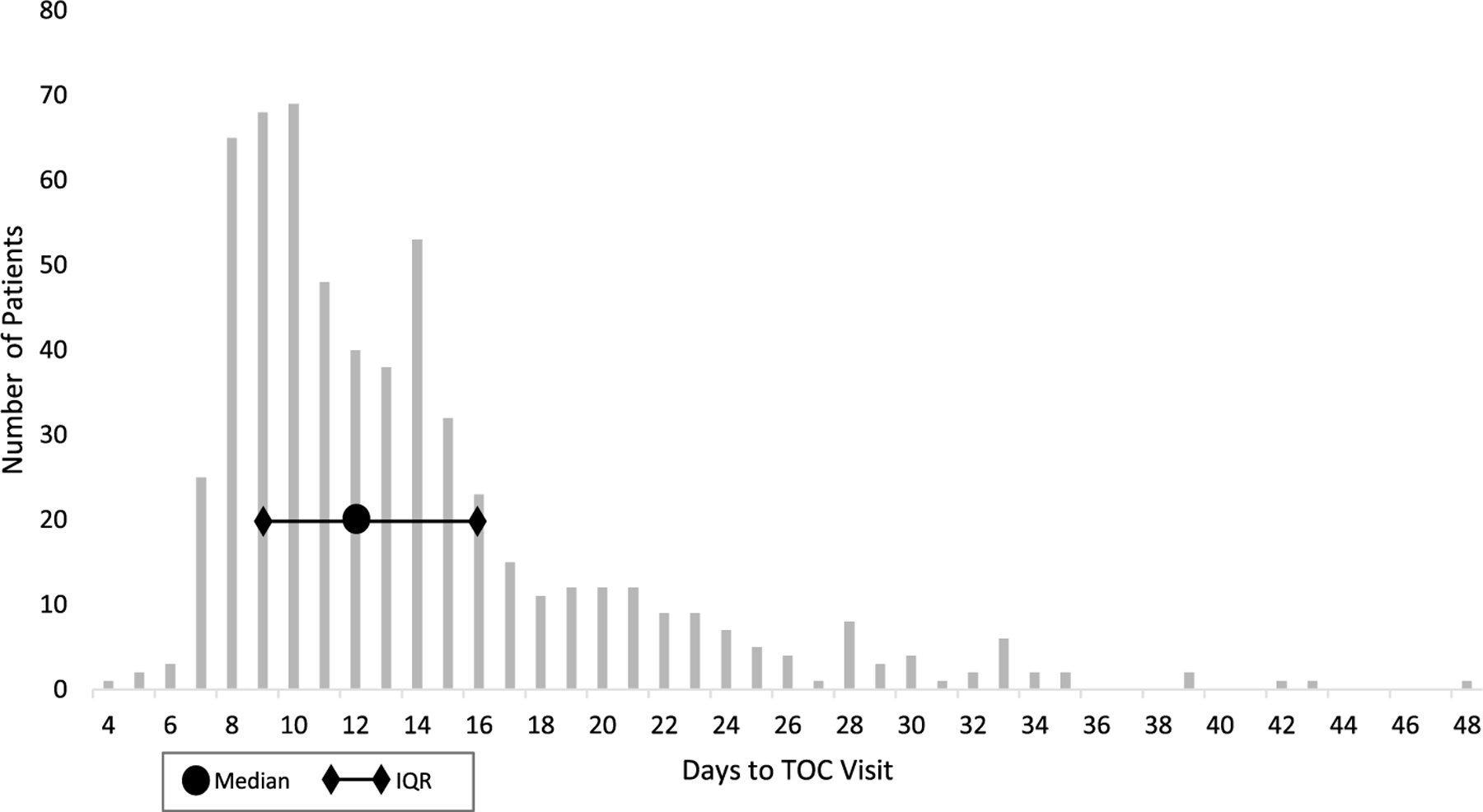
Overall, 1165 patients were diagnosed with RS infections. Over half returned for TOC (weighted TOC, 61%; 95% confidence interval, 50.1%–72.6%; range by jurisdiction, 32%–80%). Test of cure rates were higher among asymptomatic (68%) than symptomatic patients (53%, P = 0.001), and men who have sex with men (62%) compared with men who have sex with women (50%; P < 0.001). Median time between treatment and TOC was 12 days (interquartile range, 9–16). Of the 31 (4.5%) TOC patients with positive results, 13 (42%) were suspected because of reinfection and 11 (36%) because of false-positive results. There were no treatment failures suspected to be due to RS-GC.
Conclusions:
Most patients with a RS infection returned for a TOC, though return rates varied by jurisdiction and patient characteristics. Test of cure can identify and facilitate treatment of reinfections, but false-positive TOC results may complicate interpretation and clinical management.
-
Subjects:
-
Source:Sex Transm Dis. 48(12):S167-S173
-
Pubmed ID:34433793
-
Pubmed Central ID:PMC10280133
-
Document Type:
-
Funding:
-
Place as Subject:
-
Volume:48
-
Issue:12
-
Collection(s):
-
Main Document Checksum:urn:sha256:bd8331caf06107b8b71fd2eba21f8f3299e5946f2d6c074d7347cad64728eb85
-
Download URL:
-
File Type:
 [PDF
- 398.05 KB
]
[PDF
- 398.05 KB
]
Supporting Files


File Language:
English
ON THIS PAGE

CDC STACKS serves as an archival repository of CDC-published products including
scientific findings,
journal articles, guidelines, recommendations, or other public health information authored or
co-authored by CDC or funded partners.
As a repository, CDC STACKS retains documents in their original published format to ensure public access to scientific information.
As a repository, CDC STACKS retains documents in their original published format to ensure public access to scientific information.
You May Also Like
COLLECTION
CDC Public Access