



Risk Factors for Non-O157 Shiga Toxin–Producing Escherichia coli Infections, United States
Supporting Files
Public Domain

-
6 2023 ; 6-2023
File Language:
English
Details
-
Alternative Title:Emerg Infect Dis
-
Personal Author:Marder, Ellyn P. ; Cui, Zhaohui ; Bruce, Beau B. ; Richardson, LaTonia Clay ; Boyle, Michelle M. ; Cieslak, Paul R. ; Comstock, Nicole ; Lathrop, Sarah ; Garman, Katie ; McGuire, Suzanne ; Olson, Danyel ; Vugia, Duc J. ; Wilson, Siri ; Griffin, Patricia M. ; Medus, Carlota
-
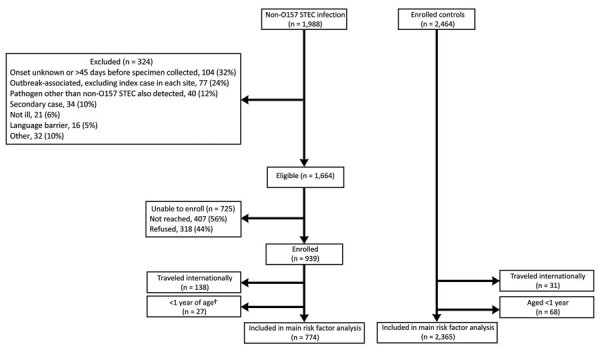
Description:Shiga toxin-producing Escherichia coli (STEC) causes acute diarrheal illness. To determine risk factors for non-O157 STEC infection, we enrolled 939 patients and 2,464 healthy controls in a case-control study conducted in 10 US sites. The highest population-attributable fractions for domestically acquired infections were for eating lettuce (39%), tomatoes (21%), or at a fast-food restaurant (23%). Exposures with 10%-19% population attributable fractions included eating at a table service restaurant, eating watermelon, eating chicken, pork, beef, or iceberg lettuce prepared in a restaurant, eating exotic fruit, taking acid-reducing medication, and living or working on or visiting a farm. Significant exposures with high individual-level risk (odds ratio >10) among those >1 year of age who did not travel internationally were all from farm animal environments. To markedly decrease the number of STEC-related illnesses, prevention measures should focus on decreasing contamination of produce and improving the safety of foods prepared in restaurants.
-
Subjects:
- Research
- Risk Factors for Non-O157 Shiga Toxin–Producing Escherichia coli Infections, United States
- Escherichia coli
- Shiga toxin–producing Escherichia coli
- STEC
- enteric infections
- bacteria
- case-control
- foodborne illnesses
- food safety
- produce
- meat
- animals
- risk
- FoodNet
- United States
- Animals
- Cattle
- Escherichia coli Infections
- Case-Control Studies
- Risk Factors
- Diarrhea
- Shiga-Toxigenic Escherichia coli
-
Source:Emerg Infect Dis. 2023; 29(6):1183-1190
-
Pubmed ID:37209671
-
Pubmed Central ID:PMC10202860
-
Document Type:
-
Volume:29
-
Issue:6
-
Download URL:
-
File Type:
 [PDF - 758.79 KB]
 -
Collection(s):
-
Main Document Checksum:urn:sha256:cc19d155a843cb1da687dc7e1f634c6cd88c20f02729614e3e8c7e9f4c8ffb39
Supporting Files


File Language:
English
 Was this page helpful?
 Found an issue?


CDC STACKS serves as an archival repository of CDC-published products including
scientific findings, journal articles, guidelines, recommendations, or other public health information authored or
co-authored by CDC or funded partners.
As a repository, CDC STACKS retains documents in their original published format to ensure public access to scientific information.
As a repository, CDC STACKS retains documents in their original published format to ensure public access to scientific information.
You May Also Like
COLLECTION
Emerging Infectious Diseases