


Developmental Monitoring and Referral for Low-Income Children Served by WIC: Program Development and Implementation Outcomes
Supporting Files

-
2 2022
-

File Language:
English
Details
-
Alternative Title:Matern Child Health J
-
Personal Author:
-
Description:Objective
To develop, implement, and assess implementation outcomes for a developmental monitoring and referral program for children in the Special Supplemental Nutrition Program for Women, Infants, and Children (WIC).
Methods
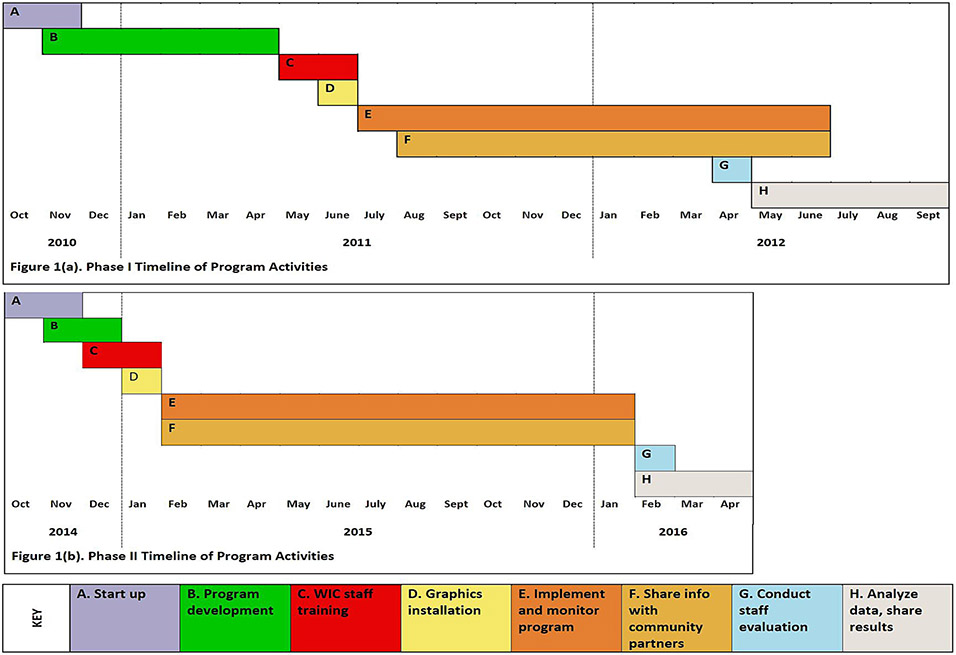
Based on Centers for Disease Control and Prevention’s Learn the Signs. Act Early. campaign, the program was developed and replicated in two phases at 20 demographically diverse WIC clinics in eastern Missouri. Parents were asked to complete developmental milestone checklists for their children, ages 2 months to 4 years, during WIC eligibility recertification visits; WIC staff referred children with potential concerns to their healthcare providers for developmental screening. WIC staff surveys and focus groups were used to assess initial implementation outcomes.
Results
In both phases, all surveyed staff (n = 46) agreed the program was easy to use. Most (≥ 80%) agreed that checklists fit easily into clinic workflow and required ≤ 5 min to complete. Staff (≥ 55%) indicated using checklists with ≥ 75% of their clients. 92% or more reported referring one or more children with potential developmental concerns. According to 80% of staff, parents indicated checklists helped them learn about development and planned to share them with healthcare providers. During the second phase, 18 of 20 staff surveyed indicated the program helped them learn when to refer children and how to support parents, and 19 felt the program promoted healthy development. Focus groups supported survey findings, and all clinics planned to sustain the program.
Conclusions
Initial implementation outcomes supported this approach to developmental monitoring and referral in WIC. The program has potential to help low-income parents identify possible concerns and access support.
-
Subjects:
-
Keywords:
-
Source:Matern Child Health J. 26(2):230-241
-
Pubmed ID:34988863
-
Pubmed Central ID:PMC10249725
-
Document Type:
-
Funding:
-
Volume:26
-
Issue:2
-
Collection(s):
-
Main Document Checksum:urn:sha-512:e402f59c922e7b428bf44b61ecf2f0ab4f35c34168a5c1f6d9044de65f57c3a7dc2dc3bf34b6bd51640cf3c8f050fdbfc617c46660d6340af9ab779c0c5c11cb
-
Download URL:
-
File Type:
 [PDF
- 614.50 KB
]
[PDF
- 614.50 KB
]

Supporting Files


File Language:
English
ON THIS PAGE


CDC STACKS serves as an archival repository of CDC-published products including
scientific findings,
journal articles, guidelines, recommendations, or other public health information authored or
co-authored by CDC or funded partners.
As a repository, CDC STACKS retains documents in their original published format to ensure public access to scientific information.
As a repository, CDC STACKS retains documents in their original published format to ensure public access to scientific information.
You May Also Like
COLLECTION
CDC Public Access