


Assessing consent for and response to health survey components in an era of falling response rates: National Health and Nutrition Examination Survey, 2011–2018
Supporting Files

-
8 19 2021
-
File Language:
English
Details
-
Alternative Title:Surv Res Methods
-
Personal Author:
-
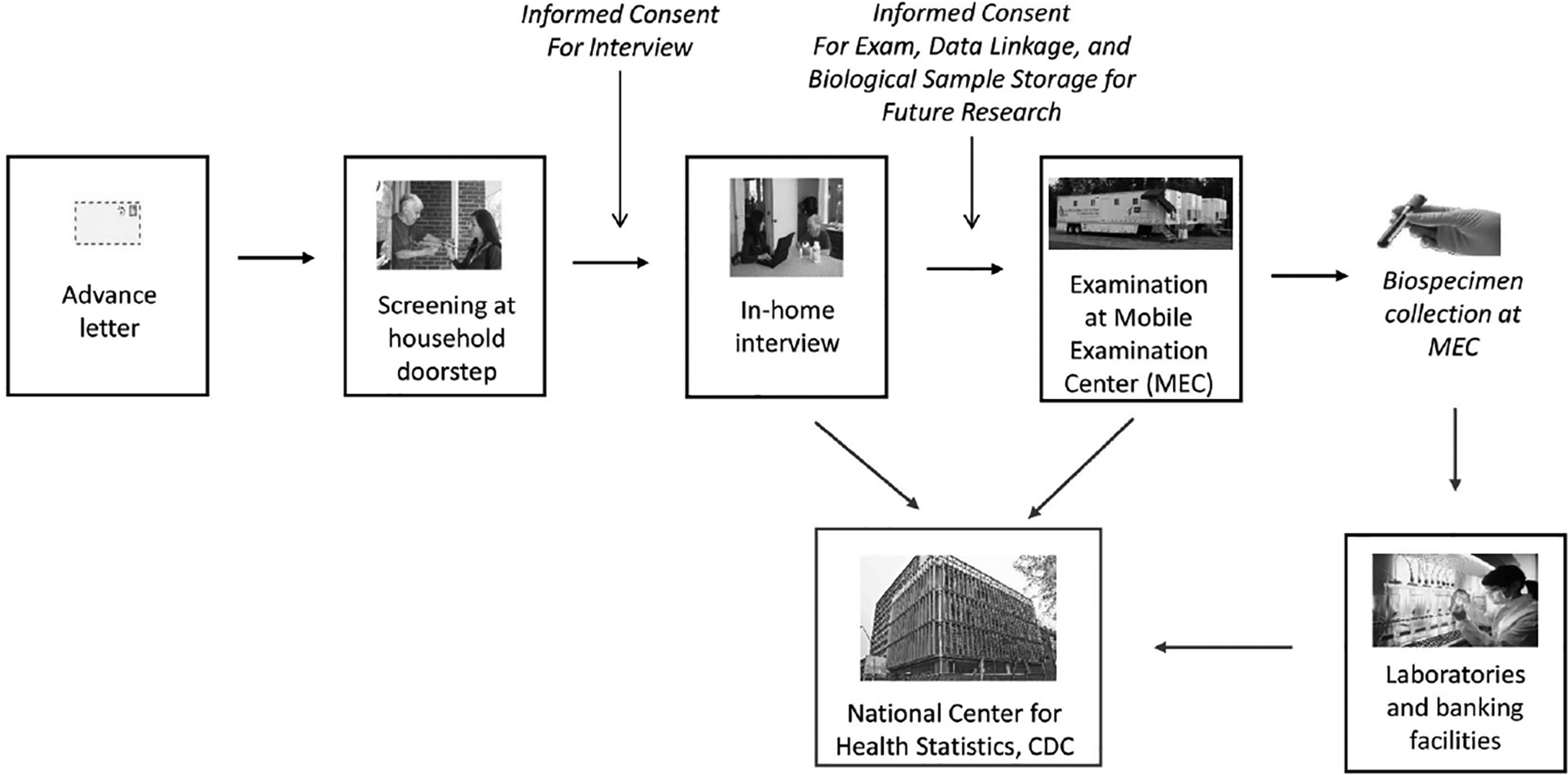
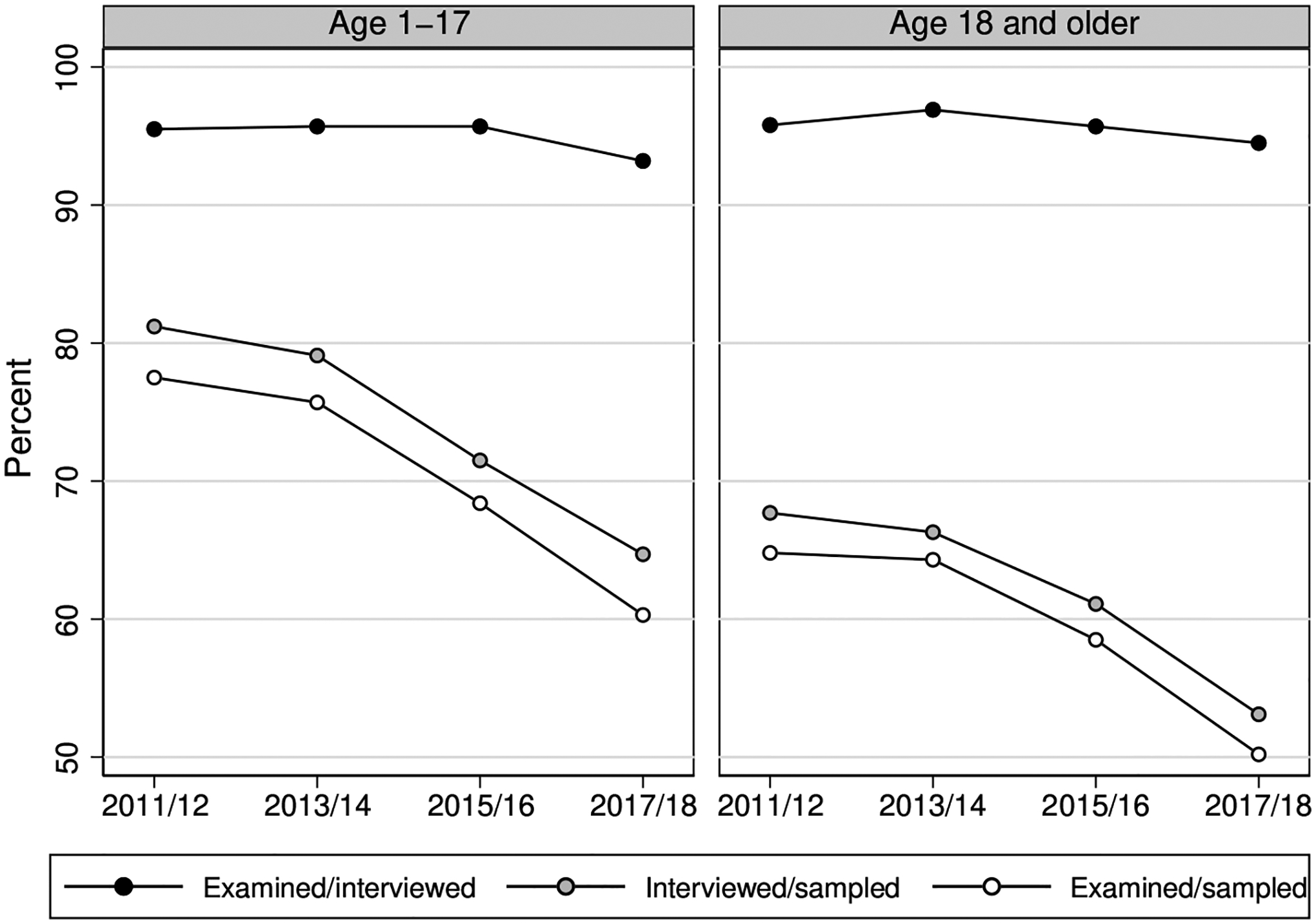
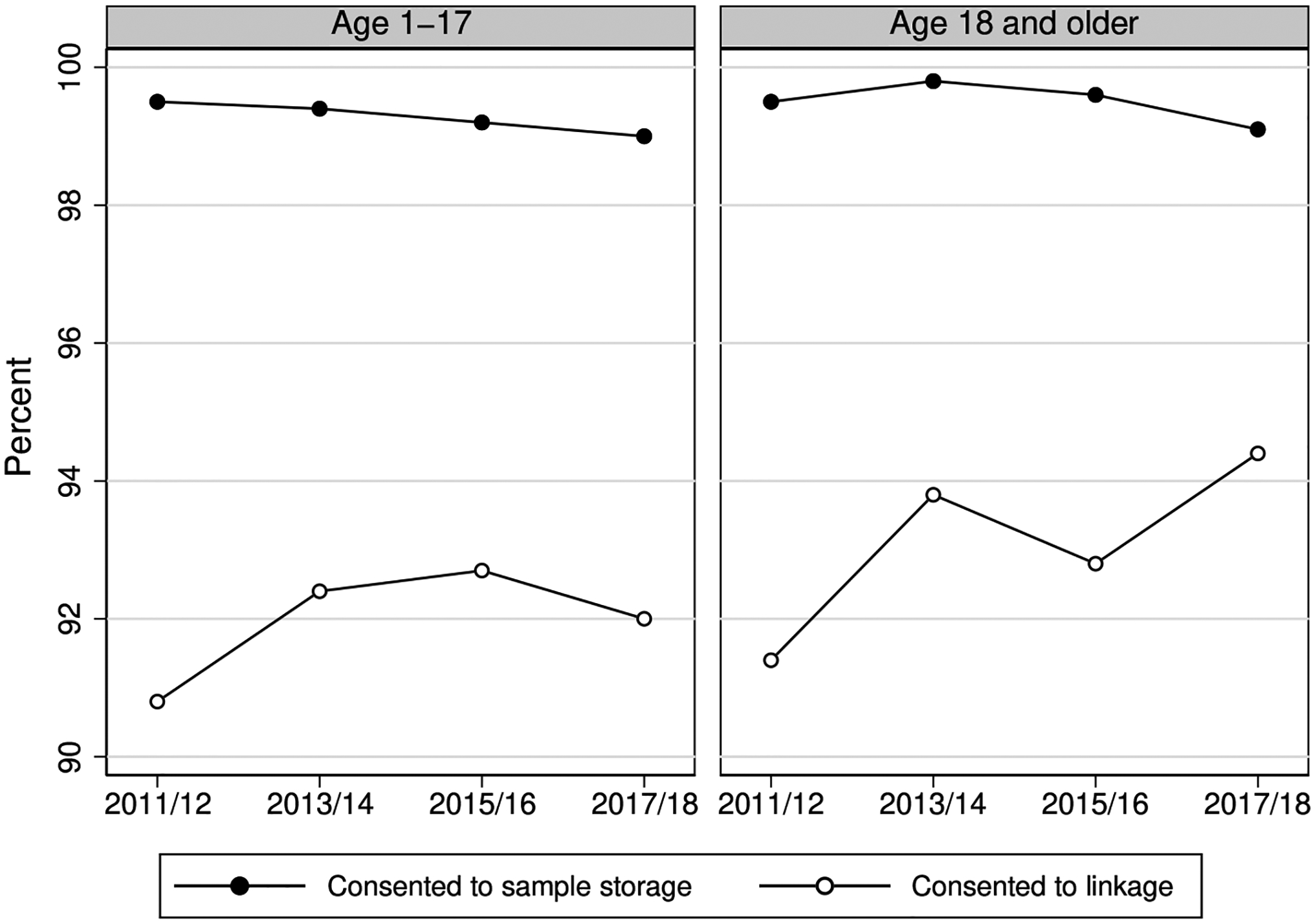
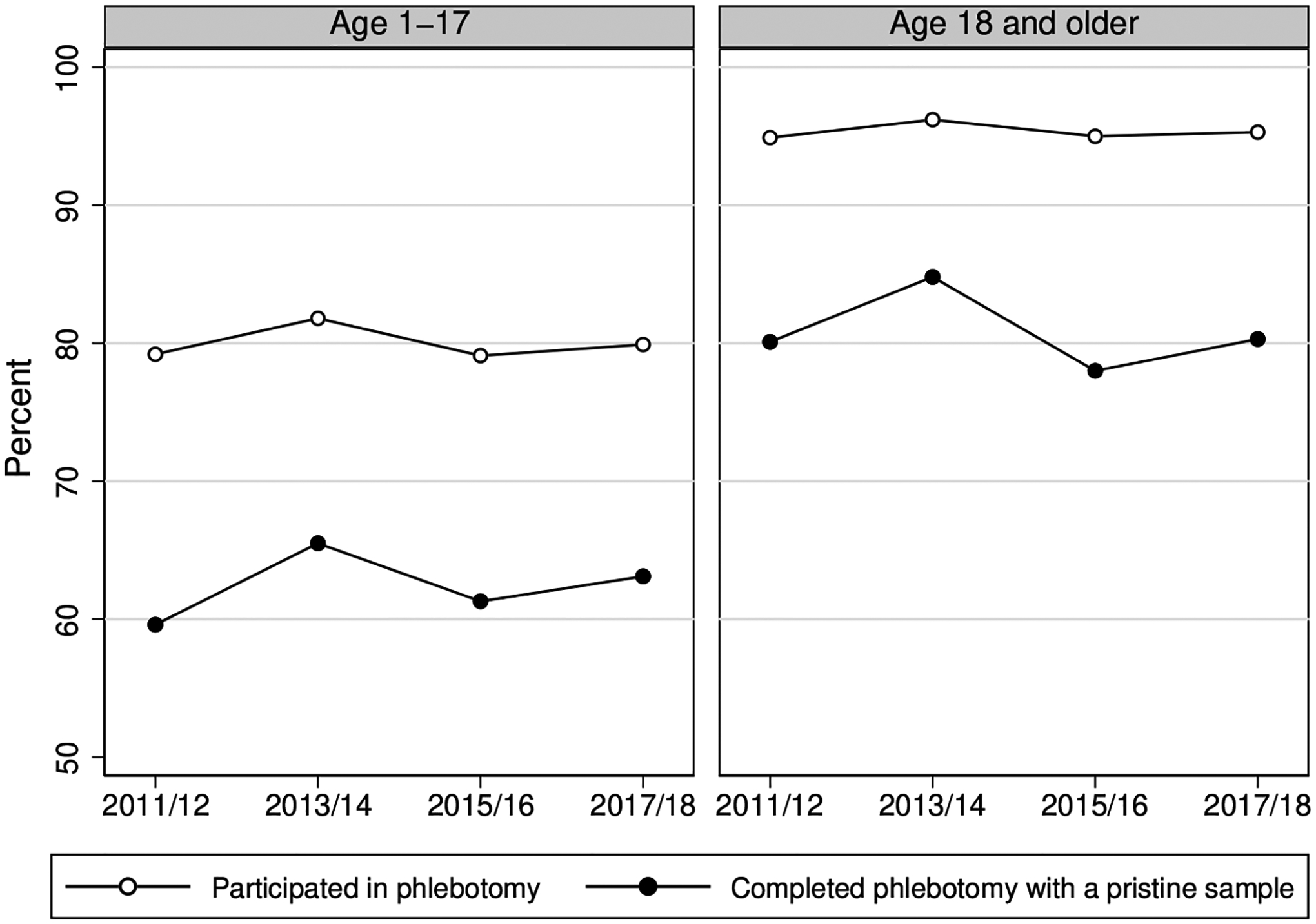
Description:Response rates for national population-based surveys have declined, including the National Health and Nutrition Examination Survey (NHANES). Declining response to the initial NHANES interview may impact consent and participation in downstream survey components such as record linkage, physical exams, storage of biological samples and phlebotomy. Interview response rates dropped from 68% in 2011-2012 to 53% in 2017-2018 for adults age 18 and older. Response was higher for children (1-17 years) but with a similar downward trend (2011-2012, 81%; 2017-2018, 65%). Despite declining interview response rates, changes in consent and response rates for downstream components over time have been mixed. Among those interviewed, the examination response rate was over 93%, consent for record linkage was over 90%, and consent for storage of specimens for future research was over 99%. The availability of a blood sample for storage ranged between 60%-65% for children and 78%-85% for adults.
-
Subjects:
-
Source:Surv Res Methods. 15(3):257-268
-
Pubmed ID:37201135
-
Pubmed Central ID:PMC10191170
-
Document Type:
-
Funding:
-
Volume:15
-
Issue:3
-
Collection(s):
-
Main Document Checksum:urn:sha256:a6827d246a3e73d461e12e48f1109f6624ca0458d25a723010ff4a743f838cc9
-
Download URL:
-
File Type:
 [PDF
- 768.56 KB
]
[PDF
- 768.56 KB
]
Supporting Files


File Language:
English
ON THIS PAGE

CDC STACKS serves as an archival repository of CDC-published products including
scientific findings,
journal articles, guidelines, recommendations, or other public health information authored or
co-authored by CDC or funded partners.
As a repository, CDC STACKS retains documents in their original published format to ensure public access to scientific information.
As a repository, CDC STACKS retains documents in their original published format to ensure public access to scientific information.
You May Also Like
COLLECTION
CDC Public Access