


Late Stage Melanoma: Be sure to screen uninsured unmarried men
Supporting Files

-
11 2018
-
File Language:
English
Details
-
Alternative Title:South Med J
-
Personal Author:
-
Description:Objective:
The purpose of this study is to assess for any associations between individual and social factors and late-stage melanoma in Kentucky from 1995 to 2013.
Methods:
The study combines three datasets: individual level data from the Kentucky Cancer Registry (KCR), census tract level data from the United States (US) Census and county level physician licensure data from the Kentucky Department of Public Health. The study population is described by all cases, early-stage and late-stage. Logistic regression was used to evaluate the unadjusted associations between each covariate and early-stage and late-stage disease groups. All significant variables were assessed for interaction effect and the significant interaction terms were used in the final model. Multiple logistic regression provided the final model of late-stage disease.
Results:
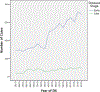
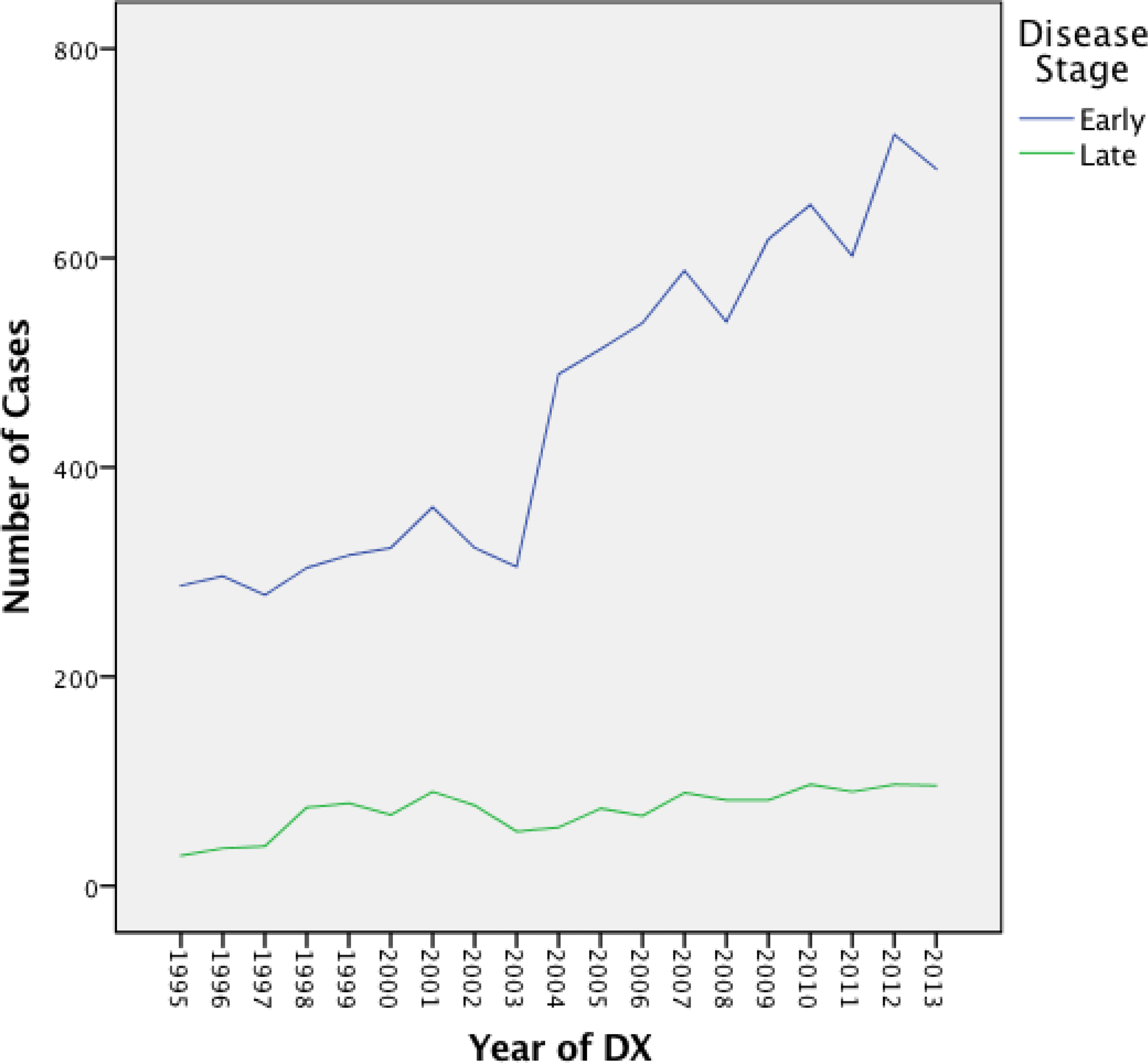
In this study population, a dramatic increase in melanoma incidence is seen from 1995 to 2013 with a three-fold increase in the number of cases per year. Of the 10,109 cases reported, 13.6% have late-stage disease with a mean age for all cases at 56.9 years and the majority male. Late-stage cases are more commonly uninsured or insured with Medicaid or Medicare compared to early-stage lesions. Having a spouse or partner is clearly protective from being diagnosed with late-stage melanoma while being uninsured or having Medicaid increases the odds of late-stage melanoma.
Conclusion:
The incidence of melanoma is dramatically increasing. With no screening recommendation for the general population from the US Preventative Task Force, clinicians should focus on those at increased risk of late-stage melanoma; unmarried men who are uninsured or on Medicaid. 12
-
Subjects:
-
Source:South Med J. 111(11):649-653
-
Pubmed ID:30391998
-
Pubmed Central ID:PMC9272562
-
Document Type:
-
Funding:
-
Place as Subject:
-
Volume:111
-
Issue:11
-
Collection(s):
-
Main Document Checksum:urn:sha-512:dcc5d27775ad5c8aad4e1f3487d3a312e6a2badafcbc727eb1bbba02b937c703dab857d54b795f90d335ce6c4e64592f3b7dd3f61b3c9f44dca180ece1935fb5
-
Download URL:
-
File Type:
 [PDF
- 202.69 KB
]
[PDF
- 202.69 KB
]
Supporting Files


File Language:
English
ON THIS PAGE

CDC STACKS serves as an archival repository of CDC-published products including
scientific findings,
journal articles, guidelines, recommendations, or other public health information authored or
co-authored by CDC or funded partners.
As a repository, CDC STACKS retains documents in their original published format to ensure public access to scientific information.
As a repository, CDC STACKS retains documents in their original published format to ensure public access to scientific information.
You May Also Like
COLLECTION
CDC Public Access