


Item Response Theory analysis of the Modified Roland-Morris Disability Questionnaire in a population-based study
Supporting Files

-
3 15 2015
File Language:
English
Details
-
Alternative Title:Spine (Phila Pa 1976)
-
Personal Author:
-
Description:Study Design:
This is a secondary analysis of a cross-sectional population-based survey.
Objective:
Shorten the 23-item Roland scale using item response theory methods and describe where in the functional disability range each scale is the most precise.
Summary of Background Data:
The Roland-Morris Disability Questionnaire is recommended for a functional disability outcome measure in low back pain (LBP)patients. One commonly used version is the modified 23-item Roland. It is unknown where in the functional disability range the modified 23-item Roland measures.
Methods:
One candidate individual with LBP in randomly selected households was interviewed, identifying 694 adults with chronic LBP. To justify the use of a unidimensional 2-parameter logistic item response theory model, we performed both exploratory and confirmatory factor analysis.
Results:
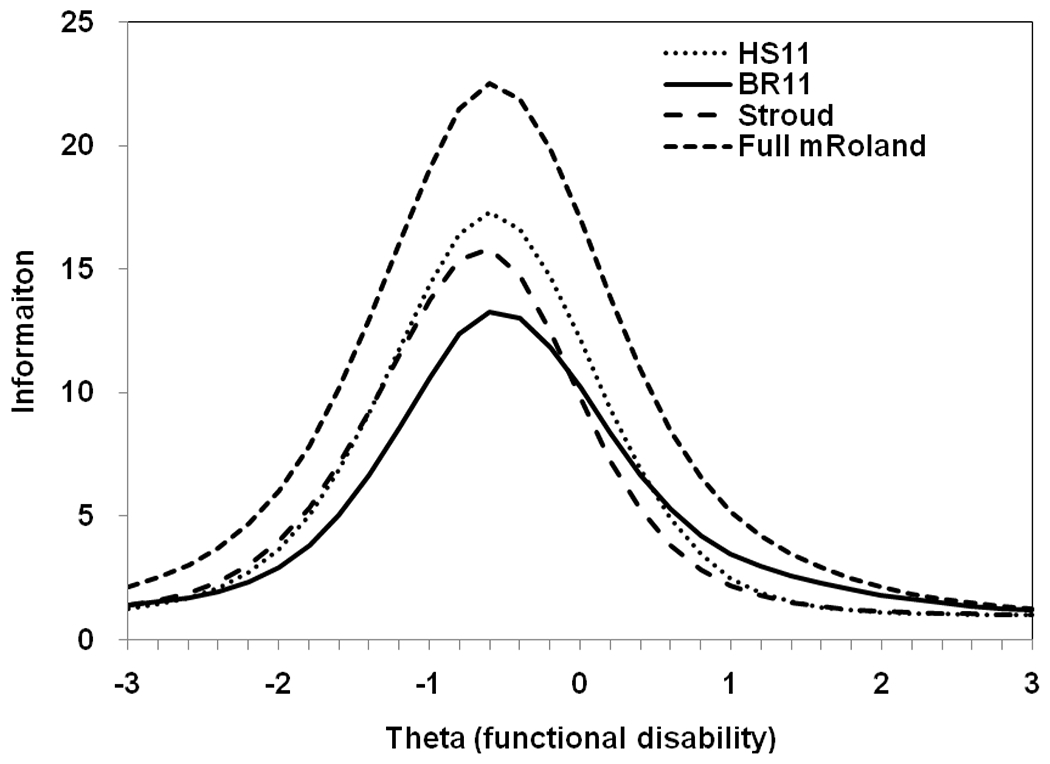
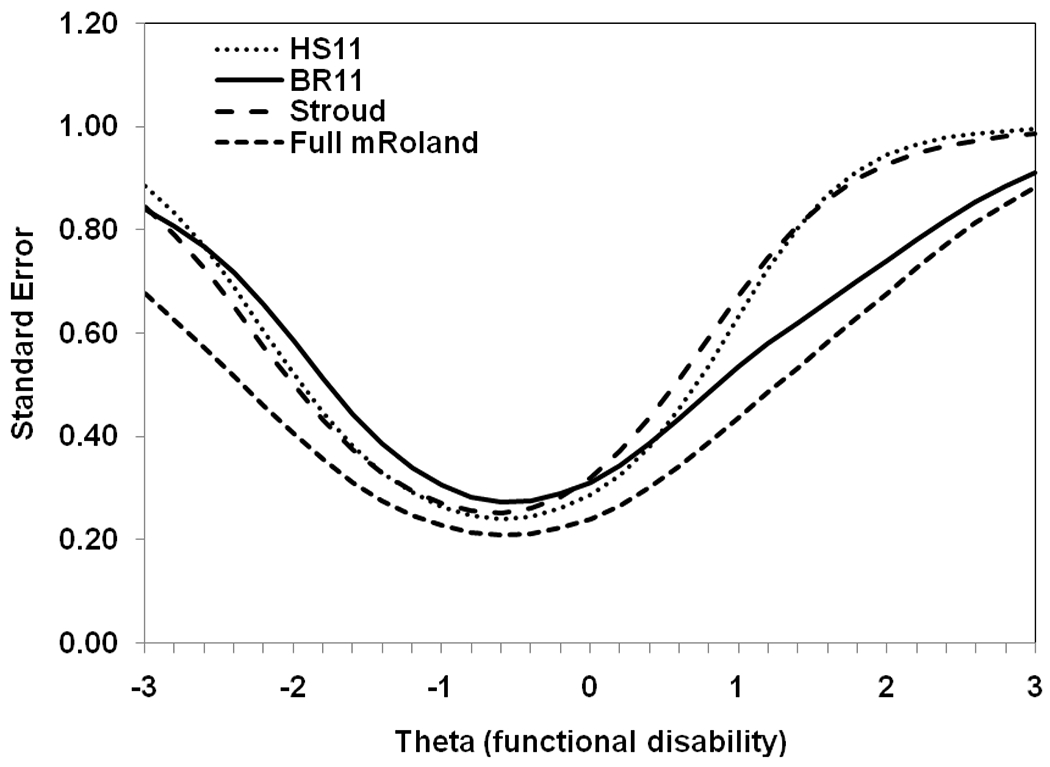
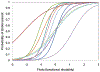
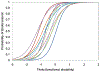
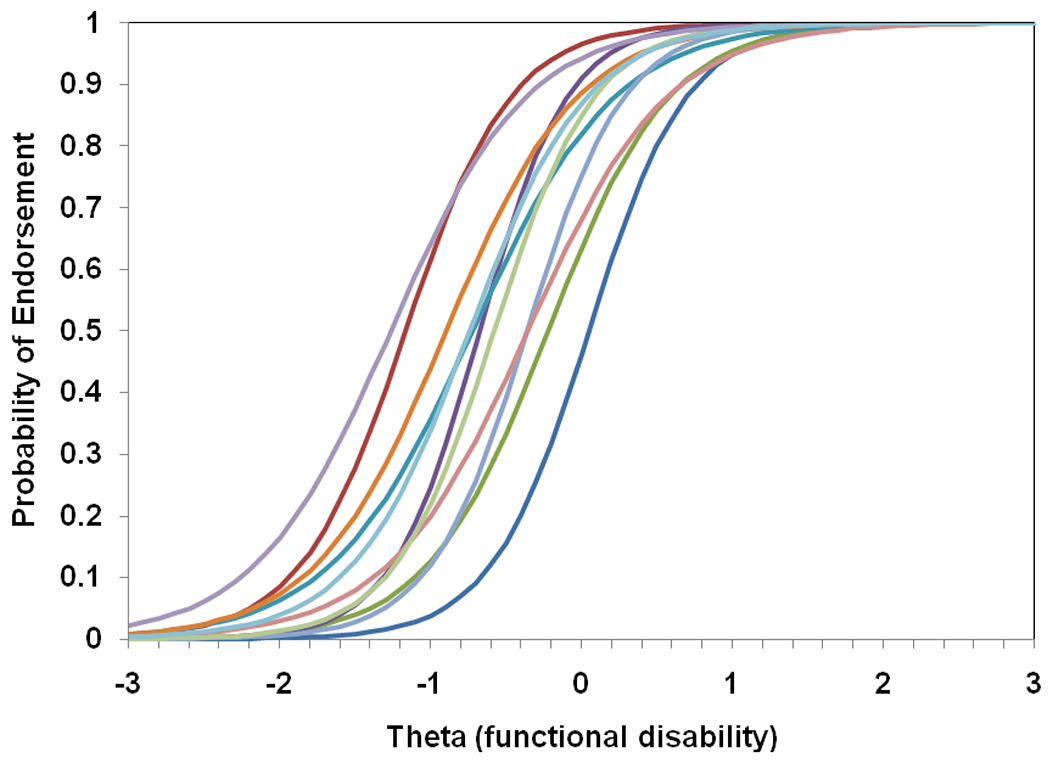
Exploratory factor analysis revealed one dominant eigenvalue. Confirmatory factor analysis results indicate that the one factor model fit well. Item response theory analysis revealed variability in the slopes, ranging from 1.07 to 3.10. The marginal reliability, an item response theory-based analog to coefficient alpha, was 0.88. The modified 23-item Roland produces reliable scores (i.e., with a standard error less than 0.3) from 1.4 standard deviations below the mean to roughly 0.2 above the mean.
Conclusions:
The modified 23-item Roland measures one construct. The modified 23-item Roland appears to be an excellent tool for measuring just-below-average levels of functional disability. The modified 23-item Roland measures high levels of functional disability with relatively poor reliability and may be more appropriate for a less disabled population with LBP. We demonstrate that the modified 23-item Roland can be shortened to 11 items with minimal loss of information. We show that there are different ways to go about selecting the set of 11 items which yield short forms with different strengths.
-
Subjects:
-
Source:Spine (Phila Pa 1976). 40(6):E366-E371
-
Pubmed ID:25774468
-
Pubmed Central ID:PMC9923782
-
Document Type:
-
Funding:
-
Volume:40
-
Issue:6
-
Collection(s):
-
Main Document Checksum:urn:sha256:ff63a6809a366dcb77891d09ff6f152707d6085d45146cf738bf18530f6adc66
-
Download URL:
-
File Type:
 [PDF
- 356.65 KB
]
[PDF
- 356.65 KB
]
Supporting Files


File Language:
English
ON THIS PAGE


CDC STACKS serves as an archival repository of CDC-published products including
scientific findings,
journal articles, guidelines, recommendations, or other public health information authored or
co-authored by CDC or funded partners.
As a repository, CDC STACKS retains documents in their original published format to ensure public access to scientific information.
As a repository, CDC STACKS retains documents in their original published format to ensure public access to scientific information.
You May Also Like
COLLECTION
CDC Public Access