



Comparison of estimated core body temperature measured with the BioHarness and rectal temperature under several heat stress conditions
Supporting Files

-
8 2016
-
Available in CDC Stacks on 2023-02-07T00:00:00Z
File Language:
English
Details
-
Alternative Title:J Occup Environ Hyg
-
Personal Author:
-
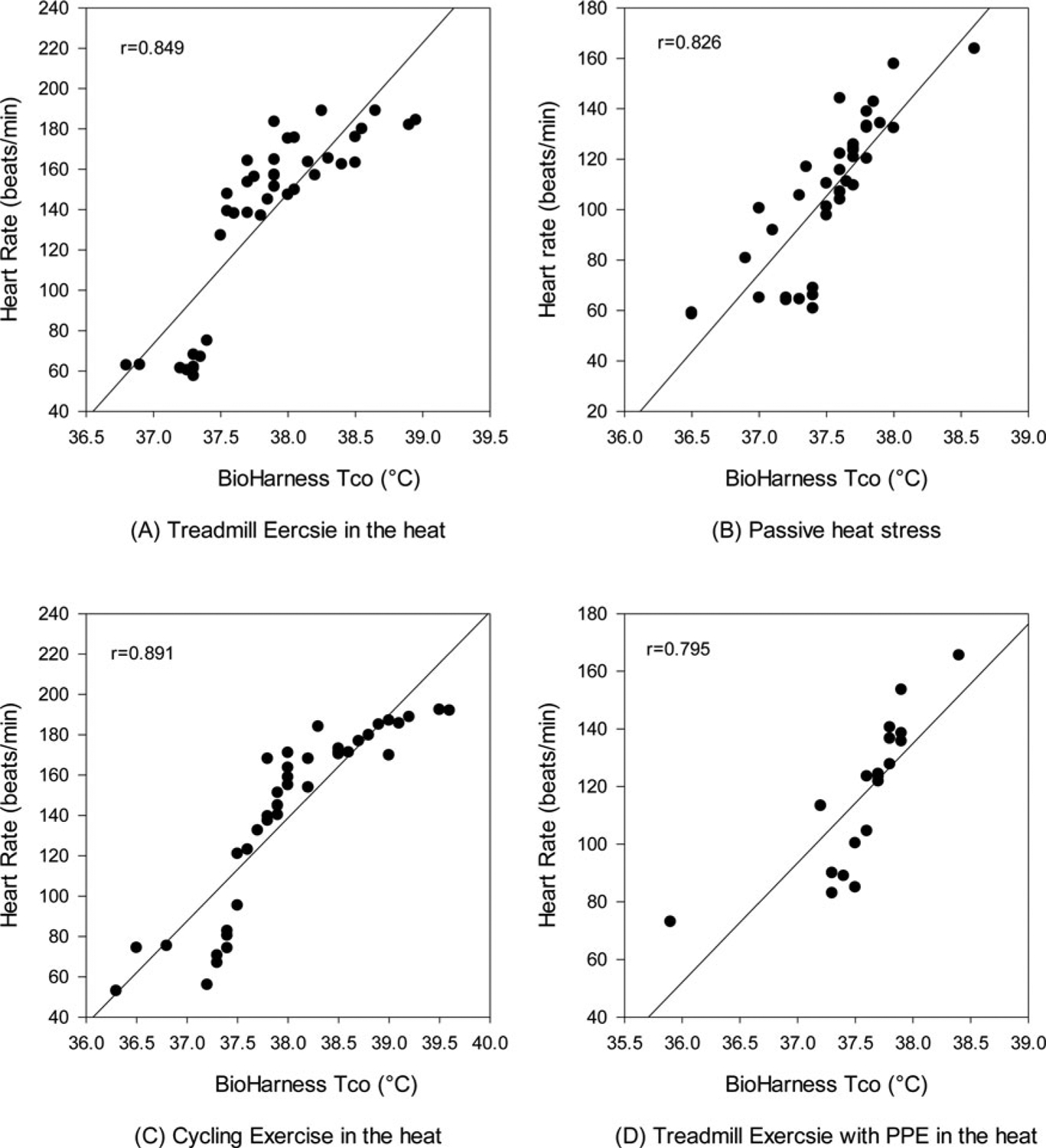
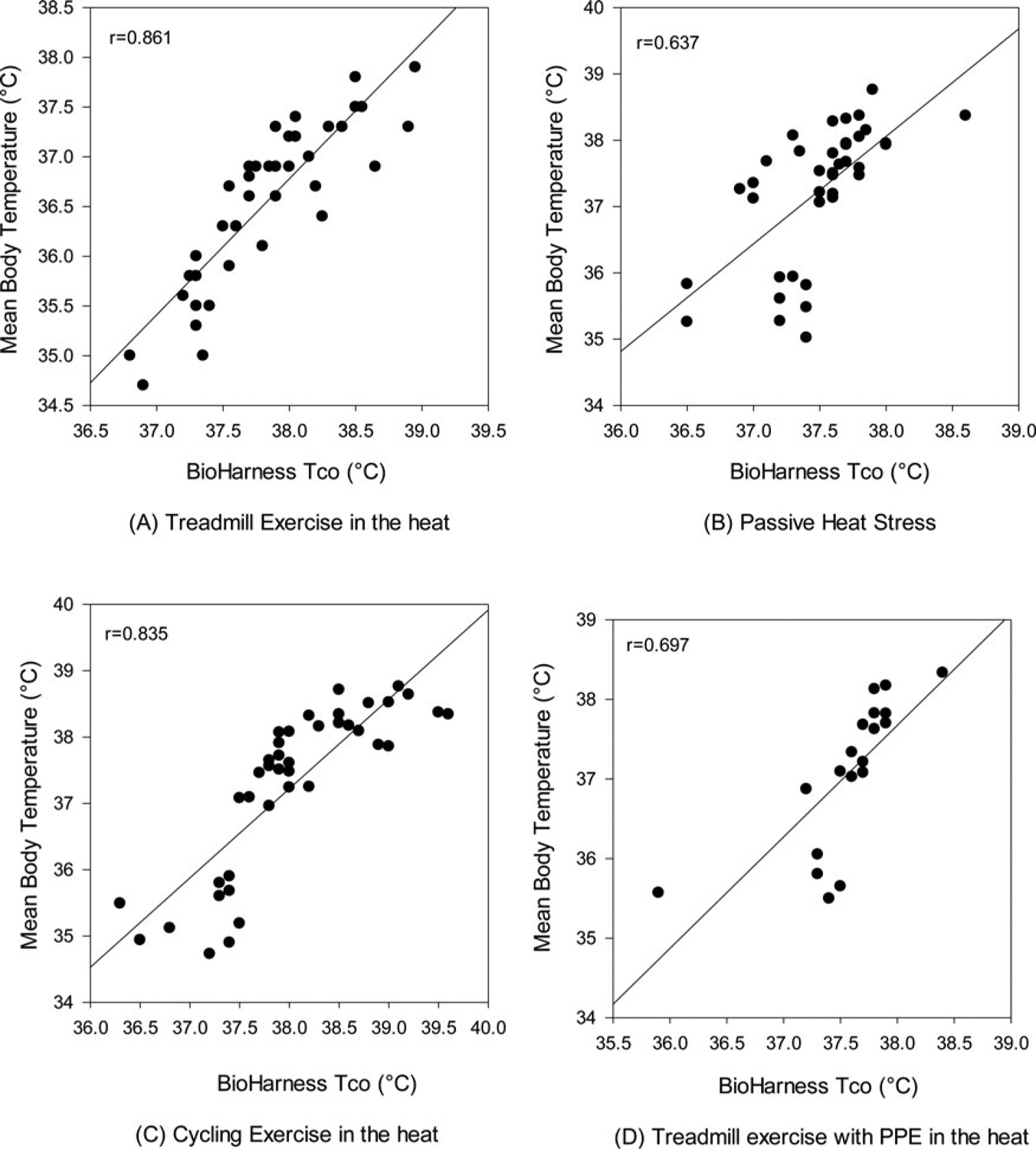
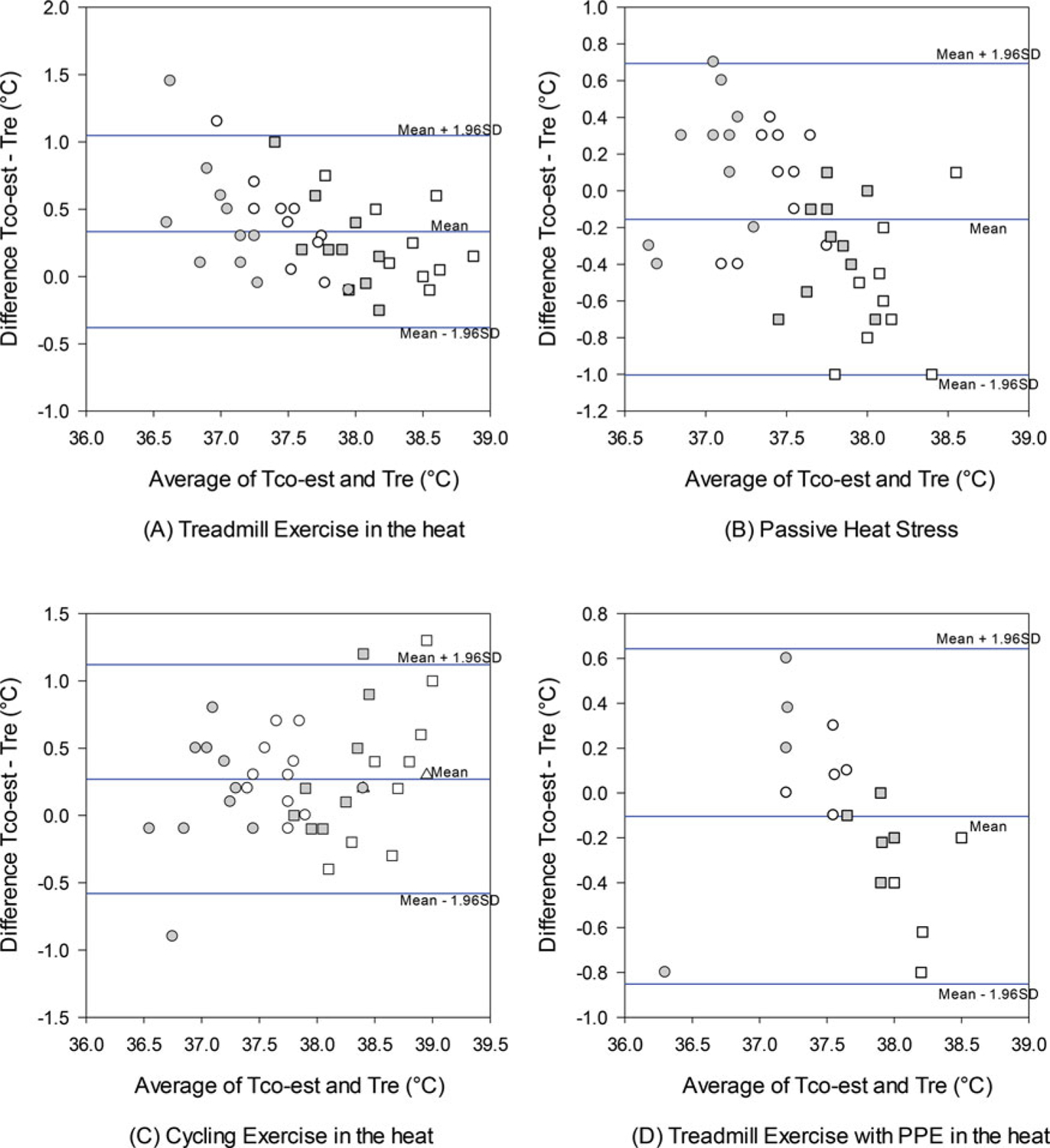
Description:Monitoring and measuring core body temperature is important to prevent or minimize physiological strain and cognitive dysfunction for workers such as first responders (e.g., firefighters) and military personnel. The purpose of this study is to compare estimated core body temperature (Tco-est), determined by heart rate (HR) data from a wearable chest strap physiology monitor, to standard rectal thermometry (Tre) under different conditions. Tco-est and Tre measurements were obtained in thermoneutral and heat stress conditions (high temperature and relative humidity) during four different experiments including treadmill exercise, cycling exercise, passive heat stress, and treadmill exercise while wearing personal protective equipment (PPE). Overall, the mean Tco-est did not differ significantly from Tre across the four conditions. During exercise at low-moderate work rates under heat stress conditions, Tco-est was consistently higher than Tre at all-time points. Tco-est underestimated temperature compared to Tre at rest in heat stress conditions and at a low work rate under heat stress while wearing PPE. The mean differences between the two measurements ranged from -0.1 ± 0.4 to 0.3 ± 0.4°C and Tco-est correlated well with HR (r = 0.795 - 0.849) and mean body temperature (r = 0.637 - 0.861). These results indicate that, the comparison of Tco-est to Tre may result in over- or underestimation which could possibly lead to heat-related illness during monitoring in certain conditions. Modifications to the current algorithm should be considered to address such issues.
-
Subjects:
-
Source:J Occup Environ Hyg. 13(8):612-620
-
Pubmed ID:26954265
-
Pubmed Central ID:PMC9903159
-
Document Type:
-
Funding:
-
Volume:13
-
Issue:8
-
Download URL:
-
File Type:
 [PDF - 605.86 KB]
 -
Collection(s):
-
Main Document Checksum:urn:sha256:ff3bb4cfe94e7342c8b347d06978c168f7885d991733a43f0e30af4d3eb390f3
Supporting Files


File Language:
English
 Was this page helpful?
 Found an issue?



CDC STACKS serves as an archival repository of CDC-published products including
scientific findings, journal articles, guidelines, recommendations, or other public health information authored or
co-authored by CDC or funded partners.
As a repository, CDC STACKS retains documents in their original published format to ensure public access to scientific information.
As a repository, CDC STACKS retains documents in their original published format to ensure public access to scientific information.
You May Also Like
COLLECTION
CDC Public Access