


New Approaches with Different Types of Circulating Cathodic Antigen for the Diagnosis of Patients with Low Schistosoma mansoni Load
Supporting Files
Public Domain

-
Feb 28 2013
-
File Language:
English
Details
-
Alternative Title:PLoS Negl Trop Dis
-
Personal Author:
-
Description:Background
Schistosomiasis mansoni is a debilitating and sometimes fatal disease. Accurate diagnosis plays a key role in patient management and infection control. However, currently available parasitological methods are laborious and lack sensitivity. The selection of target antigen candidates has turned out to be a promising tool for the development of more sensitive diagnostic methods. In our previous investigations, the use of crude antigens led to false-positive results. Recently, focus has been given to highly purified Schistosoma mansoni antigens, especially to circulating antigens.
Method
Thus, our main goal was to test different types of circulating cathodic antigen glycoprotein (CCA), as “crude antigen,” the protein chain of recombinant CCA and two individual peptides. These schistosome proteins/peptides were tested in a new diagnostic method employing immunomagnetic separation based on the improvement of antigen–antibody binding.
Principal Findings
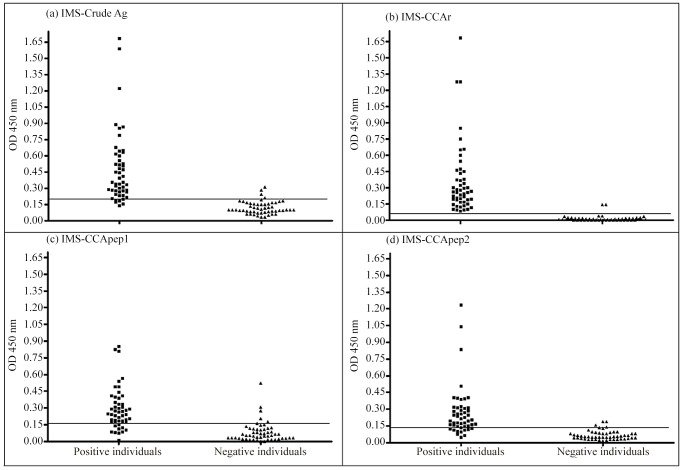
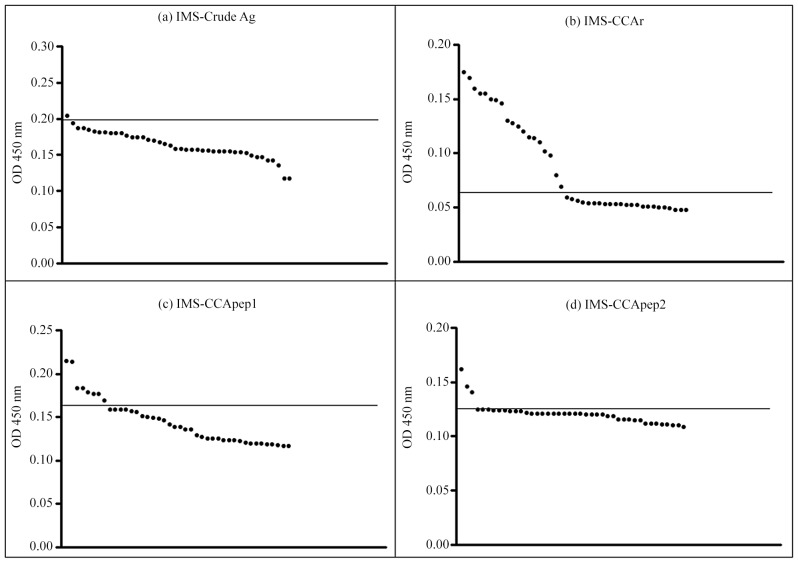
Use of recombinant CCA as a diagnostic antigen allowed us to develop a diagnostic assay with high sensitivity and specificity with no false-negative results. Interestingly, the “crude antigen” worked as a good marker for control of cure after praziquantel treatment.
Conclusions/Significance
Our new diagnostic method was superior to enzyme-linked immunosorbent assay in diagnosing low endemicity patients.
-
Subjects:
-
Source:PLoS Negl Trop Dis. 2013; 7(2).
-
Document Type:
-
Volume:7
-
Issue:2
-
Collection(s):
-
Main Document Checksum:urn:sha256:4e60ad0efca40f954111fc5fb4d212a1ce93ffb4e9a0b74f2bf485a278bbe04e
-
Download URL:
-
File Type:
 [PDF
- 705.69 KB
]
[PDF
- 705.69 KB
]
Supporting Files


File Language:
English
ON THIS PAGE







CDC STACKS serves as an archival repository of CDC-published products including
scientific findings,
journal articles, guidelines, recommendations, or other public health information authored or
co-authored by CDC or funded partners.
As a repository, CDC STACKS retains documents in their original published format to ensure public access to scientific information.
As a repository, CDC STACKS retains documents in their original published format to ensure public access to scientific information.
You May Also Like
COLLECTION
CDC Public Access