


The multidrug-resistant PMEN1 pneumococcus is a paradigm for genetic success
Supporting Files
Public Domain

-
Nov 16 2012
-
Details
-
Alternative Title:Genome Biol
-
Personal Author:Wyres, Kelly L ; Lambertsen, Lotte M ; Croucher, Nicholas J ; McGee, Lesley ; von Gottberg, Anne ; Liñares, Josefina ; Jacobs, Michael R ; Kristinsson, Karl G ; Beall, Bernard W ; Klugman, Keith P ; Parkhill, Julian ; Hakenbeck, Regine ; Bentley, Stephen D ; Brueggemann, Angela B ; Wyres, Kelly L ; Lambertsen, Lotte M ; Croucher, Nicholas J ; McGee, Lesley ; von Gottberg, Anne ; Liñares, Josefina ; Jacobs, Michael R ; Kristinsson, Karl G ; Beall, Bernard W ; Klugman, Keith P ; Parkhill, Julian ; Hakenbeck, Regine ; Bentley, Stephen D ; Brueggemann, Angela B
-
Description:Background
Streptococcus pneumoniae, also called the pneumococcus, is a major bacterial pathogen. Since its introduction in the 1940s, penicillin has been the primary treatment for pneumococcal diseases. Penicillin resistance rapidly increased among pneumococci over the past 30 years, and one particular multidrug-resistant clone, PMEN1, became highly prevalent globally. We studied a collection of 426 pneumococci isolated between 1937 and 2007 to better understand the evolution of penicillin resistance within this species.
Results
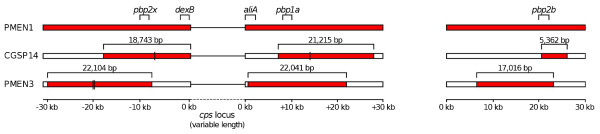
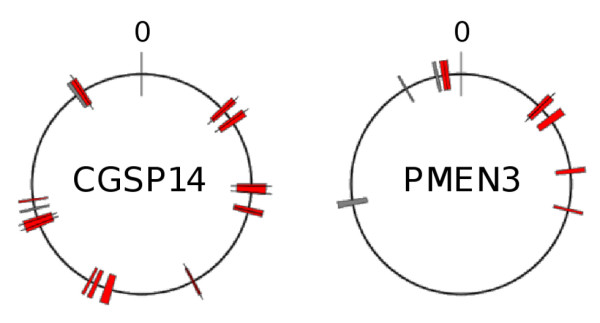
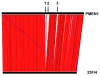
We discovered that one of the earliest known penicillin-nonsusceptible pneumococci, recovered in 1967 from Australia, was the likely ancestor of PMEN1, since approximately 95% of coding sequences identified within its genome were highly similar to those of PMEN1. The regions of the PMEN1 genome that differed from the ancestor contained genes associated with antibiotic resistance, transmission and virulence. We also revealed that PMEN1 was uniquely promiscuous with its DNA, donating penicillin-resistance genes and sometimes many other genes associated with antibiotic resistance, virulence and cell adherence to many genotypically diverse pneumococci. In particular, we describe two strains in which up to 10% of the PMEN1 genome was acquired in multiple fragments, some as long as 32 kb, distributed around the recipient genomes. This type of directional genetic promiscuity from a single clone to numerous unrelated clones has, to our knowledge, never before been described.
Conclusions
These findings suggest that PMEN1 is a paradigm of genetic success both through its epidemiology and promiscuity. These findings also challenge the existing views about horizontal gene transfer among pneumococci.
-
Subjects:
-
Source:Genome Biol. 2012; 13(11):R103. ; Genome Biol. 2012; 13(11):R103.
-
Document Type:
-
Volume:13
-
Issue:11
-
Collection(s):
-
Main Document Checksum:urn:sha256:3bc872edd568ce1e4c88887203db1f16d39f4847b491c595fded9504e0d8bd5f
-
Download URL:
-
File Type:
 [PDF
- 977.02 KB
]
[PDF
- 977.02 KB
]
Supporting Files


ON THIS PAGE





CDC STACKS serves as an archival repository of CDC-published products including
scientific findings,
journal articles, guidelines, recommendations, or other public health information authored or
co-authored by CDC or funded partners.
As a repository, CDC STACKS retains documents in their original published format to ensure public access to scientific information.
As a repository, CDC STACKS retains documents in their original published format to ensure public access to scientific information.
You May Also Like
COLLECTION
CDC Public Access