



Metabolomic Profiling of Fatty Acid and Amino Acid Metabolism in Youth With Obesity and Type 2 Diabetes
Supporting Files
Public Domain

-
Jan 20 2012
Details
-
Alternative Title:Diabetes Care
-
Personal Author:
-
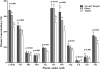
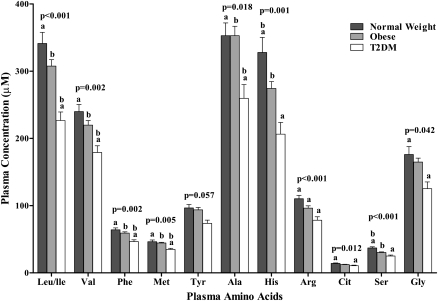
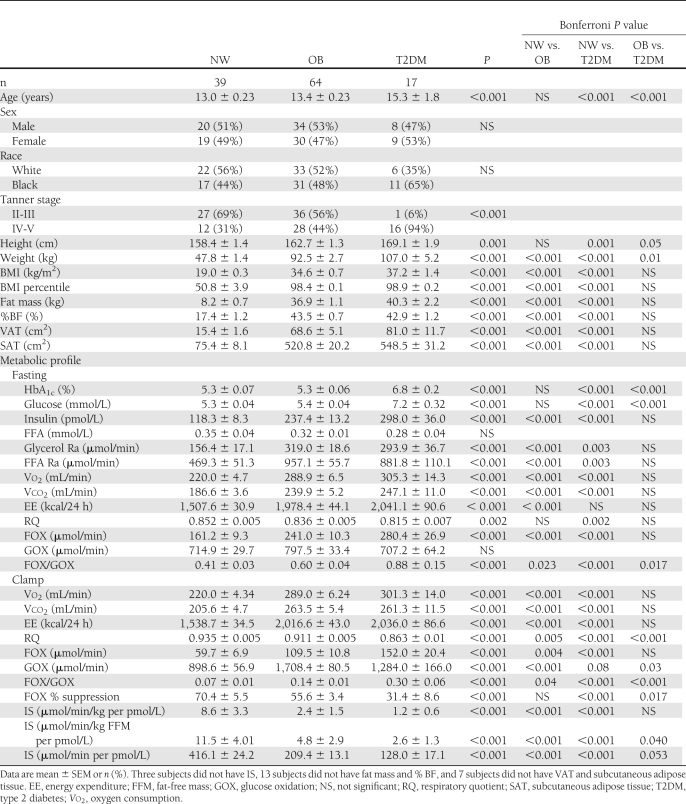
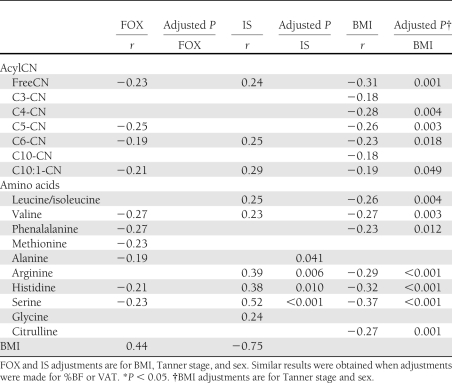
Description:OBJECTIVE ; We compared acylcarnitine (AcylCN) species, common amino acid and fat oxidation (FOX) byproducts, and plasma amino acids in normal weight (NW; n = 39), obese (OB; n = 64), and type 2 diabetic (n = 17) adolescents. ; RESEARCH DESIGN AND METHODS ; Fasting plasma was analyzed by tandem mass spectrometry, body composition by dual energy X-ray absorptiometry and computed tomography, and total-body lipolysis and substrate oxidation by 2H5glycerol and indirect calorimetry, respectively. In vivo insulin sensitivity (IS) was assessed with a 3-h hyperinsulinemic-euglycemic clamp. ; RESULTS ; Long-chain AcylCNs (C18:2-CN to C14:0-CN) were similar among the three groups. Medium- to short-chain AcylCNs (except C8 and C10) were significantly lower in type 2 diabetes compared with NW, and when compared with OB, C2-, C6-, and C10-CN were lower. Amino acid concentrations were lower in type 2 diabetes compared with NW. Fasting lipolysis and FOX were higher in OB and type 2 diabetes compared with NW, and the negative association of FOX to C10:1 disappeared after controlling for adiposity, Tanner stage, and sex. IS was lower in OB and type 2 diabetes with positive associations between IS and arginine, histidine, and serine after adjusting for adiposity, Tanner stage, and sex. ; CONCLUSIONS ; These metabolomics results, together with the increased rates of in vivo FOX, are not supportive of defective fatty acid or amino acid metabolism in obesity and type 2 diabetes in youth. Such observations are consistent with early adaptive metabolic plasticity in youth, which over time—with continued obesity and aging—may become dysfunctional, as observed in adults.
-
Subjects:
-
Source:Diabetes Care. 2012; 35(3):605-611.
-
Document Type:
-
Volume:35
-
Issue:3
-
Download URL:
-
File Type:
 [PDF - 289.89 KB]
 -
Collection(s):
-
Main Document Checksum:urn:sha256:4800afd8d4f73669d82ec96557fab0cfb7ab43f7a55fd8696fd29fe46c551d30
Supporting Files


 Was this page helpful?
 Found an issue?



CDC STACKS serves as an archival repository of CDC-published products including
scientific findings, journal articles, guidelines, recommendations, or other public health information authored or
co-authored by CDC or funded partners.
As a repository, CDC STACKS retains documents in their original published format to ensure public access to scientific information.
As a repository, CDC STACKS retains documents in their original published format to ensure public access to scientific information.
You May Also Like
COLLECTION
CDC Public Access